

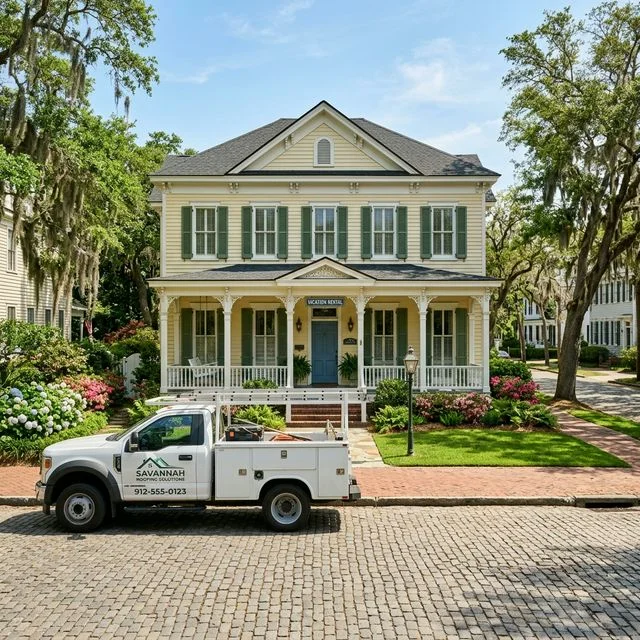
If you own rental property in Savannah, here is a question that will come up sooner or later: a tenant calls and says the roof is leaking. Who pays? Is it your responsibility as the landlord, or can the tenant be held liable? The answer, under Georgia law, is clear — but occasionally misunderstood by both parties.
The Short Answer: Landlords Pay for Roof Repairs
Under Georgia landlord-tenant law (O.C.G.A. § 44-7-14), the landlord is responsible for maintaining the structural integrity of the rental property. The roof is structural. Period. If the roof leaks due to age, weather damage, or wear and tear, the landlord must repair or replace it.
This applies whether the property is a single-family home in Ardsley Park, a duplex in Midtown, or a multi-unit rental off Victory Drive. The tenant is not responsible for normal deterioration of the building's structure.
When Is the Tenant Liable?
There is exactly one scenario where a tenant may be held financially responsible for roof damage:
Negligence or intentional damage. If the tenant causes roof damage through their own actions — for example, climbing onto the roof and puncturing it, allowing a grill to melt through the surface, or deliberately damaging a vent — the landlord can charge the tenant for the repairs or deduct the cost from the security deposit.
The Landlord's Biggest Mistake: Ignoring Tenant Complaints
Here is where landlords in Savannah get into serious legal trouble. A tenant reports a leak. The landlord ignores it, or does a cheap patch that fails within weeks. The leak worsens, destroying the tenant's personal property — furniture, electronics, clothing. Under Georgia law, the tenant now has the right to pursue the landlord for property damage, rent reduction, or even lease termination.
The fastest way to protect yourself as a landlord is to respond to roof complaints immediately. Call a licensed roofing contractor, get the leak properly diagnosed, and fix it correctly the first time.
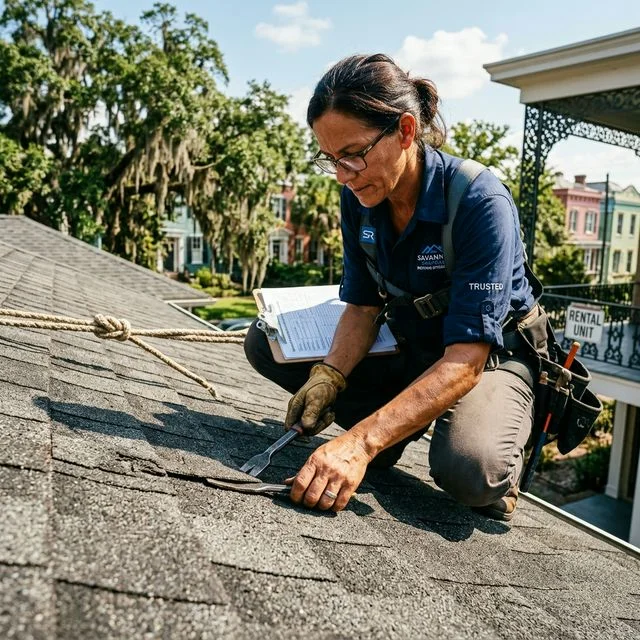
Ignored roof leaks in rental properties quickly escalate into expensive interior damage — and potential legal liability for the landlord.
Smart Strategies for Savannah Landlords
Schedule Annual Roof Inspections
Do not wait for a tenant to report a leak. Proactive annual inspections catch small issues (lifted shingles, cracked pipe boots) before they become expensive repairs or legal disputes.
Include Roof Maintenance Clauses in Your Lease
Your lease should require tenants to report roof leaks promptly. If a tenant notices a leak and fails to report it for months — allowing mold and wood rot to spread — you may have grounds to hold them partially responsible for the additional damage.
Budget for Roof Replacement Cycles
In Savannah's climate, asphalt shingle roofs typically last 18–25 years. If your rental property's roof is approaching year 15, start budgeting for a full replacement. It is far cheaper to plan a replacement than to react to an emergency leak that damages both the structure and a tenant's belongings.
Attention Savannah Landlords and Property Managers
Talya Roofing offers priority scheduling for rental property owners and property management companies. We provide detailed inspection reports you can keep on file for tenant disputes and insurance claims.
Georgia Landlord Roof Responsibilities
Under Georgia Code Title 44, Chapter 7, landlords are legally responsible for maintaining the structural integrity of rental properties, which explicitly includes the roof. Failure to maintain a weathertight roof can result in tenants withholding rent, breaking the lease without penalty, or filing complaints with Chatham County Code Enforcement.
Landlord vs. Tenant Responsibility
| Responsibility | Landlord | Tenant |
|---|---|---|
| Structural roof repairs | Always | Never |
| Leak repairs from wear/age | Always | Never |
| Storm damage repairs | Always (insurance claim) | Report promptly |
| Gutter cleaning | Usually (check lease) | Sometimes (if specified in lease) |
| Damage from tenant negligence | Initial repair | Reimbursement via security deposit |
Tax Benefits of Rental Property Roof Replacement
Georgia landlords can depreciate the cost of a new roof over 27.5 years (the residential rental property depreciation schedule). On a $12,000 roof replacement, this provides approximately $436 per year in depreciation deductions. If the roof replacement includes energy-efficient components (cool roofing, improved insulation), additional tax credits may apply. Consult with a Georgia CPA experienced in rental property taxation to maximize your deductions — the combination of depreciation, energy credits, and potential insurance premium reductions often makes the effective cost of a rental roof replacement 40-50% less than the contract price.