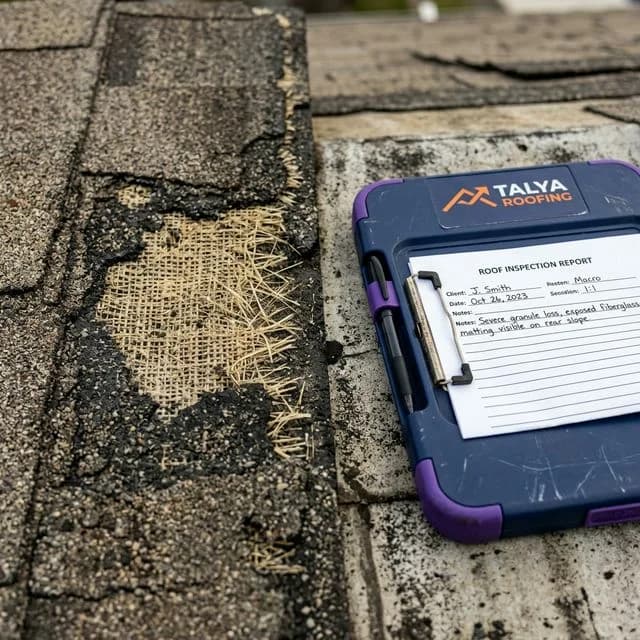

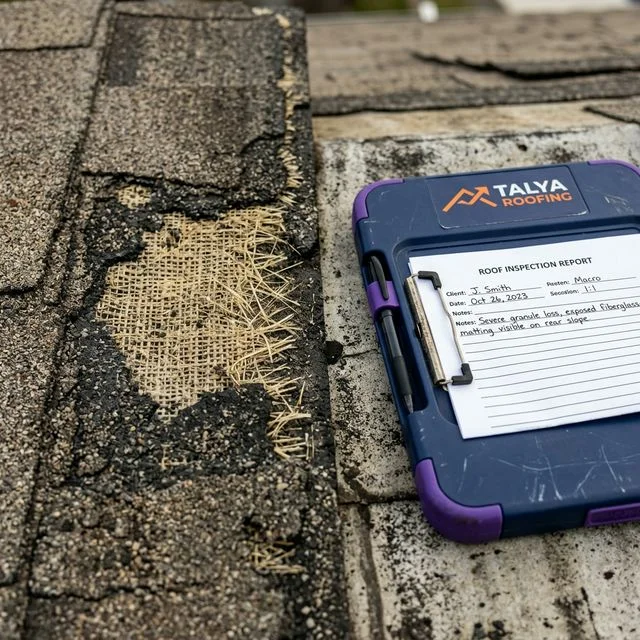
Black Sand in the Gutters?
Why Shingle Granule Loss is a Ticking Time Bomb
If you are cleaning your gutters in Savannah and notice heavy accumulations of black, coarse, sand-like material, your roof is trying to tell you something. That material is not dirt—it is the protective granule coating from your asphalt shingles, and losing too much of it can lead to catastrophic roof failure.
What Are Shingle Granules?
Asphalt shingles are composed of a fiberglass mat coated with asphalt. Because raw asphalt degrades rapidly when exposed to ultraviolet (UV) light, manufacturers embed crushed stone granules (coated in ceramic coloring) into the surface.
-
UV Protection: They act like sunscreen, preventing the asphalt backing from drying out, blistering, and cracking under the brutal Georgia sun.
-
Fire Resistance: The stone granules significantly increase the fire rating of the roof.
-
Aesthetics: They provide the physical color and depth definition of your roof.
Normal vs. Extreme Granule Loss
Not all granule loss is a sign of immediate doom. It is important to distinguish between normal wear and tear and an actively failing roof system.
🟢 Normal Loss
New Roofs: It is normal to see a small surge of granules in your gutters and at the bottom of downspouts immediately after a new roof is installed. Manufacturers pack extra granules onto the shingle during production, and the excess washes off in the first few rainstorms.
🔴 Extreme Loss
Aging Roofs: If your roof is over 12 years old and you are scooping handfuls of granules out of your gutters every time it rains, the asphalt holding them in place has dried out and failed.
Why Granule Loss is Dangerous for Your Roof
Once a shingle loses its protective granule coating, the black asphalt underneath is directly exposed to the sun. In the Savannah summer heat, exposed asphalt will quickly blister, bake, and crack. At that point, the shingle loses its waterproofing capability entirely. Water will seep through the micro-cracks into the fiberglass mat and eventually down into your home's wooden decking.
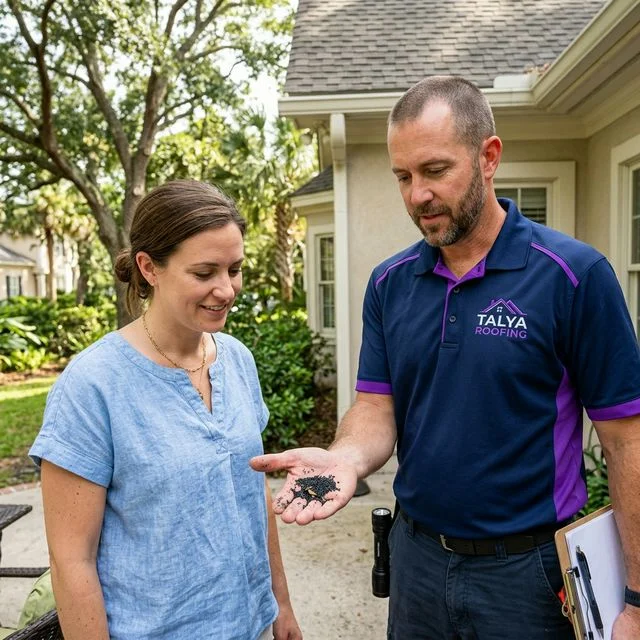
If you find piles of granular "sand" at the bottom of your downspouts, your roof has likely reached the end of its functional life.
When Does Granule Loss Mean You Need a New Roof?
If your roof exhibits "bald spots"—patches where the shingles look entirely smooth, black, or shiny—a roof replacement is imminent. You can no longer patch or repair shingles in this condition because they will simply crumble when handled.
Schedule a Free Roof Health Report
Not sure if the granule loss in your gutters is normal or a sign of failure? Our Talya Roofing inspectors will evaluate your shingles with high-definition drone photography to give you an honest answer.
Understanding Shingle Granule Loss Stages
Granule loss on asphalt shingles follows a predictable progression that helps Savannah homeowners gauge their roof's remaining life. Knowing which stage your roof is in guides repair-vs-replace decisions and insurance conversations.
| Stage | Appearance | Cause | Action Needed |
|---|---|---|---|
| Normal (Year 1-2) | Light granule accumulation in gutters | Manufacturing excess shaking loose | None — this is expected |
| Early wear (Year 8-15) | Scattered bare spots, some color variation | Normal weathering and UV exposure | Monitor annually |
| Advanced wear (Year 15-22) | Significant bare patches, dark asphalt showing | UV degradation of asphalt binder | Plan replacement within 2-3 years |
| Critical (Year 20+) | Widespread bare asphalt, shingle edges curling | Complete granule bond failure | Replace immediately — active degradation |
In Savannah's high-UV environment, granule loss accelerates 20-30% faster than manufacturer timelines suggest. South and west-facing slopes lose granules fastest due to afternoon sun exposure. If you're finding more than a handful of granules in your gutters during each cleaning and your roof is over 12 years old, it's time for a professional inspection.
What to Do About Granule Loss
Your response to granule loss depends entirely on the stage and your roof's age. For roofs under 10 years showing localized granule loss (typically manufacturing defect), file a warranty claim with the shingle manufacturer. For roofs 10-18 years old with moderate granule loss, schedule annual professional inspections and plan for replacement within 3-5 years. For roofs over 18 years with advanced granule loss, replacement is the most cost-effective path — continued patching on a granule-depleted roof is throwing good money after bad in Savannah's harsh UV environment.
How Much Granule Loss Is Normal?
Understanding the difference between expected granule shedding and problematic loss helps you avoid both unnecessary panic and dangerous complacency:
- New roof shedding (first 1–2 years): Manufacturers embed excess granules into shingle surfaces during production. These loosely bonded granules wash off in the first several rainstorms. Finding a thin layer of granules in your gutters after a new installation is completely normal and not a cause for concern. This shedding typically stops within the first year.
- Normal aging (years 8–15): Gradual, even granule loss across the entire roof surface is part of the natural aging process. You will notice a slow accumulation of granules in your gutters over time, and the shingles may appear slightly less vibrant than when new. As long as the underlying asphalt is not exposed in bare patches, this is expected wear.
- Storm damage (any age): Hailstones, even small ones, knock granules loose on impact. After a hailstorm, you may find a sudden heavy deposit of granules in your gutters and at the base of downspouts. This type of loss is distinctly different from aging — it happens all at once and may create circular impact marks or bruises on the shingle surface. Hail-related granule loss is typically covered by homeowners insurance.
- Accelerated failure (years 15+): When the asphalt binder deteriorates from years of UV exposure and thermal cycling, granules release in large quantities. If you are scooping handfuls of grit from your gutters after every rain and can see dark bare patches on the shingles from ground level, the roof has entered its failure phase.
Insurance and Granule Loss
Granule loss intersects with homeowners insurance in ways that catch many Savannah homeowners off guard:
- How adjusters evaluate granule loss: Insurance adjusters distinguish between storm-caused and age-related granule loss. Storm damage typically shows a pattern — concentrated impact marks, loss on one slope more than others (the windward side), and correlation with a documented weather event. Age-related loss presents as uniform degradation across all surfaces. Adjusters use test squares (counting granule adhesion in a defined area) and compare your roof against neighboring properties of similar age.
- When granule loss warrants a claim: If you can tie sudden, significant granule loss to a specific storm event — particularly hail — you likely have a valid insurance claim. Document the storm date, save weather reports, and schedule a professional roof inspection before the adjuster visit. Having a roofer's independent damage assessment strengthens your claim considerably.
- When insurance will not cover it: Gradual wear-and-tear granule loss from normal aging is explicitly excluded from standard homeowners policies. If your roof is 18 years old and showing widespread granule depletion, that is a maintenance and replacement planning issue, not an insurance claim. Filing a wear-and-tear claim wastes everyone's time and can flag your policy for non-renewal.
- The depreciation factor: Even for legitimate storm claims, insurers depreciate the payout based on the roof's age and pre-storm condition. A 15-year-old roof with pre-existing granule wear will receive a lower payout than a 5-year-old roof with the same storm damage. This is why maintaining your roof in good condition protects your insurance recovery value.
Extending Shingle Life in Coastal Georgia
Savannah's combination of intense UV radiation, high humidity, frequent storms, and salt air means your shingles work harder than shingles in most U.S. markets. These maintenance practices can add years to your roof's functional lifespan:
- Maximize attic ventilation: Proper soffit-to-ridge airflow keeps attic temperatures lower, reducing the thermal stress that breaks down asphalt binder and releases granules. Verify that soffit vents are clear and that your ridge vent is unobstructed. In Savannah, inadequate ventilation can reduce shingle life by 5–8 years.
- Keep the roof clear of debris: Pine needles, leaves, and branches trap moisture against shingle surfaces, creating localized conditions that accelerate granule loss and promote algae growth. Clean debris from valleys, around penetrations, and anywhere material accumulates. Trim tree branches to maintain at least 6 feet of clearance from the roof surface.
- Address algae early: The dark streaks (Gloeocapsa magma algae) common on Savannah roofs are not just cosmetic — algae colonies retain moisture against the shingle surface and can accelerate granule loosening over time. Algae-resistant shingles with copper-infused granules help prevent colonization. For existing growth, professional soft-wash cleaning can remove algae without damaging the remaining granules.
- Schedule annual inspections: A professional eye catches developing problems — a cracked pipe boot, lifted flashing, or ventilation blockage — before they compound into accelerated granule loss and premature failure. In Savannah, the ideal inspection window is March–May, before summer storm season begins.
- Choose quality materials at installation: When it is time for a roof replacement, invest in premium architectural shingles with enhanced UV stabilizers and thicker asphalt coatings. The $500–$1,000 premium over builder-grade shingles translates to 3–5 additional years of service life in our climate — a clear return on investment.