
7 Roofing Scam Warning Signs
How Georgia Homeowners Get Taken — and How to Protect Yourself
After every major storm that hits Coastal Georgia, our phones light up with calls from homeowners who already signed a contract with someone else — and are now realizing something feels wrong. The truck had out-of-state plates. The "contract" is a one-page form with no company address. The deposit check was cashed the same day.
Roofing scams are a multi-billion dollar problem nationally, and Savannah's geographic exposure to hurricanes and severe thunderstorms makes us a prime hunting ground. Here are the seven red flags that separate a legitimate contractor from a predator.
The 7 Warning Signs
1. They Knocked on Your Door Uninvited After a Storm
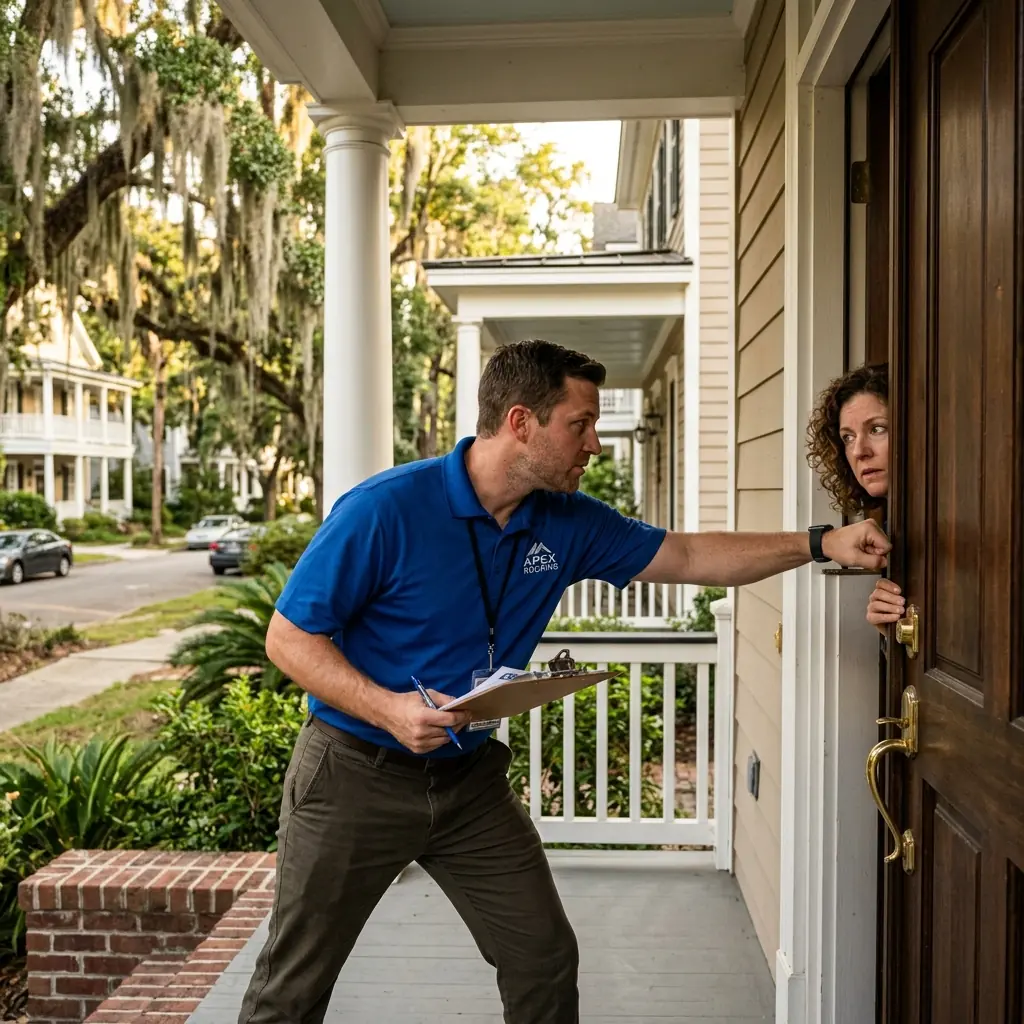
Legitimate roofing companies in Savannah are booked solid. They do not need to canvass neighborhoods. Storm chasers drive in from out of state, knock on every door on the block, and use manufactured urgency — "I can see hail damage from the street, and your insurance will cover the whole thing" — to pressure you into signing before you can research them.
What to do: Ask for their Georgia contractor license number and look it up on the Secretary of State website before any conversation continues.
2. They Want Cash or a Large Upfront Deposit
A demand for cash payment — or a deposit exceeding one-third of the total project cost — is a major red flag. Georgia law allows contractors to take a reasonable deposit for materials, but any reputable company will accept credit card or check, provide a receipt, and never pressure you to pay the full amount before work begins.
What to do: Never pay more than 30% upfront, and never pay cash without a detailed written receipt.
3. They Cannot Produce a Valid Georgia Contractor License
In Georgia, roofing contractors must hold a valid license issued by the state. If they cannot produce the license number on the spot, or if it does not match the name on their business card, walk away immediately. An unlicensed contractor means no consumer protections, no bond, and no recourse if the work fails.
What to do: Verify the license number at sos.ga.gov/PLB. Talya Roofing's license is always available on request.
4. There Is No Written Contract (or It Is Vague)
A legitimate roofing contract specifies the exact scope of work: shingle brand and model, underlayment type, number of vents, flashing details, wood replacement allowance, and a clear payment schedule. If the "contract" is a half-page handwritten note or a digital form with blanks, the contractor is leaving room to cut corners or inflate costs later.
What to do: Insist on a line-item estimate that specifies materials, labor, and warranty terms before signing anything.
5. They Pressure You to "Sign Today for a Discount"
"If you sign right now, I can take 20% off." This is the oldest trick in the book. A reputable roofer's price is based on material costs, labor, and profit margin — not a timer. The manufactured discount is designed to prevent you from getting competing bids or researching their company online.
What to do: Any company that gives you a worse deal for taking a day to think is not a company you want on your roof.
6. They Offer to "Waive Your Deductible"
This is actually insurance fraud — and it can get you, the homeowner, in legal trouble. When a contractor says "Don't worry about your $2,000 deductible, we'll take care of it," they are inflating the claim to your insurance company to cover the deductible amount. If State Farm or Allstate catches this, they can deny the entire claim and potentially drop your policy.
What to do: Your deductible is your legal obligation. A trustworthy contractor will never offer to waive it.
7. They Start Work Without Pulling a Permit
In Chatham County, a building permit is required for roof replacements. Storm chasers skip permits because they do not plan to be around for the final inspection. Without a permit, there is no official record that work was done to code, which creates a nightmare when you try to sell the house or file a future insurance claim.
What to do: Ask to see the permit before any materials are delivered to your property.
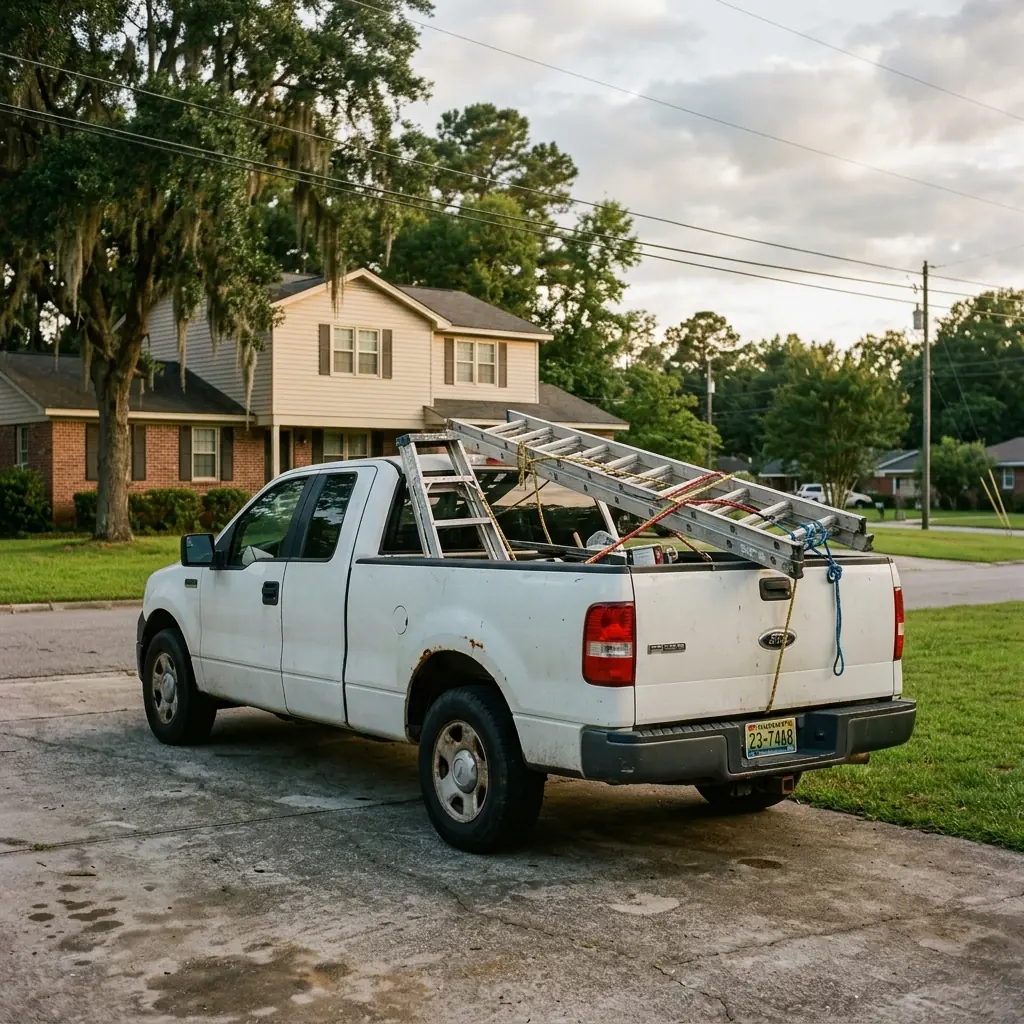
A local, licensed roofing company will have branded vehicles, a physical office address, and a verifiable track record in the community.
What a Legitimate Roofing Contractor Looks Like
Compare those seven red flags against what you should expect from a real contractor. At Talya Roofing, we provide a valid Georgia license number on first contact, carry $2M in general liability insurance, provide fully itemized written estimates, pull Chatham County permits for every job, and never ask for cash or offer to waive your deductible. Our 5.0 Google rating is built on doing the right thing for Savannah homeowners, not gaming the system.
Already Signed With a Suspicious Contractor?
Under Georgia law, you have the right to cancel most home improvement contracts within 3 business days of signing (the "cooling off" rule). If you are feeling uneasy about a roofing contract you just signed, act quickly.
- • Send a written cancellation via certified mail immediately
- • Contact your insurance company and let them know you are getting a second opinion
- • Call Talya Roofing for a free, honest second opinion
How to Verify a Georgia Roofing Contractor
Before signing any contract or paying any deposit, take these verification steps. They take 15 minutes and can save you thousands:
- Check their Georgia contractor license: Visit the Georgia Secretary of State's Professional Licensing Board website (sos.ga.gov) and search by company name or license number. A valid residential/general contractor license should be current and in good standing. If the contractor cannot provide a license number or the number does not check out, end the conversation immediately. Unlicensed contracting is illegal in Georgia and leaves you with zero consumer protection.
- Verify insurance coverage: Request a Certificate of Insurance (COI) showing both general liability insurance (minimum $1 million recommended) and workers' compensation coverage. Call the insurance company listed on the certificate to confirm the policy is active — some contractors provide expired or forged certificates. If a worker is injured on your property and the contractor lacks workers' comp, you can be held personally liable under Georgia law.
- Check the Better Business Bureau: Search the contractor on bbb.org for their BBB rating, complaint history, and resolution record. A pattern of unresolved complaints, especially around quality issues or failure to complete work, is a serious warning sign. Note that a lack of BBB accreditation is not itself a red flag — many excellent contractors simply have not paid for accreditation — but active unresolved complaints are meaningful.
- Review Google reviews and local references: Check their Google Business Profile for review count, rating, and review content. A legitimate Savannah contractor should have multiple reviews from identifiable local homeowners describing specific projects. Be skeptical of profiles with very few reviews, all posted in a short time period, or reviews that read generically without project-specific details. Ask the contractor for 3–5 local references you can call — a company with 100+ completed projects should have no trouble providing this.
- Verify manufacturer certifications: If the contractor claims to be GAF Master Elite, Atlas Pro+, or CertainTeed SELECT, verify directly with the manufacturer. These certifications can be checked on the manufacturer's website by entering the contractor's name or zip code. Misrepresenting certification status is surprisingly common among less reputable operators.
What to Do If You Have Been Scammed
If you have already paid a contractor who has disappeared, delivered substandard work, or refused to honor a warranty, take these steps to pursue resolution and protect other homeowners:
- File a complaint with the Georgia Office of the Commissioner of Insurance (OCI): If the scam involved insurance fraud (inflated claims, deductible waiver schemes, or misrepresentation to your insurer), the OCI has enforcement authority. File at oci.georgia.gov. Include all documentation — contract, payment records, correspondence, and photographs of defective work.
- Report to the Better Business Bureau: File a formal complaint at bbb.org. The BBB contacts the company and attempts mediation. Even if the company does not respond, the complaint becomes part of their public record, warning future consumers. Include photos, contract copies, and a timeline of events.
- File a complaint with the Georgia Secretary of State: If the contractor was licensed, file a complaint with the Professional Licensing Board at sos.ga.gov. License violations can result in fines, suspension, or revocation. If the contractor was unlicensed, report the unlicensed activity — it is a misdemeanor offense in Georgia.
- Explore legal options: For losses exceeding $15,000, consult a Georgia construction attorney. For smaller amounts, Georgia's Magistrate Court handles claims up to $15,000 without requiring an attorney. You will need your signed contract, proof of payment, photographs documenting defective work, and any written correspondence. Georgia's Home Solicitation Sales Act provides additional consumer protections for contracts signed at your residence.
- Contact your insurance company: If the scam involved an insurance claim, notify your carrier immediately. They have fraud investigation units and legal resources that can pursue the contractor on your behalf. Early notification also protects your policy from cancellation if the insurer discovers the fraud independently.
- Document everything: Photograph all defective work before making any corrections. Save every text message, email, voicemail, and piece of paper. This documentation is essential for every avenue of recourse listed above.
Not Sure if Your Roofer is Legit?
Call Talya Roofing. We will review any existing estimate or contract for free and give you an honest assessment of what your roof actually needs.