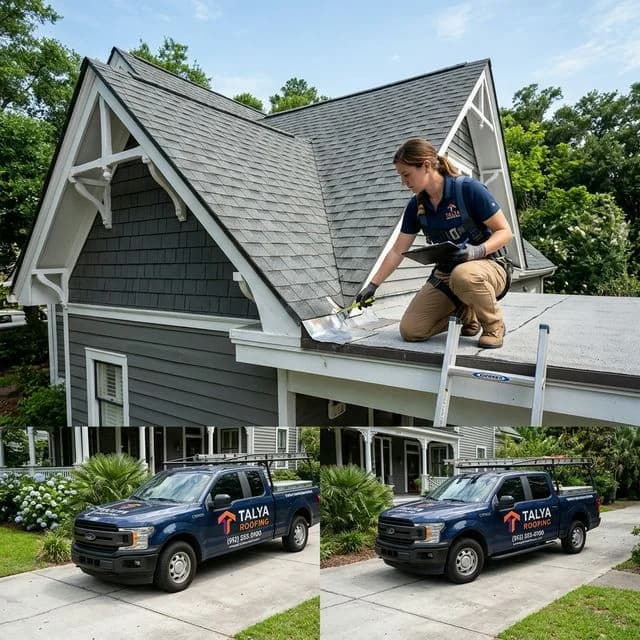

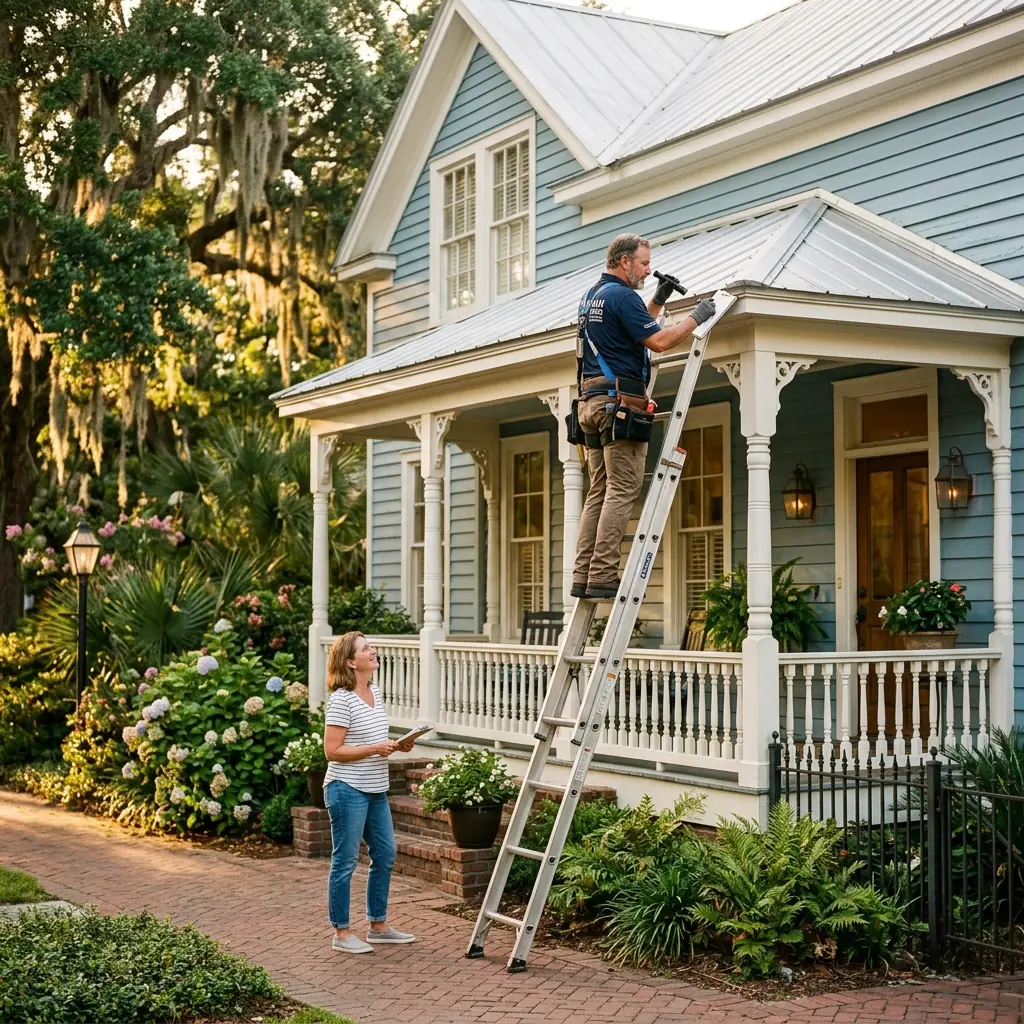
Porch & Carport Roofs
Why Attached Roofs Fail Faster Than Main Roofs
If you have an attached covered porch, sunroom, or carport in Coastal Georgia, there is a high probability it will leak before your main roof does. Learn why these structural additions are highly vulnerable to water damage and how to fix them permanently.
The Flashing Failure Zone
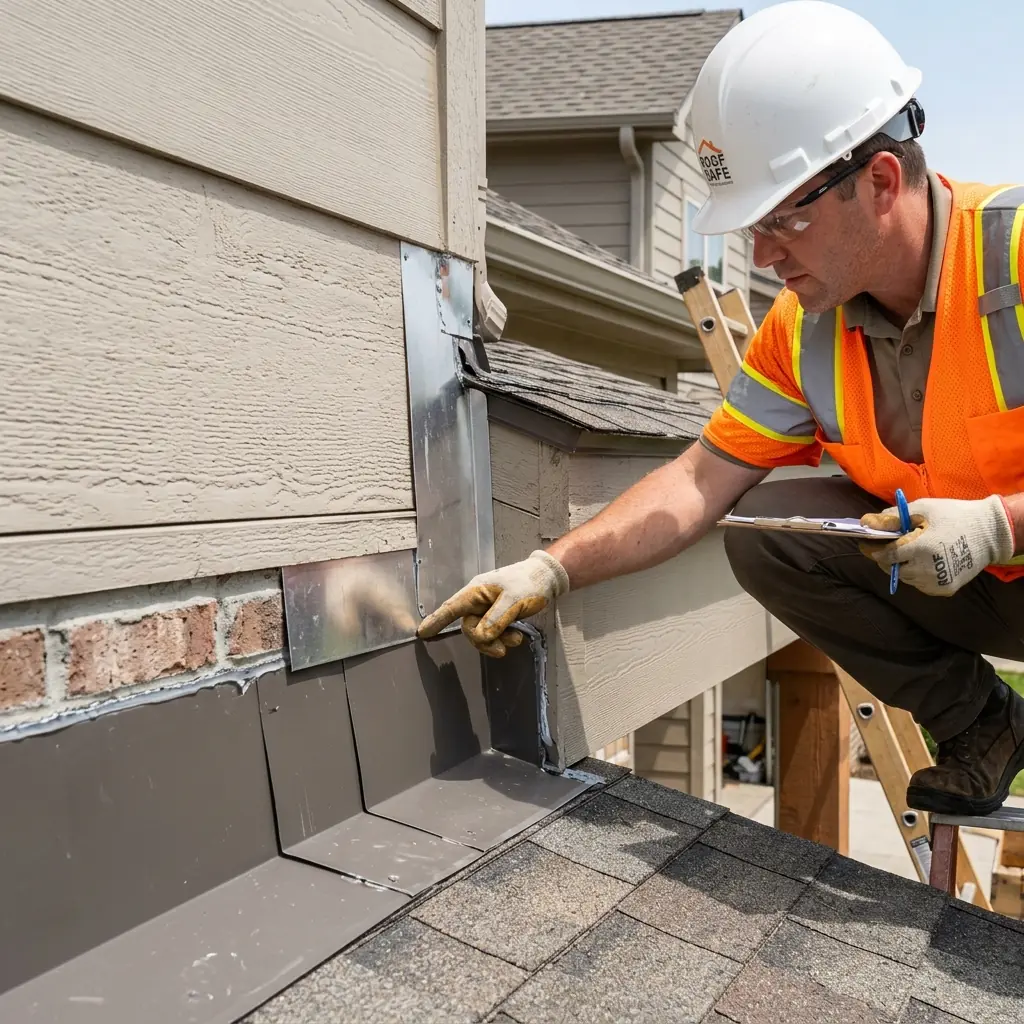
A porch or carport roof typically consists of a lower-sloped secondary roof structure tying into the vertical wall of your main house (often right below the second-story windows or just below your primary roofline). The 90-degree junction where the porch roof meets your siding or brick is the most critical waterproofing detail on your entire property.
The Problem: When builders or inexperienced roofers install a porch addition, they often face-nail a single piece of "L-flashing" against the wall and glob roof cement over it. Over time, physical expansion, contraction, and Savannah's aggressive summer storms crack that sealant, sending water pouring straight down inside your walls.
Low Slope Equals Slow Drainage
Most architectural shingle roofs require a minimum slope of 2/12 (dropping 2 inches vertically for every 12 inches horizontally). However, because porch and carport roofs have limited vertical height to tie into the main house, they are often built nearly flat.
If a roofer installs standard asphalt shingles on a "flat" porch roof, water will actually travel upstream underneath the shingles due to capillary action and wind-driven rain from coastal squalls. This leads to wood rot and catastrophic structural failure. Low-slope porch roofs must use specialized rolled roofing (like Modified Bitumen) or TPO membrane, not shingles.
Signs Your Carport or Porch Roof is Failing
- ✓ Water stains on the ceiling: Brown rings on your porch ceiling beadboard or drywall.
- ✓ Siding rot: The siding or trim boards on the main house directly above the porch roof are soft or rotting.
- ✓ Sagging headers: The main support beam spanning the front of your carport is dipping in the middle due to water-logged wood.
Repair Options From Talya Roofing
Fixing a leaking porch roof is not solved with a tube of caulk. At Talya Roofing, our structural repair process usually involves:
1. Removing Siding for Proper Flashing
We carefully remove the bottom rows of your home's siding to install custom-bent metal flashing directly against the house framing, then weave it under specialized ice and water shield, and finally reinstall the siding over it. This guarantees water flows over the roofing material, not behind it.
2. Converting to Commercial-Grade Materials
If your porch is too flat for shingles, we will strip it down to the wood deck and install a multi-ply modified bitumen or TPO membrane system designed for zero-slope water drainage.
3. Structural Wood Replacement
If the leak has existed for years, the rafters connecting the porch to your house may be compromised. Our crews include experienced carpenters who can sister new rafters and replace rotted headers to restore structural integrity before the new roof goes on.
Stop the Wall Leak Permanently
If water is pouring in where your porch or carport meets your home, let Talya Roofing's experts install a permanent flashing solution. We do it right the first time.
Common Carport and Porch Roof Problems in Savannah
Carport and porch roofs in Savannah face unique challenges because they're typically lower-pitch structures with less sophisticated drainage and often use different materials than the main house roof. Here's what to watch for:
| Problem | Cause | Repair Cost | Urgency |
|---|---|---|---|
| Sagging flat carport roof | Water pooling, undersized rafters | $1,200-$3,000 | High — structural risk |
| Corrugated metal panel leaks | Fastener rust, sealant failure | $300-$800 | Medium |
| Porch ceiling water stains | Flashing failure at house connection | $400-$900 | Medium-High |
| Screen porch roof rot | Moisture trapped by screening material | $800-$2,000 | Medium |
When to Repair vs. Rebuild
Carport and porch roofs in Savannah often reach a point where repeated patching becomes less cost-effective than rebuilding the structure. If the support posts show rot at the base (common in our humidity), the rafters are sagging more than 1 inch per 10-foot span, or the connection to the house has separated creating a gap, rebuilding is the smarter investment. A new carport or porch roof costs $3,000-$8,000 depending on size and material, but provides 25-40 years of service compared to spending $500-$1,000 annually on patch repairs that address symptoms without fixing structural decline.