
Key Takeaways
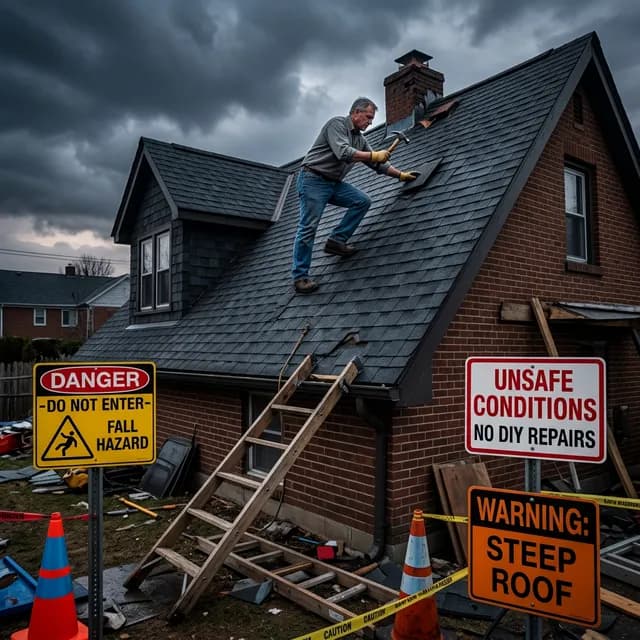
- Falls from roofs are the leading cause of construction-related fatalities in the U.S. — homeowners face the same gravity without the training or equipment.
- DIY roof repairs in Savannah's heat and humidity create additional hazards including heat stroke, slippery surfaces, and hidden structural damage.
- Improper repairs often void manufacturer warranties and can cause insurance claim denials.
- What looks like a simple patch job frequently masks deeper problems that only a professional inspection can identify.
The Appeal of DIY — And Why It's Dangerous
We get it. You're a capable homeowner. You've watched YouTube videos, and that leaking pipe boot or missing shingle looks like a weekend project. Individual store-bought materials can look inexpensive, but they do not represent the installed repair scope, which depends on access, compatible flashing, surrounding shingles, and any supported deck damage. Why pay a contractor for something that seems straightforward?
Because the risk-reward calculation on roofing is fundamentally different from painting a bathroom or replacing a faucet. The consequences of getting it wrong range from voided warranties and hidden water damage to traumatic injury and death. This isn't scare-tactic marketing — it's data-backed reality that every homeowner in Savannah, Pooler, Richmond Hill, and Tybee Island should understand before climbing a ladder.
Danger #1: Falls Kill and Maim
The Bureau of Labor Statistics consistently ranks falls from roofs among the top causes of workplace fatalities in America. And those statistics are for trained professionals who use harnesses, anchor points, and toe boards every day. Homeowners have none of that equipment and none of that muscle memory for moving safely on a sloped surface.
The average single-story home in Savannah's suburbs puts you 12–15 feet above ground. Two-story homes push that to 20–25 feet. A fall from even one story frequently results in broken bones, spinal injuries, and traumatic brain injuries. The combination of Savannah's high humidity (dew on shingles in the early morning), afternoon thunderstorms that arrive without warning, and shingle surfaces that get dangerously slippery when wet creates conditions where even careful footing is unreliable.
Savannah-Specific Hazards
- Algae and moss — black algae streaks (Gloeocapsa magma) on shingles are extremely slippery when damp
- Live oak debris — leaves and small branches accumulate in valleys, hiding soft spots in the decking
- Extreme heat — roof surface temperatures exceed 150°F in summer, causing dizziness and heat exhaustion within minutes
- Sudden storms — Savannah's summer thunderstorms can move in within 15–20 minutes, turning a dry roof into an ice rink
Danger #2: You'll Likely Make the Problem Worse
Roofing looks simple from the ground. Shingles overlap. Water runs downhill. How hard can it be? The truth is that a roofing system is an engineered assembly where every component's placement, fastening pattern, and overlap dimension is specified for a reason.
Common DIY Mistakes We Fix Regularly
- Caulk and sealant abuse — smearing roofing cement or silicone caulk over a leak source seals moisture IN rather than keeping it out, accelerating rot beneath
- Wrong nail placement — shingle nails placed too high miss the nailing strip, and shingles blow off in the next storm; nails too low crack the shingle below
- Improper shingle weaving in valleys — valleys require specific cutting and layering techniques; wrong execution creates a water dam that channels rain under the shingles
- Stepping on and breaking field shingles — walking on a hot roof cracks granules loose and weakens the seal strips; professionals know where and how to step
- Mismatched shingles — different production runs have different color tones; a patch that doesn't match reduces curb appeal and home value
- Ignoring the underlayment — replacing a shingle without checking the underlayment and decking beneath leaves the real problem untreated
We see these DIY repairs during professional inspections multiple times every month. In nearly every case, the homeowner spent money on materials and significant time on the repair, only to need a professional to undo the DIY work and perform the correct fix. The total cost ends up being more than if they'd called a contractor first.
Danger #3: Voided Warranties
Shingle manufacturers like GAF, Atlas, CertainTeed, and Owens Corning are explicit: their warranties require installation and repair by certified contractors. The moment you drive a nail into your own roof, you've potentially voided coverage worth $10,000–$25,000 or more. The manufacturer's logic is simple — they can't guarantee their product's performance if an untrained person modifies the installation.
This isn't hypothetical. When you file a warranty claim years later for a legitimate manufacturing defect, the adjuster inspects the roof. If they find evidence of non-professional work — wrong nail patterns, improper sealant application, misaligned replacement shingles — the claim is denied regardless of whether your repair caused the current issue.
Danger #4: Insurance Complications
Your homeowner's insurance policy covers sudden, accidental damage — storm damage, fallen trees, hail. It does not cover damage caused by improper maintenance or amateur repair. When a DIY patch fails during the next tropical storm and water floods your attic, the adjuster will examine the failed repair. If it's determined that amateur workmanship contributed to the damage, your claim can be reduced or denied entirely.
For professional work, confirm the business or trade credentials required by the project and jurisdiction, current insurance, and written workmanship terms. Insurance and warranties do not automatically cover every correction; the policy or written warranty terms, exclusions, and responsible party determine the outcome. DIY-related damage may also be excluded under a homeowner policy.
Danger #5: Missing the Real Problem
The most insidious danger of DIY roof repair is treating symptoms instead of causes. That ceiling stain might look like it's directly below a damaged shingle, but water on a roof travels. The entry point could be 10, 20, or even 30 feet away from where the stain appears on your ceiling. A professional knows to trace the water path from the visible stain back through the attic to the actual penetration point.
Common misdiagnosed issues include:
- Replacing a shingle when the actual leak is at a flashing joint 15 feet upslope
- Caulking a pipe boot when the real issue is a cracked vent collar inside the attic
- Patching a visible hole when the decking beneath a large area is rotten and needs replacement
- Addressing a roof leak when the actual water intrusion is condensation from inadequate ventilation
What You Can Safely Do Yourself
We're not saying you should never look at your roof. There are safe, valuable actions homeowners can take:
- Ground-level visual inspection — walk around your home and look for missing shingles, sagging, or debris from the ground using binoculars
- Gutter cleaning — keep gutters and downspouts clear to prevent water backup (use a stable ladder, never climb on the roof for this)
- Attic inspection — check for daylight through the decking, water stains, or musty odors from inside the attic without getting on the roof
- Document damage — after a storm, photograph any visible damage from the ground for insurance purposes
- Trim overhanging branches — keep tree limbs at least 6 feet from the roof surface
The Cost Comparison That Changes Minds
A professional roof repair for shingles, a pipe boot, or flashing should be priced from the documented scope. Access, pitch, material match, integration details, and concealed conditions can change the estimate, so request an itemized written quote rather than relying on a generic range.
A DIY attempt that goes wrong can result in: emergency room bills averaging $3,500 for fall injuries (before surgery), water damage remediation costing $5,000–$15,000, a voided manufacturer warranty worth $10,000+, or an insurance claim denial leaving you paying for an entire roof replacement out of pocket. The math is clear.
Leave It to the Professionals
Talya Roofing handles repairs of all sizes across Savannah, Pooler, Richmond Hill, and Tybee Island. Licensed, insured, and manufacturer-certified — we do it right the first time.
Schedule Your RepairOr call us: (912) 999-7989