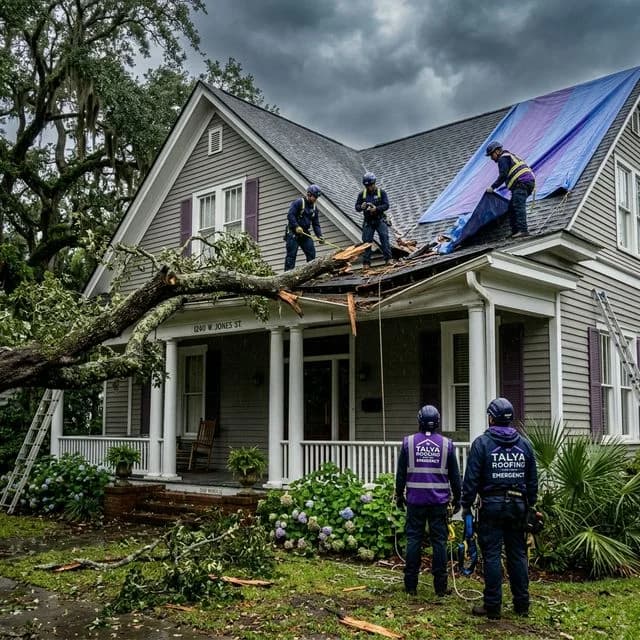

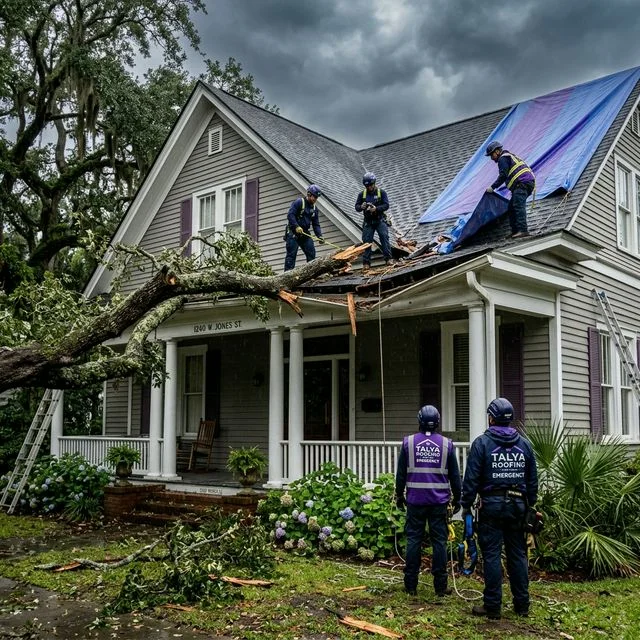
A Tree Fell On My Roof
Step-by-Step Emergency Protocol for Savannah Homeowners
Coastal Georgia is known for its beautiful, sprawling live oaks and towering Southern pines. But during hurricane season or severe summer thunderstorms, those beautiful trees can become devastating projectiles.
If a tree or large limb has crashed onto your roof, the sound is terrifying, and the immediate aftermath is chaotic. Here is the exact step-by-step protocol you need to follow to protect your family, minimize water damage, and navigate your insurance claim.
Step 1: Secure Your Family and Assess the Situation
Your roof can be replaced; your life cannot. The moment a tree impacts your home, your primary concern is life safety.
- • Evacuate the impact zone: If a tree has punctured the roof or ceiling, structural collapse is possible. Get everyone out of that room and ideally out of that wing of the house.
- • Watch for live wires: Trees frequently take down power lines as they fall. Do not go outside in the dark. If you smell smoke or see sparks, evacuate the home immediately and call 911.
- • Call a roofing contractor immediately: Do not wait for normal business hours. Reputable local companies like Talya Roofing have 24/7 emergency response teams.
Step 2: Emergency Tarping to Prevent Water Damage
When a tree pierces your roof deck, you now have an open hole right into your attic or living room—often while it is still raining heavily. You must quickly establish a "dry-in" to prevent catastrophic interior water damage.
Do NOT go on the roof
A wet, storm-damaged roof covered in foliage is incredibly slick. Furthermore, the structural trusses beneath the shingles may be broken. Walking on a damaged roof is a recipe for falling through.
Professional "Dry-In"
Our emergency response team will arrive with heavy-duty commercial tarps. If the tree is small enough, we will safely remove it, secure the tarp using furring strips, and ensure your interior is protected from further rain.
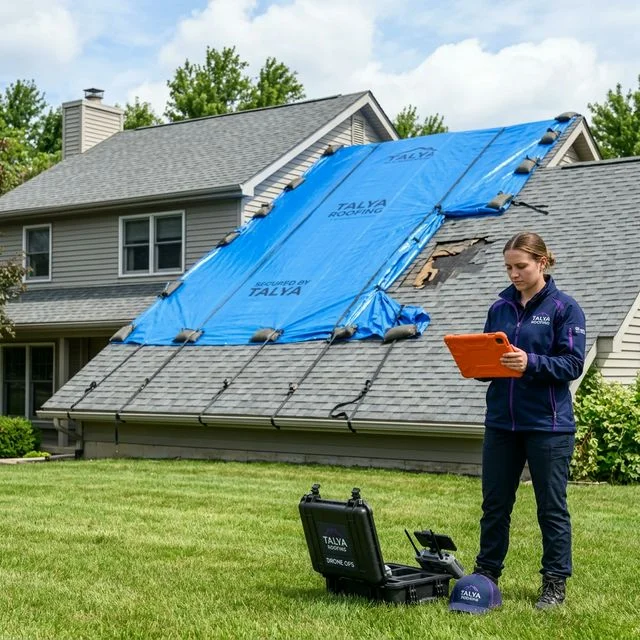
Emergency tarping is the critical first step to stopping water flow before the actual rebuilding begins.
Step 3: Document Everything for Your Insurance Claim
Before any major debris is hauled away, you (or your roofing contractor) must document the scene thoroughly for your homeowner's insurance adjuster. Take photos of:
- The tree resting on the house from multiple exterior angles.
- Interior damage (cracked drywall, water stains, broken trusses).
- Damage to personal property inside the home.
Step 4: Coordinating Tree Removal and Roof Repair
Here is the logistical hurdle most homeowners face: Tree removal companies don't fix roofs, and roofers don't cut down 80-foot pines.
Once a crane or arborist removes the heavy timber, your roof is completely exposed. If a roofer isn't scheduled to tarp the house the exact same day, the next rainstorm will flood your home. At Talya Roofing, we actively coordinate with local tree removal services to ensure seamless handoffs. As soon as their crane leaves, our tarping crew takes over.
The Talya Roofing Emergency Response
If a tree has fallen on your Savannah-area home, do not wait. We offer emergency tarping, structural assessment, and seamless insurance claim assistance.
Insurance and Liability: Who Pays When Trees Fall?
In Georgia, the responsibility for tree damage depends on the tree's health before it fell, not whose property it stood on. This is a critical distinction that many Savannah homeowners misunderstand.
Liability Quick Reference
| Scenario | Who Pays | Key Factor |
|---|---|---|
| Healthy neighbor's tree falls in storm | Your homeowner's insurance | Act of nature — no negligence |
| Dead/diseased neighbor's tree falls | Neighbor's liability insurance | Negligence — knew tree was hazardous |
| Your own tree falls on your roof | Your homeowner's insurance | Covered under dwelling protection |
| City tree falls on your roof | City of Savannah (if negligent) | Must prove city knew of hazard |
Document the tree's condition immediately after the fall. Photograph the root ball, trunk, and any visible rot, insect damage, or dead wood. If the tree was dead or obviously diseased before falling, this evidence supports a negligence claim against the tree's owner.
Emergency Steps After Tree Impact
Time is critical after a tree falls on your Savannah home. First, ensure everyone is safe and evacuate if structural integrity is uncertain. Call 911 if power lines are involved — never approach a downed tree near power lines. Once safety is confirmed, photograph everything before touching anything. Call your insurance company, then a licensed tree removal service and roofing contractor. Tree removal should happen first, but the roofer should inspect before and after removal to document the full extent of damage while the tree's impact pattern is still visible.