
My Neighbor's Tree Damaged My Roof. Who Pays?
Navigating Georgia Liability Law and Insurance Claims
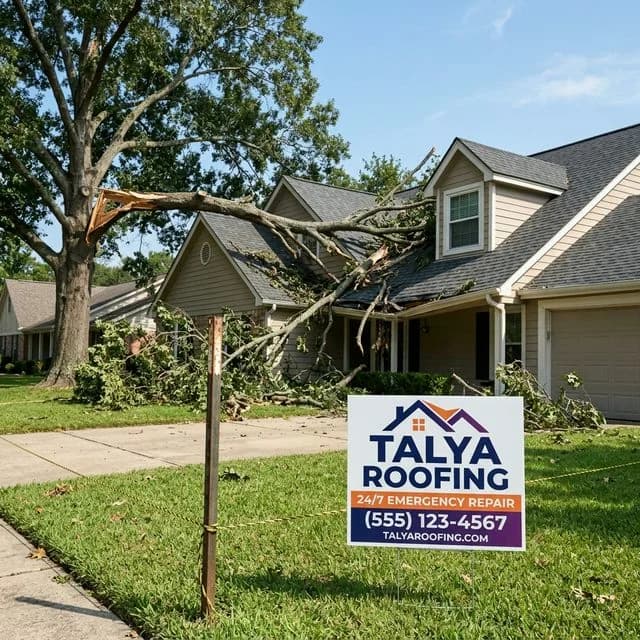
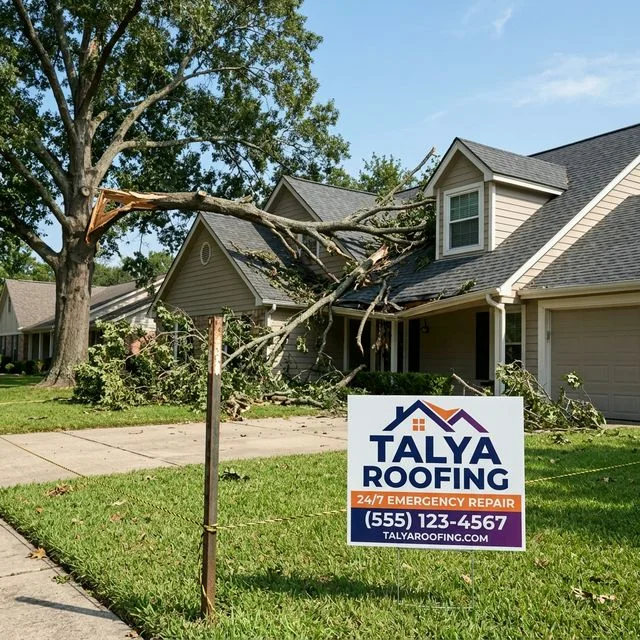
It is the classic neighborhood nightmare sequence: A violent summer squall blows through Savannah, you hear a massive crash, and you look outside to see a 50-foot pine tree resting inside your master bedroom. But there is a catch—the tree was planted exactly two feet over the property line in your neighbor's yard.
So, who is responsible for paying the $15,000 roof replacement bill? Is it your neighbor, your neighbor's insurance, or you? The legal answer almost always surprises Georgia homeowners.
The Shocking Truth About 'Act of God' Clauses
Under standard Georgia property law and homeowners insurance policies, if a perfectly healthy tree is blown over by high winds, a hurricane, or a lightning strike, it is considered an "Act of God."
In an "Act of God" scenario, whoever owns the property where the tree lands is responsible for the damages—not where the tree was planted.
This means if your neighbor's healthy tree falls on your roof during a storm, your homeowners insurance policy is responsible for paying for the tree removal from the structure and the subsequent roof replacement. You will also be responsible for paying your own deductible.
When Is the Neighbor Actually Liable?
There is one major exception to the "Act of God" rule: Negligence.
If the tree was visibly dead, diseased, leaning dangerously, or rotting before the storm, and your neighbor knew (or reasonably should have known) about the hazard but failed to remove it, they can be held liable.
Proving Negligence requires documentation:
- Did you previously send your neighbor a certified letter or email asking them to address the dead tree?
- Did the city or a homeowner's association cite them for a hazardous tree?
- Did an arborist visually confirm the tree was long dead prior to the storm?
Subrogation, liability, coverage, and any deductible recovery depend on the facts, policy terms, applicable law, and carrier decisions. Ask your insurer or attorney how those issues apply to your situation. Talya Roofing can document roof conditions and provide an itemized construction estimate, but does not decide liability, coverage, or payment.
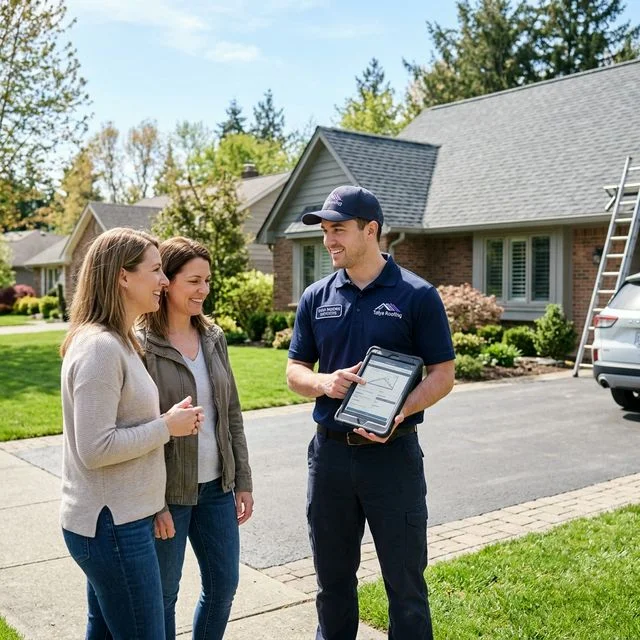
Navigating a cross-property insurance claim requires clear communication and professional documentation.
How to File the Claim Without Ruining the Relationship
Property damage often creates bitter feuds between neighbors. At Talya Roofing, we highly recommend keeping emotions out of it. Follow this professional order of operations:
Secure your home first: Call an emergency roofing company (like Talya Roofing) immediately to tarp the impact zone. Preventing secondary interior water damage is critical.
Talk to the neighbor calmly: Walk over and explain the situation. Trade insurance information politely. Do not demand they pay your deductible on the spot; let the insurance adjusters sort out the liability.
Ask whether your roofer can attend the site meeting: A roofing contractor can explain visible construction conditions and an itemized repair estimate during an on-site adjuster meeting. The carrier and policy determine coverage and payment.
What if the Neighbor Tries to Remove the Tree Themselves?
Under no circumstances should you allow an uninsured neighbor with a chainsaw to climb onto your roof to remove the tree. If they fall, you could be liable for their medical bills, and if they cut the tree incorrectly, it could shift and cause thousands of dollars of extra structural damage to your home. Mandate that a crane or an insured, professional tree removal service handles the extraction.
Need Emergency Tree Tarping in Savannah?
If a neighbor's tree has breached your roof, call Talya Roofing immediately. We will dry-in your property and help you navigate the entire complex insurance process.
Preventing Future Tree Damage Issues
Georgia law allows property owners to trim branches that overhang their property line, up to the property boundary. Document the current state of any neighboring trees that concern you with dated photographs, and send a written notice to your neighbor if you observe dead limbs, leaning trunks, or signs of root disease — this creates the "notice" record needed to establish negligence if the tree later causes damage.
Emergency Response: What to Do in the First 24 Hours
If a neighbor's tree has just fallen on your roof:
We provide emergency tarping and assessments for tree-impact damage throughout the Savannah metro, scheduled according to weather, safe access, location, storm volume, and crew availability. See our emergency roof repair service and storm damage repair page for our response process.
Tree fell on your roof? Call (912) 999-7989 to check current emergency availability
We provide tarping, assessment, and damage documentation when conditions and scheduling allow. City of Savannah business licensed and insured.