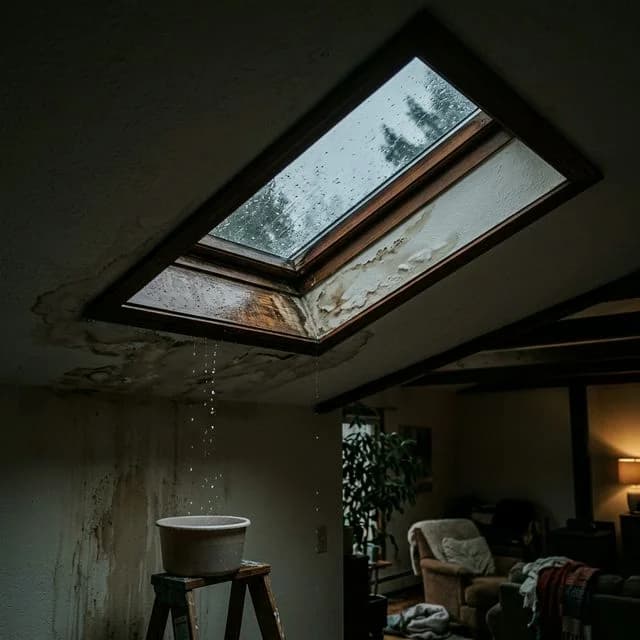

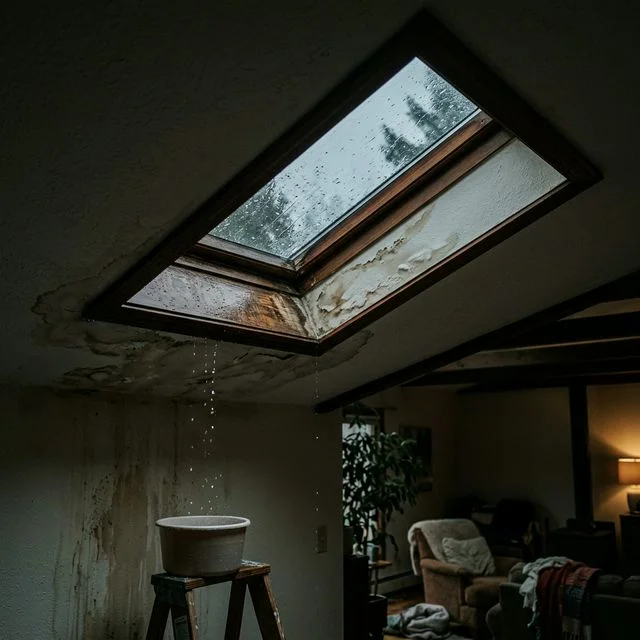
Here is a statistic that surprises most Savannah homeowners: roughly 95% of the "skylight leaks" we get called out to fix have nothing to do with the skylight glass or frame. The water is coming in around the skylight, through failed flashing, dried-out sealant, or improper installation from the start.
It's the Flashing, Not the Glass
A skylight is installed by cutting a rectangular hole in your roof deck and framing it with a "curb." The skylight unit sits on top. The critical waterproofing component is the step flashing and counter flashing system that weaves shingle material around the curb, channeling water around and over the skylight without allowing it to penetrate the seam.
Over time — and in Savannah's punishing cycle of 95°F summers and tropical downpours — the sealant at those seams dries out, cracks, and separates. Once that happens, every heavy rain sends a trickle of water down the inside of your drywall chase. By the time you see a brown ring on your ceiling, the damage is already significant.
Top Causes of Skylight Leaks in Savannah
-
1
Cracked or Dried-Out Flashing Sealant
The #1 culprit. Original sealant around the curb dries out after 8–12 years. Savannah's UV exposure accelerates this dramatically.
-
2
Improper Step Flashing Integration
Budget roofers sometimes skip individual step flashing pieces and use a single L-shaped piece. This fails under wind-driven rain because water can travel laterally under the metal.
-
3
Debris Dams on the Uphill Side
Pine needles, live oak leaves, and pollen pack up on the high side of the skylight curb, creating a dam that forces water underneath the shingles and into the flashing seam.
Condensation vs. An Actual Leak
Here is something worth knowing before you panic: not every drip from a skylight is a roof leak. Savannah's humidity regularly sits above 75%, and skylights are thermal weak points. When cold air-conditioned air inside the house meets the hot glass, condensation forms on the interior surface and drips onto your floor.
How can you tell the difference? A true roof leak stains the drywall around the skylight frame and gets worse during rain. Condensation drips from the glass itself and is worst on humid mornings with no rain at all.
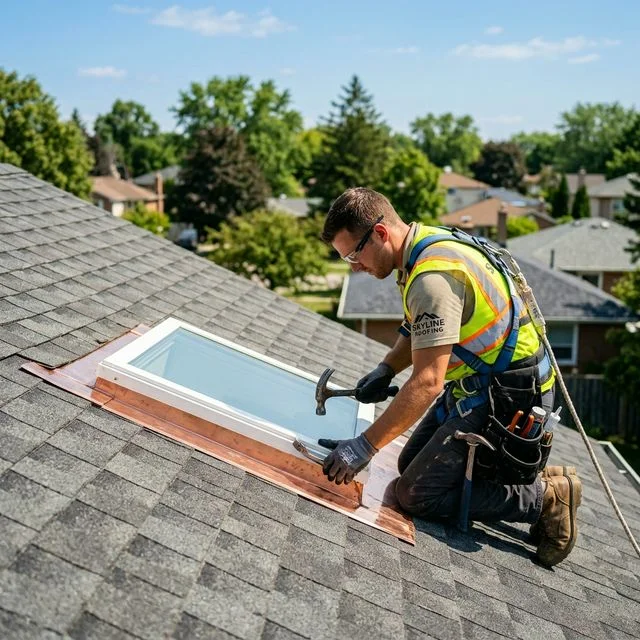
Cracked sealant and lifted step flashing around a skylight curb — the most common leak source we see on Savannah roofs.
Can a Leaking Skylight Be Repaired, or Does It Need Replacement?
It depends entirely on the age and condition of the unit. If the skylight itself is less than 15 years old and the glass seal is still intact (no fog between the panes), a full flashing rebuild is usually all you need. We remove the shingles surrounding the curb, strip the old sealant, install brand-new step and counter flashing with ice and water shield underlayment, and reshingle over it.
However, if the skylight is 20+ years old, the glass seal has failed (foggy between panes), or the frame is warped, we strongly recommend replacing the entire unit during a roof replacement. Installing a new skylight at the same time as a new roof costs significantly less than doing it as a standalone project later.
Talya Roofing's Skylight Repair Promise
We will never tell you to replace a perfectly good skylight just to sell a bigger job. Our interest is solving the leak — whether that takes $400 worth of flashing work or a full unit swap.
- ✓ Honest diagnosis: flashing repair vs. full replacement
- ✓ High-resolution drone photos of the leak source
- ✓ Manufacturer-spec Velux and Fakro installations
Stop the Drip Before It Destroys Your Ceiling
If your skylight leaks every time it rains in Savannah, the problem is almost certainly fixable. Let Talya Roofing diagnose it and give you an honest repair estimate.