Solar Attic Ventilation Options for Savannah Roofs
Attic heat and humidity can affect comfort and roof-system performance. A solar-powered attic fan may help when it is balanced with adequate intake ventilation. We confirm the product, quantity, installed price, backup-power needs, and warranty terms in your written proposal.
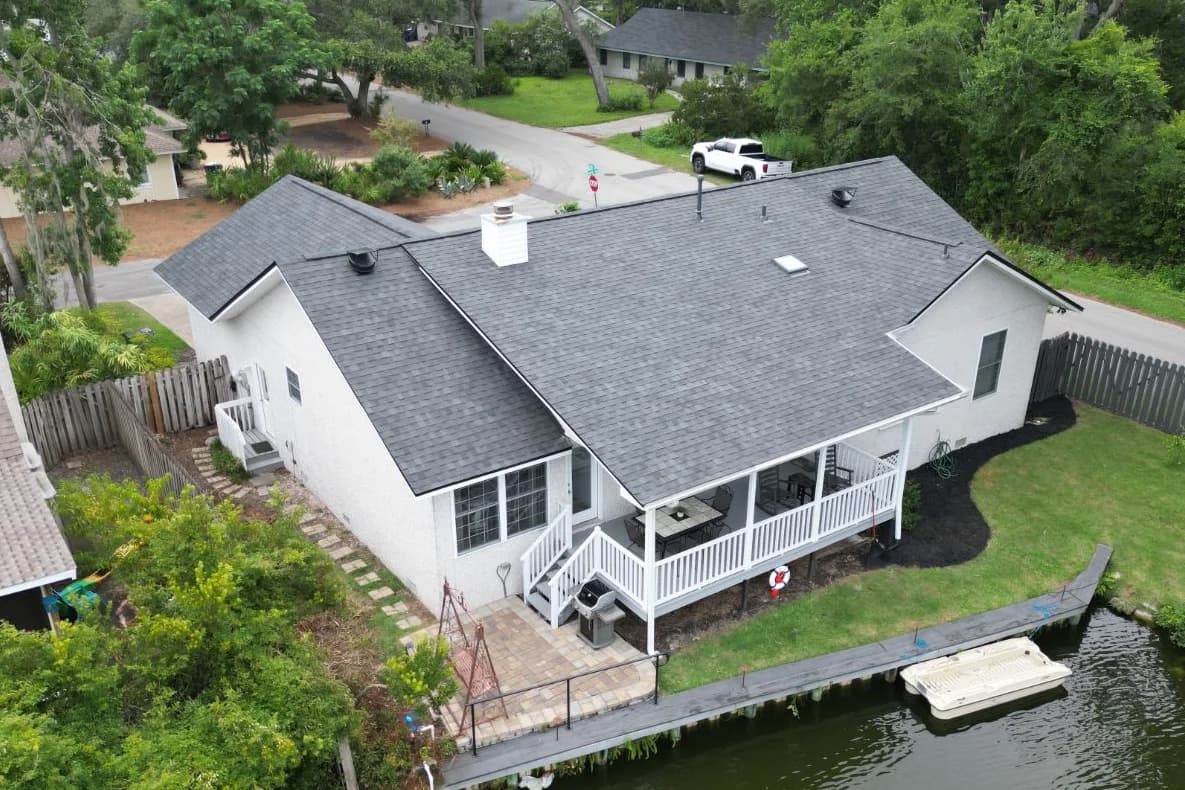
See How Attic Ventilation Fits the Roof System
In 45 seconds: how attic heat affects a roof system and how a solar attic fan may fit a balanced intake-and-exhaust ventilation plan.
- Actual temperature change depends on the home and weather
- Intake ventilation and insulation remain part of the design
- Product, quantity, price, and warranty are confirmed in writing
22 in. Solar Attic Fan
42W · 2,800 CFM · Weatherproof · 110V Smart Adapter Included
The illustrated solar-powered attic fan is marketed for hot, humid conditions. Its 42W panel and up-to-2,800-CFM airflow are manufacturer specifications, not guaranteed installed performance. If a 110V backup adapter is proposed, its controls and electricity use will be documented in writing.
Design Before Choosing Quantity
A second fan is not automatically better. We consider attic volume, available intake, existing exhaust, roof geometry, and the selected product before quoting a quantity.
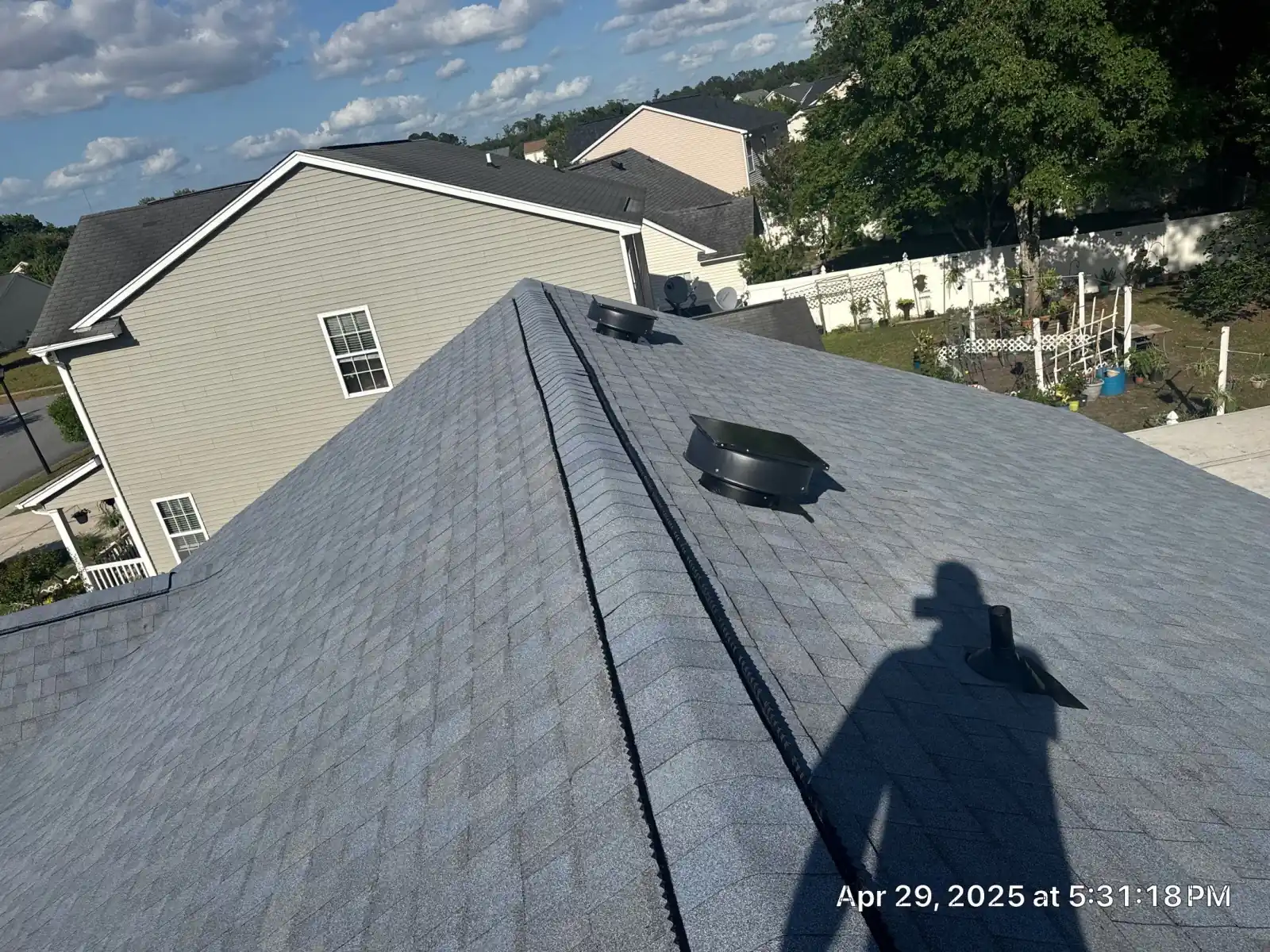
Real Install · Savannah GA · Apr 2025
Solar Attic Fan — Available as a Quoted Upgrade
A solar attic fan may be added when it is compatible with the roof system and balanced with sufficient intake ventilation. It is not included automatically with every roof.
The written proposal identifies the selected model, quantity, installed price, backup-power requirements, and product-specific warranty terms.
Why It Matters for Your Home
Proper attic ventilation is the most overlooked factor in roof longevity — and the most impactful for your energy bills.
How the Solar Attic Fan Works
Sun Powers the Fan
For the illustrated model, a 42W built-in solar panel powers the fan when sunlight and system conditions allow.
Hot Air Gets Pulled Out
Powered exhaust draws attic air through the roof vent; actual airflow depends on the installed system and available intake.
Cool Air Flows In
Fresh air enters through soffit vents, creating a continuous circulation loop.
Optional Backup Power
A compatible 110V backup adapter may be quoted when requested; its controls and electricity use depend on the selected model.
What Comes In the Box
Components vary by the model quoted for your project. These are the parts shown in the illustrated system; your written proposal controls the actual scope.
42W MPPT Solar Panel
High-efficiency panel with multiple adjustable mounting angles to maximize sun exposure year-round. Weatherproof for hot, humid coastal conditions.
Brushless DC Motor Fan
Brushless motor delivers up to 2,800 CFM airflow across 3 speeds at just 60 dB — quieter than a normal conversation. Runs at 1,500 RPM with minimal vibration.
110V Smart Adapter
A compatible backup adapter may supplement solar input under configured conditions. Confirm controls, wiring requirements, and electricity use for the selected model.
Temperature + Humidity Sensors
Built-in temperature and humidity sensors hold steady attic conditions year-round — plus a smoke-detection function that shuts the fan off automatically if smoke is detected.
Remote Control (~32 ft range)
Wireless remote lets you control the fan from inside your home. Turn it on/off or adjust settings without going into the attic.
Insect Screen + Hardware
The illustrated system shows an insect screen and mounting hardware. Included parts and certification markings must be verified for the model named in the proposal.
How Attic Conditions Interact With HVAC
Attic temperature, insulation, air sealing, duct location, intake ventilation, and HVAC efficiency all affect comfort and energy use. A fan alone does not guarantee a fixed result.
Conditions to Review First
- HeatMeasure attic conditions instead of assuming a universal temperature
- DuctsIdentify whether ducts and equipment are inside the attic
- IntakeConfirm enough net-free intake area for powered exhaust
- Air sealCheck pathways that may pull conditioned air into the attic
- ExistingAccount for ridge, gable, turbine, and other exhaust vents
Questions for the Proposed Design
- ModelWhich product, controls, and manufacturer ratings are proposed?
- BalanceHow will intake and exhaust be balanced for this attic?
- BackupWill backup power be used, and what electricity does it require?
- WarrantyHow does the installation affect roof and product warranty terms?
- ResultsWhat can be measured after installation without promising savings?
Compressor Cycling Is Property-Specific
Attic conditions can influence HVAC load, but thermostat settings, insulation, duct leakage, equipment sizing, and outdoor weather also affect cycling. A solar fan does not guarantee fewer starts or longer equipment life.
Ductwork Location Matters
Ducts located in an attic can gain heat when insulation or sealing is inadequate. Ventilation may be one consideration, but duct sealing, insulation, and HVAC evaluation remain separate parts of the solution.
Verify Results, Don't Assume
If performance matters to the decision, establish a baseline and monitor attic conditions after installation. Talya Roofing does not promise a fixed utility reduction, HVAC-life extension, or roof-life extension.
What to Verify Before Choosing a Solar Attic Fan
A Greener Savannah
Savannah sees over 215 sunny days per year and average summer temperatures in the high 90s. Unventilated attics become heat traps that push AC systems to work harder, increasing energy consumption and carbon output.
Solar-powered exhaust may reduce reliance on grid power while sunlight is available, but actual household energy use depends on the selected fan, backup controls, attic conditions, and HVAC system.
- Solar operation while sufficient sunlight is available
- Backup-power electricity use disclosed when applicable
- Performance depends on balanced intake and exhaust
- No fixed utility savings or roof-life extension promised
Property-Specific Design Inputs
Frequently Asked Questions
What is a Solar Attic Fan?
Is a Solar Attic Fan included with every installation?
How much energy can a Solar Attic Fan save?
Does it work on cloudy days?
Can I add a second Solar Attic Fan for a larger attic?
Why is Talya Roofing doing this initiative?
Ready for a Greener, Cooler Home?
Request a no-obligation project estimate and ask whether a solar attic fan fits your roof and ventilation design. It is not included automatically; the selected product, installed price, and terms appear in the written proposal.