
Key Takeaways
- Clogged or damaged gutters are the leading cause of preventable water damage to Savannah roofs and foundations
- Savannah receives 49+ inches of annual rainfall — every inch of that water must be managed by your gutter system
- Gutter overflow causes fascia rot, soffit damage, foundation erosion, and landscape destruction within a single storm season
- Seamless aluminum gutters with proper sizing and slope outperform sectional systems in our high-volume rainfall climate
- Bi-annual gutter maintenance (spring and fall) prevents 90% of gutter-related roof and structural damage
The Connection Between Gutters and Roof Health
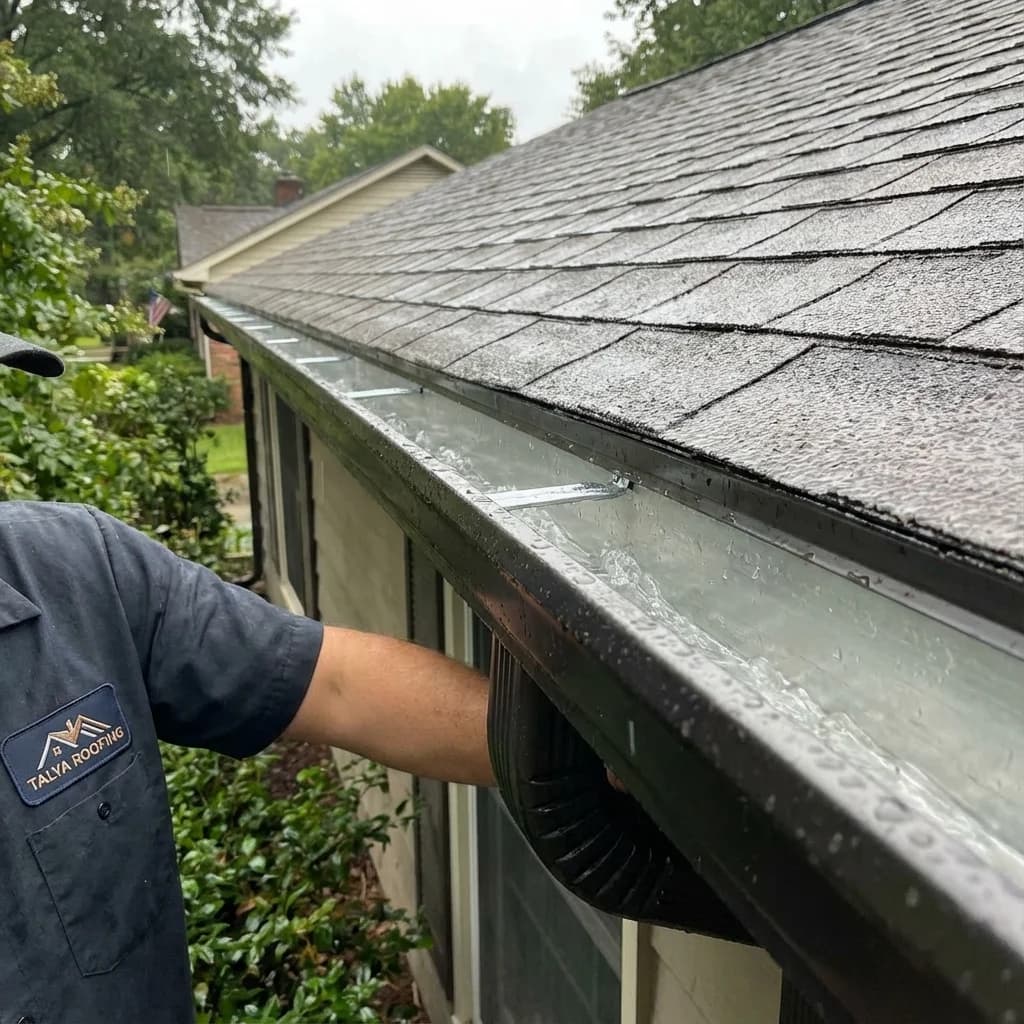
Gutters aren't just channels that carry rainwater away from your house. They're an integral part of your roofing system's ability to protect your home from water damage. When gutters fail — whether from clogs, damage, or improper installation — the consequences reach far beyond the gutter itself. Water backs up against the roof edge, infiltrates behind fascia boards, saturates soffit material, and cascades down exterior walls into the foundation.
In Savannah, where annual rainfall averages over 49 inches and summer thunderstorms can dump 2–3 inches in a single hour, the margin for gutter system failure is extremely narrow. Homes throughout Pooler, Richmond Hill, and Tybee Island depend on properly functioning gutters during every rainstorm.
The Most Common Gutter Problems in Savannah
Clogging from Debris
Savannah's legendary live oaks drop leaves, small branches, Spanish moss, and catkins year-round. Pine needles from the region's abundant loblolly and slash pines are particularly problematic — they compact inside gutters and create dense clogs that water can't penetrate. Spring pollen season adds another layer of material that combines with moisture to form a stubborn sludge. Without regular cleaning, most Savannah gutters will clog within 3–6 months.
Improper Slope
Gutters must maintain a consistent slope toward downspouts — typically 1/4 inch per 10 feet of run. Settlement, fascia board warping, or poor initial installation can create flat spots or reverse slopes where water pools instead of flowing. Standing water breeds mosquitoes, accelerates corrosion, and adds weight that further pulls gutters out of alignment.
Undersized Systems
Many older Savannah homes were built with standard 5-inch K-style gutters that struggle to handle our intense rainfall rates. During a 2-inch-per-hour downpour, a standard 5-inch gutter on a moderate roof can overflow within minutes. Upgrading to 6-inch gutters with oversized 3×4 downspouts makes a dramatic difference in water handling capacity.
Separation and Sagging
The weight of water-saturated debris, combined with Savannah's heat-driven expansion and contraction cycles, gradually pulls gutters away from fascia boards. Once separation begins, water flows behind the gutter and directly against the fascia — the exact condition gutters are designed to prevent. Sagging creates additional low spots that compound the clogging problem.
Corrosion and Rust
Galvanized steel gutters — still found on many older homes in Savannah's historic districts — eventually lose their protective zinc coating and corrode. Salt air exposure near Tybee Island and Wilmington Island accelerates this process. Pinhole leaks develop along seams and joints, dripping water onto walkways and against the building envelope at multiple points.
How Gutter Failure Damages Your Roof
The chain reaction from gutter failure to roof damage follows a predictable pattern that plays out across Savannah neighborhoods every storm season:
- Fascia board saturation: When gutters overflow backward, the fascia board absorbs water continuously. Wood fascia rots within 1–2 seasons of chronic exposure. This compromises the structural mounting point for both gutters and the lower course of roof sheathing.
- Drip edge bypass: Water flowing behind gutters bypasses the drip edge — the metal strip designed to direct water into the gutter. Without this critical path, water wicks upward under the starter shingle course through capillary action.
- Soffit deterioration: Overflowing water splashes against and saturates soffit panels. Vented soffit becomes blocked, compromising attic ventilation. Solid soffit absorbs moisture and becomes a pathway for water intrusion into the attic.
- Foundation undermining: Water that misses the gutter entirely erodes soil at the foundation perimeter. Over time, this can cause settlement, cracking, and structural shifting that affects the entire house — including the roof framing above.
Best Gutter Solutions for Savannah Homes
- Seamless aluminum gutters: Custom-fabricated on-site to the exact measurements of your home, eliminating joints where leaks develop. Available in 5-inch (standard) and 6-inch (recommended for Savannah's rainfall) profiles. Aluminum won't rust and withstands our salt air environment.
- Gutter guards: Surface-tension, micro-mesh, or screen-type guards significantly reduce debris entry. No system eliminates all maintenance, but quality guards can extend cleaning intervals from quarterly to annually in most Savannah neighborhoods.
- Oversized downspouts: Upgrading from 2×3 to 3×4 downspouts increases drainage capacity by roughly 50%. For homes with large roof areas or steep pitches, this upgrade is essential for handling peak flow rates.
- Underground drainage: Connecting downspouts to buried drain lines that discharge well away from the foundation provides the most complete water management. Particularly important for properties in Savannah's lower-lying areas where surface drainage is slow.
Maintenance Schedule for Savannah's Climate
Given our year-round foliage and heavy rainfall, Savannah gutters demand more frequent attention than most national maintenance guides suggest:
- Spring (March–April): Clean accumulated winter debris and pollen buildup. Inspect for damage from any winter storms. Verify all downspouts are flowing freely before summer rain season.
- Fall (November): Clear leaf accumulation after the primary drop season. Check gutter slope and reattach any sections that have pulled away from fascia.
- After major storms: Inspect gutters following any tropical weather event or severe thunderstorm. Wind-driven debris can clog even well-maintained systems in a single event.
- Year-round spot checks: During heavy rain, visually check gutters from ground level. Overflow at any point indicates a clog or capacity problem that needs prompt attention.
When Gutter Problems Signal Bigger Roof Issues
Sometimes what appears to be a gutter problem is actually a symptom of a roof issue. Excessive granule accumulation in gutters indicates advanced shingle wear. Water flowing behind gutters despite proper installation may indicate flashing failure at the roof edge. Persistent overflow in a properly sized, clean gutter can signal an upstream roof drainage problem.
If you're experiencing repeated gutter issues that don't resolve with cleaning and basic maintenance, a comprehensive roof inspection may reveal the underlying cause.
Protect Your Home from Water Damage
Talya Roofing installs and services gutter systems throughout Savannah, Pooler, Richmond Hill, and Tybee Island. From seamless gutter installation to complete roof-edge water management, we ensure your home handles Savannah's rainfall safely. Contact us for a free assessment.