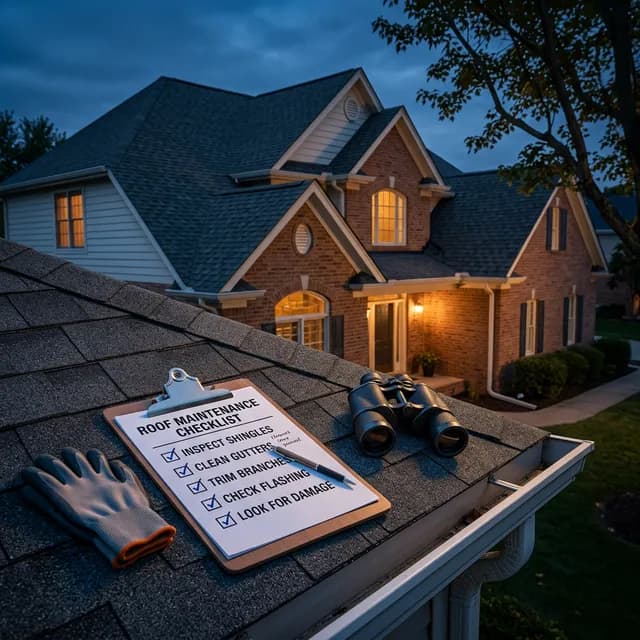

Key Takeaways
- Regular roof maintenance extends your roof's lifespan by 5–10 years and prevents costly emergency repairs.
- Savannah's humidity, storms, and live oak debris require a more aggressive maintenance schedule than inland areas.
- Most maintenance tasks can be observed from the ground or attic — you don't need to climb on the roof.
- A twice-yearly professional inspection catches problems invisible to untrained eyes and keeps your warranty intact.
Why Savannah Roofs Need More Maintenance
Living in Coastal Georgia means your roof faces challenges that homeowners in drier, cooler climates simply don't deal with. Savannah's climate is a triple threat: sustained humidity promotes biological growth, intense UV degrades materials faster, and severe weather events can cause sudden damage that compounds over time if left unaddressed. Homes in Pooler, Richmond Hill, and especially the barrier islands like Tybee face the additional stress of salt air corrosion.
This maintenance checklist is designed specifically for our climate. Follow it consistently and you'll maximize your roof's lifespan, maintain your warranty coverage, and avoid the kind of preventable failures that lead to expensive emergency repairs.
Spring Checklist (March–April)
Spring is your most important maintenance window. You're assessing winter weather damage and preparing for the intense summer storm season.
Exterior Ground-Level Inspection
- Walk the perimeter — look for shingles on the ground or hanging from the eaves (blown off during winter storms)
- Sight the ridge line — stand across the street and check that it's straight; any dipping or waviness suggests structural issues
- Check the roof surface — binoculars help you spot missing, cracked, or curling shingles from the ground
- Inspect flashing — look for lifted, bent, or rusted flashing around chimneys, vents, and wall transitions
- Examine eaves and soffits — check for peeling paint, rot, animal entry holes, or wasp nests blocking soffit vents
- Inspect gutters — look for sagging sections, pulled-away hangers, or visible granule accumulation (granule loss indicates shingle aging)
Gutter and Drainage System
- Clean all gutters thoroughly — Savannah's live oaks, pine needles, and pollen create heavy debris loads through winter and spring
- Flush downspouts with a hose to confirm water flows freely
- Check that downspout extensions direct water at least 4 feet away from the foundation
- Repair any sagging gutter sections — standing water in gutters breeds mosquitoes and can back up under the drip edge
Attic Inspection
- Look for any daylight showing through the decking — indicates gaps or holes
- Check for water stains (dark spots or streaks) on the underside of the decking or rafters
- Smell for musty or mold odors — indicates persistent moisture
- Verify that soffit vents are not blocked by insulation or debris
- Confirm attic fans or ridge vents are functioning properly
Summer Maintenance (June–August)
Summer in Savannah is when your roof works hardest. Temperatures above 90°F bake the shingles, afternoon thunderstorms test every seal and flashing joint, and humidity never drops below 60%.
After Every Major Storm
- Walk the perimeter and check for debris impact, missing shingles, or displaced ridge caps
- Look for standing water that doesn't drain within 24 hours (indicates drainage blockage or flat spot)
- Check ceilings in every room for new water stains — even small ones
- Document any visible damage with photos immediately (for insurance purposes)
Monthly During Storm Season
- Check gutters for debris accumulation (summer storms push debris into downspouts)
- Trim any tree branches that have grown within 6 feet of the roof
- Inspect the attic during a heavy rain to check for active leaks
Fall Checklist (October–November)
Fall is your preparation window for winter. While Savannah winters are mild, cold fronts and nor'easters can bring significant wind and rain.
Gutter and Drainage Deep Clean
- Perform a thorough gutter cleaning after leaf drop — this is the heaviest debris period for live oaks and deciduous trees
- Install or replace gutter guards if persistent debris is an issue
- Verify all downspouts are clear and extensions are properly directed
Roof Surface
- Remove any accumulated leaf debris from valleys and behind penetrations (leaves hold moisture against shingles, accelerating algae and rot)
- Check for moss or heavy algae growth that may have developed over the summer — this is particularly common on north-facing slopes
- Inspect caulking and sealant around skylights, vents, and chimney flashing for cracking or separation
Schedule Your Annual Professional Inspection
Fall is the ideal time for a professional roof inspection. A trained inspector catches issues invisible to homeowners — deteriorating pipe boot seals, loose flashing that hasn't leaked yet, early decking soft spots, and ventilation deficiencies. The inspection also creates documentation that protects your warranty and supports insurance claims if needed.
Winter Checklist (December–February)
- After any freeze event (rare but not impossible in Savannah), check for cracked caulking around penetrations
- Monitor the attic for condensation — cold nights combined with warm interior air can create moisture on the underside of the decking
- Check for displaced shingles after winter wind events (January and February bring the strongest cold-front winds)
- Verify gutter drainage is clear — standing water in gutters during cold snaps can damage gutter seams
Annual Professional Maintenance Tasks
These tasks should be performed by a roofing professional, not as DIY projects:
- Complete roof inspection — including attic assessment and documentation
- Pipe boot assessment — inspect accessible collars, base flashing, surrounding shingles, and evidence of water entry; quote replacement after the supported scope is documented
- Flashing reseal — checking and resealing flashing at chimneys, walls, and complex transitions
- Caulking replacement — exterior sealants around skylights and penetrations degrade in Savannah's UV and should be refreshed every 5–7 years
- Algae treatment — professional low-pressure chemical wash if algae streaking is significant (never pressure wash shingles)
Stay Ahead of Roof Problems
Talya Roofing provides comprehensive roof inspections and maintenance services for homeowners across Savannah, Pooler, Richmond Hill, and Tybee Island. Catch small problems before they become big expenses.
Schedule Your InspectionOr call us: (912) 999-7989
Seasonal Maintenance Schedule for Savannah
Savannah's climate does not follow the same seasonal patterns as the rest of the country. Our maintenance schedule must account for hurricane season, extended heat waves, persistent humidity, and the unique debris load from live oaks and Spanish moss. Here is a month-by-month guide tailored to Chatham County conditions.
Spring (March–May): Pre-Storm Season Priority
Spring is the most critical maintenance window for Savannah homeowners. You are assessing any damage from winter cold fronts and preparing your roof for the June-November storm season.
- March: Schedule your annual professional roof inspection. Spring appointments fill fast — booking in early March ensures you are inspected before storm season begins.
- March-April: Complete all gutter cleaning. Live oaks drop their old leaves in March-April (not fall, unlike deciduous trees), creating the heaviest debris load of the year. Clogged gutters during a May thunderstorm can cause water backup under the drip edge.
- April-May: Address any maintenance items identified during the inspection: replace cracked pipe boots, reseal flashing, replace missing or damaged shingles. Every unrepaired vulnerability becomes a failure point in hurricane-force winds.
- May: Trim any tree branches within 10 feet of the roof surface. Savannah's live oaks grow aggressively in spring, and branches that were safe in December may be overhanging the roof by May.
Summer Storm Season (June–September): Active Monitoring
Summer is when your roof works hardest. Surface temperatures on dark shingles can reach 160-170°F, afternoon thunderstorms test every seal and joint, and humidity never drops below 60%.
- After every major storm: Walk the perimeter and check for debris, missing shingles, or displaced ridge caps. Check ceilings in every room for new water stains. Document any visible damage with photos immediately.
- Monthly: Check gutters for debris accumulation — summer storms wash leaves and twigs into downspouts. Clear any blockages promptly.
- Monthly: Inspect the attic during or immediately after a heavy rain event. Active leaks are easiest to trace when it is raining.
- As needed: If a tropical storm or hurricane passes through, follow the post-hurricane inspection checklist and contact a professional if you see any damage.
Fall (October–November): Post-Storm Assessment
Fall is your recovery and preparation window. Storm season is winding down, and you can assess cumulative wear from the summer.
- October: Schedule a post-storm-season inspection if your home experienced any significant weather events. This catches damage that may have been missed during the busy summer months.
- October-November: Perform a deep gutter cleaning after deciduous trees drop their leaves. This is the second-heaviest debris period after live oak leaf drop in spring.
- November: Inspect all caulking and sealant around skylights, vents, and chimney flashing. Summer UV exposure degrades sealants faster in Savannah than in cooler climates — replacement every 5-7 years is normal.
Winter (December–February): Minimal but Important
Savannah winters are mild compared to the rest of the country, but cold fronts and nor'easters bring wind and driving rain that stress your roof.
- After cold fronts: Check for displaced shingles. January and February bring the strongest cold-front winds, which can catch shingles with compromised seal strips.
- After rare freeze events: Check caulking around penetrations for cracking. Freeze-thaw cycling (rare but real in Savannah, especially in January) can crack rigid sealants.
- Monthly: Monitor gutters for proper drainage. Standing water in gutters during cold snaps can damage gutter seams and hangers.
DIY vs. Professional Maintenance
Not every maintenance task requires a professional, but some absolutely do. Knowing the difference saves money on routine tasks while ensuring critical work is done correctly and safely.
Safe for Homeowners (DIY)
- Ground-level visual inspection: Walk the perimeter of your home and visually inspect the roof from the ground using binoculars. Look for missing or damaged shingles, sagging gutters, and displaced flashing. This takes 15 minutes and should be done monthly during storm season.
- Gutter cleaning: If your gutters are accessible from a standard ladder and you are comfortable at that height, gutter cleaning is a reasonable DIY task. Wear gloves, use a gutter scoop, and flush downspouts with a hose to confirm flow. Clean at least twice per year — after spring live oak leaf drop and after fall deciduous leaf drop.
- Attic inspection: Check the attic during and after heavy rain for active leaks, moisture, daylight penetration, and mold. Use a flashlight and look at the underside of the decking, along rafters, and around any penetrations (vents, chimney chase). Do not step off the joists onto the drywall ceiling.
- Debris removal: Removing leaves and branches from valleys and behind dormers is safe if you can reach these areas without climbing on the roof. A leaf blower used from a ladder can clear many debris accumulation points without requiring you to walk on the roof surface.
- Downspout extension check: Verify that all downspout extensions direct water at least 4 feet away from the foundation. Reattach any that have shifted or been knocked loose by lawn equipment.
Requires a Professional
- Walking on the roof: Homeowners should not walk on their roof. Period. Aside from the fall risk, foot traffic can crack shingle seals, dislodge granules, and create damage that voids your manufacturer warranty. Professional roofers know where to step and use soft-soled shoes designed for shingle surfaces.
- Pipe boot replacement: Rubber pipe boots around plumbing vents can crack as UV exposure, heat, age, and weather cycles deteriorate the seal. Replacement may require removing surrounding shingles, installing a compatible flashing assembly, and re-shingling correctly to prevent leaks. Installed pricing is quoted after assessment because access, material match, surrounding shingles, and any supported deck damage can change the scope.
- Flashing repair or reseal: Chimney flashing, step flashing, and wall-to-roof transitions are the most leak-prone areas on any roof. Proper repair requires specific materials, techniques, and often partial shingle removal. DIY caulk applied over existing flashing is a temporary fix that usually makes the problem worse within a year.
- Algae or moss treatment: Savannah's humidity promotes algae and moss growth, especially on north-facing slopes. Professional soft-wash treatment using manufacturer-approved solutions is the only safe approach. Never pressure wash shingles — it strips granules and voids your warranty immediately.
- Ventilation assessment: Proper attic ventilation requires a calculated balance of intake (soffit vents) and exhaust (ridge vent, turbines, or powered fans). Inadequate ventilation — the number one controllable cause of premature roof failure in Savannah — requires professional diagnosis and correction.