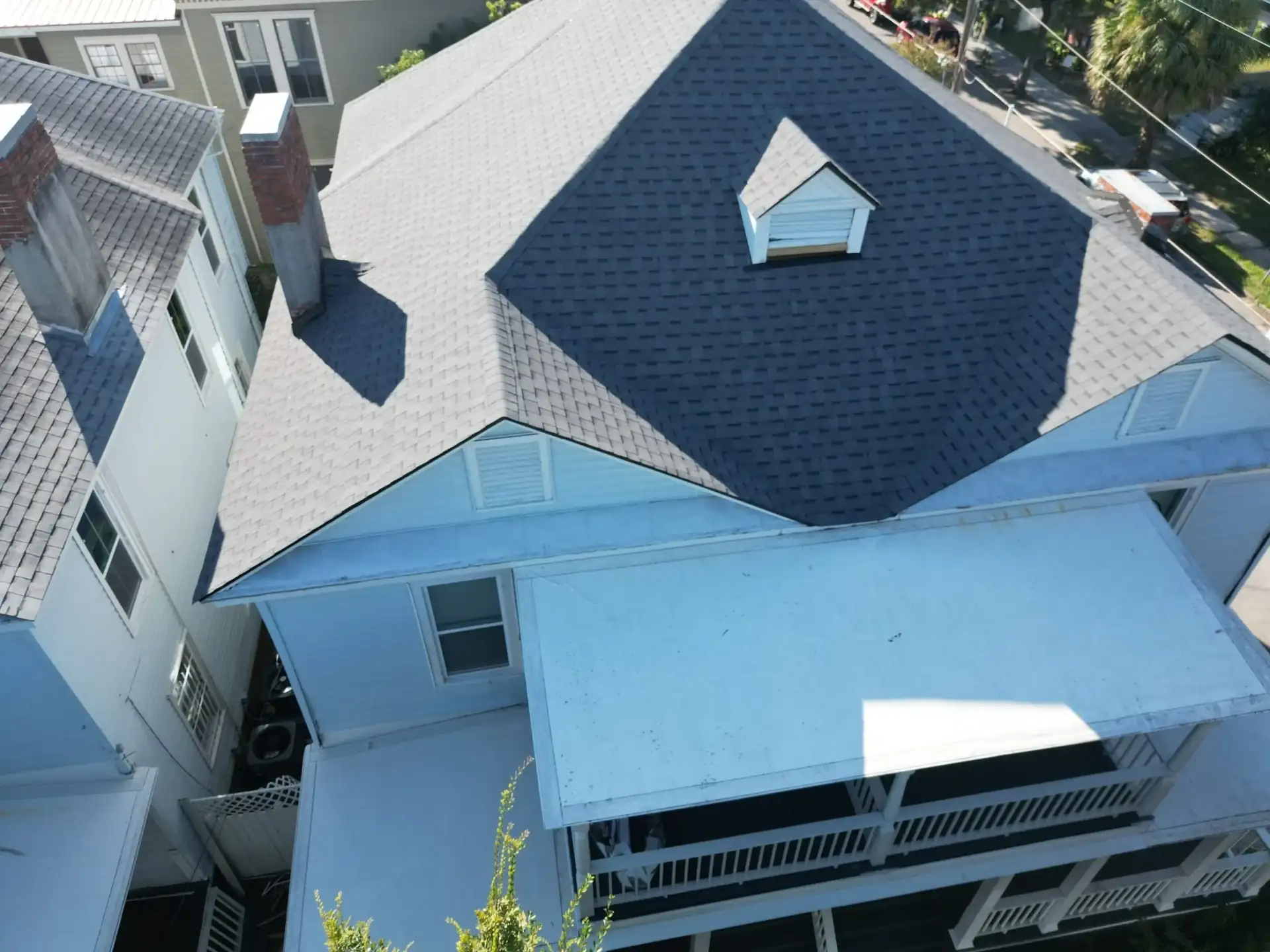

🔨 Partial vs Full Replacement
- ✓ Partial replacement makes sense when damage is localized and the rest of the roof is healthy
- ✓ Color matching older shingles is the biggest challenge — fading is unavoidable
- ✓ A partial replacement typically costs 30-50% less than a full replacement
- ✓ Some insurance claims only cover the damaged section, not the entire roof
- ✓ A reputable roofer will tell you when partial is a bad idea
Not every roof problem requires a complete tear-off and replacement. When damage is limited to a specific area — one slope hit by a fallen tree, a section of hail damage, or a localized leak — a partial roof replacement can be a smart, cost-effective solution. But there are times when partial replacement is a bad idea that costs you more in the long run.
This guide helps you understand when partial replacement makes financial sense, when it doesn't, and what to expect from the process.
When Partial Replacement Makes Sense
- Localized storm damage: A tree branch damages one slope, but the remaining 80% of the roof is in good condition
- Targeted repair area: A specific section has developed leaks due to flashing failure or localized wear
- Addition or modification: A new addition, dormer, or skylight requires reworking one section of the roof
- Budget constraints: A partial replacement now can buy you 5-10 more years on the healthy sections while you budget for a full replacement
- Insurance limitation: Your insurance claim only covers the damaged section, and the remainder does not warrant out-of-pocket replacement
When Partial Replacement Is a Bad Idea
- The roof is at end-of-life: If the existing shingles are 20+ years old and showing widespread wear, replacing one section means you will be back to replace the rest within a few years
- Color matching is important: New shingles never match aged shingles perfectly. If visual consistency matters (street-facing slopes, high-visibility areas), a partial replacement will always look like a patch
- Multiple problem areas: If the inspection reveals issues across the roof — widespread granule loss, multiple soft spots, multiple leak points — a full replacement is more cost-effective than multiple partial repairs
- Insurance is covering it: If your insurance company approves a full replacement, do not opt for a partial just to save on the deductible
The Partial Replacement Process
- Full roof inspection: We inspect the entire roof, not just the damaged area, to confirm that partial replacement is the right approach
- Shingle matching: We source the closest available match from Atlas, GAF, or CertainTeed to minimize visual contrast
- Tear-off the damaged section: Remove old shingles, inspect the decking for damage, replace any rotted wood
- Install new underlayment and shingles: Proper integration with the existing roof surface is critical
- Tie-in the new section: The transition line where new meets old must be flashed and sealed to prevent future leaks
Costs
Partial roof replacement in Savannah typically costs 30-50% less than a full replacement, depending on the section size. However, you should factor in the color mismatch, the shorter remaining lifespan of the untouched sections, and the possibility of needing additional work within 5-10 years.
We provide honest assessments. If a partial replacement does not make financial sense for your situation, we will tell you upfront and explain why, with numbers to back it up.
Not Sure If You Need a Full or Partial Replacement?
Request a complimentary repair-or-replacement project assessment and estimate. A written homeowner condition report is a separate $250 documented inspection.
When Partial Replacement Makes Sense in Savannah
Partial roof replacement is a viable option when damage is isolated to one section — typically less than 30% of the total roof area. Common scenarios in Savannah include tree limb impact on a single slope, localized storm damage to one face of the roof, or an addition or dormer that needs reroofing while the main roof remains sound.
The key consideration for Savannah homeowners is shingle matching. If your existing shingles are more than 5 years old, the new section will likely differ in color due to UV weathering on the existing shingles. This color mismatch is more visible on south-facing slopes that receive the most sun exposure. Using the same manufacturer, product line, and color code minimizes the difference, but some variation is inevitable.
Cost-Benefit Analysis: Partial vs Full
| Factor | Partial (30% area) | Full Replacement |
|---|---|---|
| Material cost | $2,500-$5,000 | $9,000-$16,000 |
| New warranty coverage | Repaired section only | Entire roof |
| Resale impact | Minimal improvement | Major value boost |
| Insurance satisfaction | May not resolve non-renewal | Resets the clock |
Matching Challenges and Solutions
The biggest aesthetic concern with partial replacement is shingle color matching. After even 3-5 years of Savannah sun exposure, existing shingles will have faded and weathered, making new shingles of the same color code appear noticeably darker. Professional roofers mitigate this by sourcing shingles from the same manufacturing lot when possible, selecting from the less-visible rear slopes for partial replacement locations, and recommending full-slope replacement rather than mid-slope patches when aesthetics matter.
For Savannah homes where the partial replacement is on a street-facing slope, replacing the entire slope (rather than just the damaged section) provides a much more uniform appearance and only adds 10-15% to the project cost compared to a spot repair that leaves visible patchwork.
Permit and Insurance Considerations
In Chatham County, partial roof replacements exceeding 100 square feet require a building permit ($85-$150 depending on scope). Your contractor should handle the permit application, but verify this is included in the contract. For insurance purposes, document the entire process with timestamped photographs — this protects both your claim and your property records for future reference. If the partial replacement was triggered by storm damage, your homeowner's insurance typically covers the damaged section minus your deductible, but the policy will not cover the undamaged areas even if you choose to extend the repair for aesthetic matching.