
Hurricane-Resistant Roofing Science 2025 Savannah GA
Looking for the quick answer?
Skim the TL;DR list at the top, review the cited statistics in each section, and use the FAQ near the end for fast answers that match Savannah and Coastal Georgia roofing needs.
🌪️ Hurricane Science Key Facts
- ✓ Wind uplift forces can exceed 150 lbs per square foot
- ✓ Roof corners experience 3x more uplift than center areas
- ✓ Proper nailing reduces failure rate by 90%
- ✓ Secondary water barriers prevent 95% of interior damage
- ✓ FORTIFIED roofs survive 25% more storm events

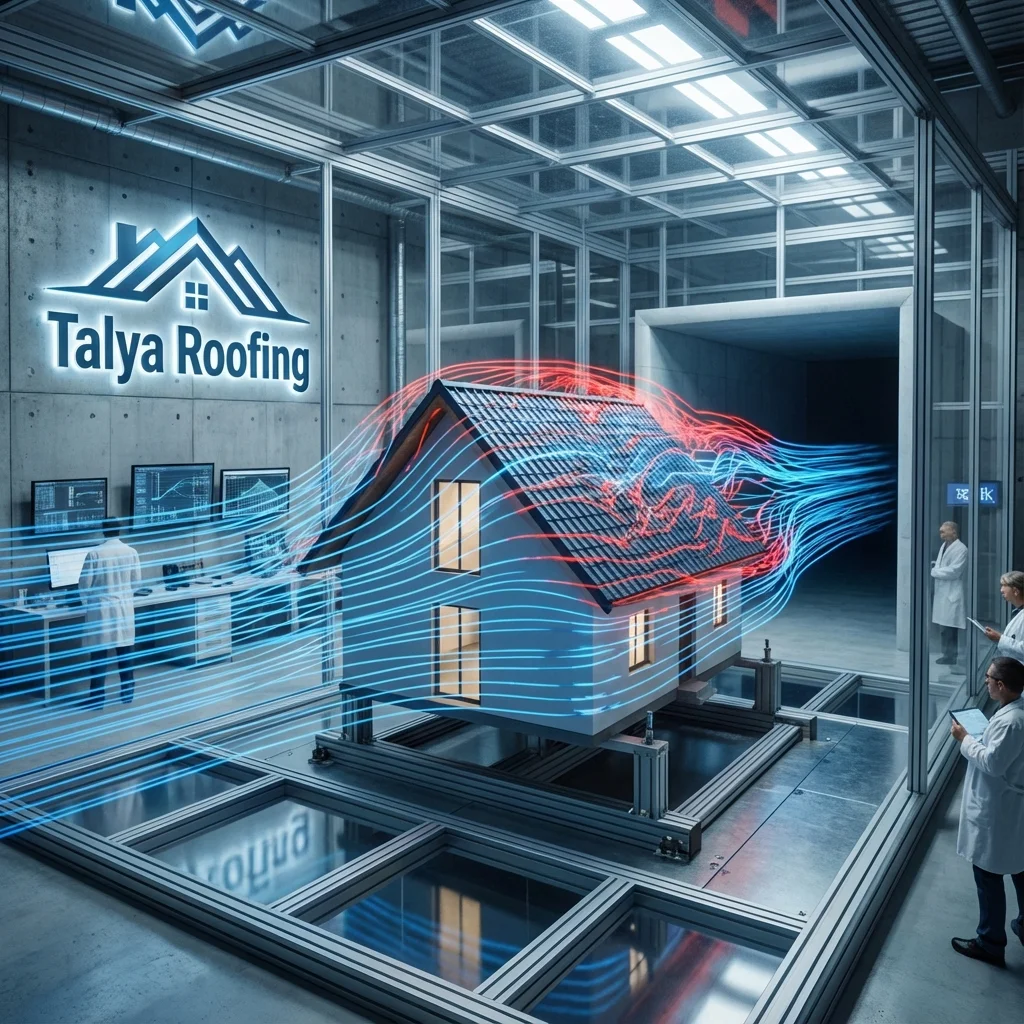
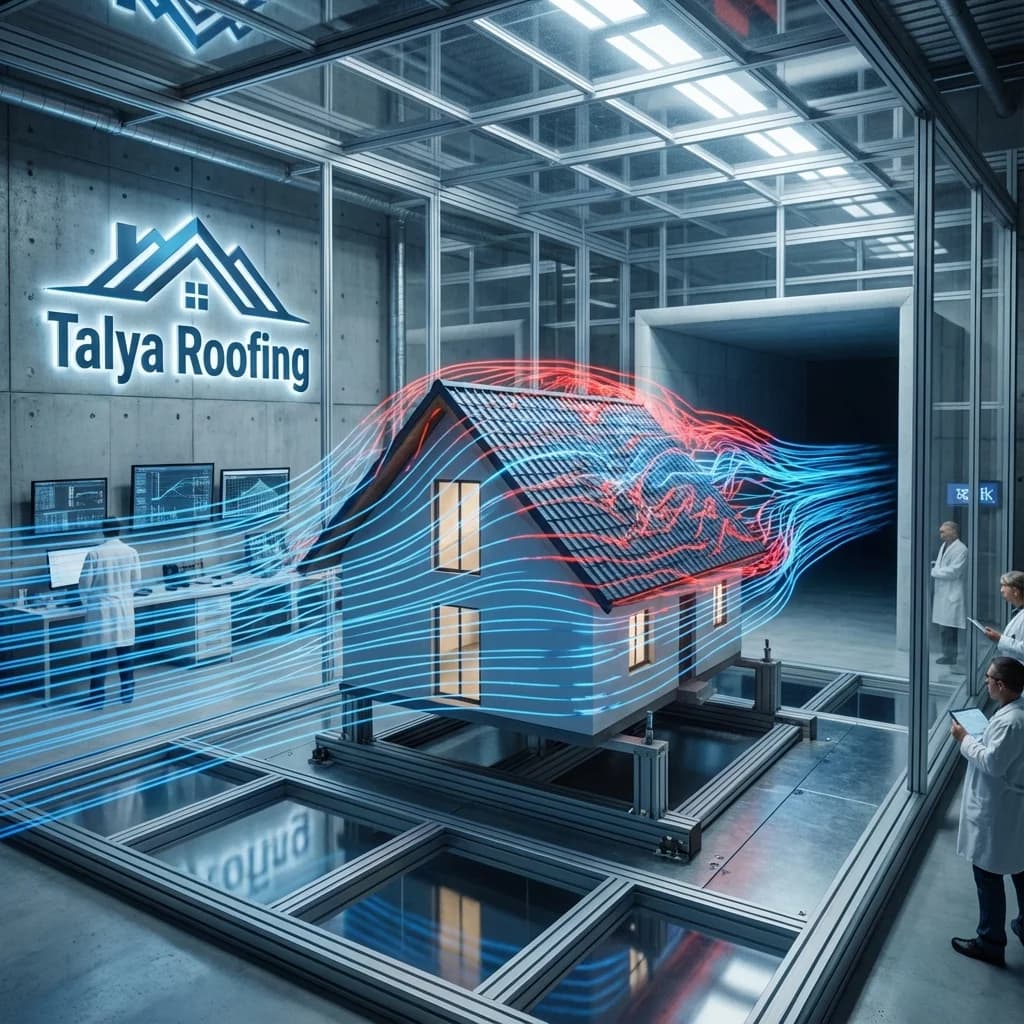
Modern hurricane-resistant roofing is a product of intensive research and engineering, driven by data from organizations like FEMA and the Insurance Institute for Business & Home Safety (IBHS). The science focuses on combating the primary forces a hurricane exerts on a home, primarily wind uplift.
The Physics of Hurricane Damage
Understanding how hurricanes damage roofs is crucial for designing effective protection:
Destructive Forces
- • Wind Uplift: 50-200 lbs/sq ft suction force
- • Lateral Pressure: Direct wind impact on surfaces
- • Debris Impact: Projectiles at 100+ mph
- • Water Intrusion: Wind-driven rain penetration
- • Pressure Cycling: Rapid pressure changes
Failure Mechanisms
- • Edge Lifting: 60% of failures start at edges
- • Nail Pull-Through: Inadequate fastening
- • Membrane Tearing: Material stress limits
- • Seam Separation: Adhesive bond failure
- • Deck Failure: Structural inadequacy
Understanding Wind Uplift
During a hurricane, high-speed winds moving over a roof create a pressure differential, similar to how an airplane wing generates lift. This results in a powerful suction force pulling upwards on the roof. The corners and edges of the roof experience the most extreme uplift forces.
Wind Uplift Pressure Zones
Corner Zones
Highest pressure
Up to 200 lbs/sq ft
Edge Zones
High pressure
100-150 lbs/sq ft
Field Areas
Moderate pressure
50-100 lbs/sq ft
Research Organizations Leading Hurricane Science
Multiple institutions contribute to hurricane-resistant roofing research:
- IBHS (Insurance Institute for Business & Home Safety): Full-scale testing facility with 105 fans generating Category 5 winds
- FEMA (Federal Emergency Management Agency): Post-storm damage assessment and building code recommendations
- FIU Wall of Wind: Florida International University's 12-fan testing facility
- University of Florida HBRL: High Bay Research Laboratory for wind engineering
- Clemson Wind Load Test Facility: Boundary layer wind tunnel testing
- NIST (National Institute of Standards): Building performance standards and testing protocols
Key Scientific Advances in Roofing
- Reinforced Nailing Zones: Shingle manufacturers like GAF (with their LayerLock™ Technology) have engineered wider, specially reinforced nailing areas. Wind tunnel tests show this can dramatically improve a shingle's resistance to "nail pull-through," a common failure point.
- Advanced Adhesives: The sealant strips that bond shingles together have been scientifically formulated to activate faster and create a stronger bond, even in less-than-ideal temperatures. This creates a monolithic, wind-resistant surface.
- Secondary Water Barriers: Research has proven that even if shingles are lost, a properly installed self-adhering secondary water barrier can prevent the catastrophic water intrusion that causes the majority of interior damage during a hurricane.
Advanced Material Technologies
Scientific breakthroughs in roofing materials are revolutionizing hurricane protection:
Modified Bitumen Systems
Polymer-modified asphalt with enhanced flexibility and adhesion. Laboratory tests show 300% improvement in tear resistance and temperature stability from -40°F to 200°F.
High-Performance Membranes
TPO and EPDM systems with reinforced scrim layers. Wind tunnel testing confirms resistance to 180+ mph winds when properly adhered with mechanical fasteners.
Impact-Resistant Composites
Class 4 materials withstand 2-inch hail at terminal velocity. Polymer matrix design distributes impact energy, preventing crack propagation and maintaining seal integrity.
Installation Science: The FORTIFIED Approach
IBHS FORTIFIED standards are based on scientific analysis of hurricane damage patterns:
| FORTIFIED Element | Scientific Basis | Improvement |
|---|---|---|
| Sealed Roof Deck | Prevents water intrusion if shingles fail | 95% reduction in interior damage |
| Ring-Shank Nails | Increased withdrawal resistance | 3x holding power vs. smooth nails |
| Enhanced Edge Sealing | Prevents edge lifting initiation | 60% reduction in edge failures |
| 6-Nail Pattern | Distributes uplift forces | 50% increase in wind resistance |

Wind Tunnel Testing and Real-World Validation
Laboratory testing provides controlled conditions for measuring roof performance:
Testing Protocols
ASTM D7158 (Wind Resistance)
Measures maximum wind speed before failure. Class H rating requires survival at 150+ mph equivalent.
FM 4474 (Uplift Resistance)
Pressure chamber testing measuring pounds per square foot resistance. Ratings from 1-15 with 15 being highest.
UL 580 (Uplift Classification)
Independent verification of wind uplift resistance for insurance and code compliance.
Post-Storm Research Findings
Analysis of actual hurricane damage provides validation of laboratory testing:
- Hurricane Michael (2018): FORTIFIED homes had 95% less roof damage than standard construction
- Hurricane Laura (2020): Properly sealed roof decks prevented interior damage even with shingle loss
- Hurricane Ian (2022): 6-nail patterns showed 75% better performance than 4-nail installations
- Hurricane Idalia (2023): Impact-resistant materials reduced insurance claims by 60%
Computational Fluid Dynamics (CFD) Modeling
Advanced computer modeling helps predict wind behavior around structures:
CFD Applications
- • Pressure distribution mapping
- • Vortex formation analysis
- • Edge effect quantification
- • Building shape optimization
Design Benefits
- • Targeted reinforcement zones
- • Optimized fastener patterns
- • Reduced material waste
- • Enhanced performance prediction
Emerging Technologies in Hurricane Protection
Next-generation roofing technologies based on cutting-edge research:
- Smart Materials: Shape-memory alloys that return to original form after deformation
- Nano-Enhanced Coatings: Self-healing surfaces that repair micro-damage automatically
- Biomimetic Design: Roof patterns inspired by hurricane-resistant natural structures
- Real-Time Monitoring: IoT sensors measuring wind loads and structural response
- Adaptive Systems: Roofs that modify their configuration based on wind conditions
Climate Change Impact on Hurricane Science
Evolving storm patterns require updated design standards:
Changing Storm Characteristics
- •Intensification Rate:
Storms now strengthen 75% faster than historical averages
- •Rainfall Volume:
30% increase in precipitation rates during hurricanes
- •Storm Surge:
Higher base sea levels amplify surge effects
Cost-Benefit Analysis of Hurricane-Resistant Roofing
Scientific studies demonstrate the economic value of enhanced protection:
| Protection Level | Additional Cost | Damage Reduction | ROI Period |
|---|---|---|---|
| Basic Wind Rating | Baseline | 0% | N/A |
| Class H Shingles | +10% | 40% | 8-12 years |
| FORTIFIED Roof | +15% | 85% | 5-8 years |
| Impact Resistant | +20% | 95% | 3-6 years |
Application to Coastal Georgia
Local conditions require specific scientific considerations:
- Salt Air Corrosion: Accelerated metal degradation requires corrosion-resistant fasteners
- High Humidity: Moisture management critical for adhesive performance
- Storm Track Patterns: Coastal Georgia faces both Atlantic and Gulf storm threats
- Soil Conditions: Sandy soils affect foundation-to-roof load transfer
- Building Codes: Georgia amendments reflect local scientific data
Choosing a "fortified" roof is about more than just good shingles; it's about implementing a complete system designed and tested to work together based on scientific principles.
🔬 Scientific Validation
Every hurricane-resistant roofing recommendation we make is backed by peer-reviewed research, laboratory testing, and post-storm performance data. We don't just follow trends – we implement scientifically proven solutions that have demonstrated their effectiveness in real-world conditions.
🌪️ Science-Based Hurricane Protection
Our hurricane-resistant roofing systems are designed using the latest scientific research and testing data. We implement FORTIFIED standards, use impact-resistant materials, and follow proven installation techniques that have been validated through wind tunnel testing and post-storm analysis.
Call (912) 999-7989 for scientifically-proven hurricane protection.
Get a Personalized Recommendation
Your home, budget, and style are unique. Let our experts provide a free, no-obligation consultation to find the perfect roofing solution for you.
Related Articles
Flat Roof Maintenance and Repair Guide: Complete Solutions for Coastal Georgia
Maintenance and repair techniques for flat roofs in coastal climates.
Roof Ventilation Solutions for Humid Climates: Coastal Georgia Guide
How ventilation prevents mold, reduces energy costs, and extends roof life.
Energy Efficient Roofing: Cool Roofs and Solar Integration in Savannah
Cool roof tech and solar integration for better ROI in Savannah.