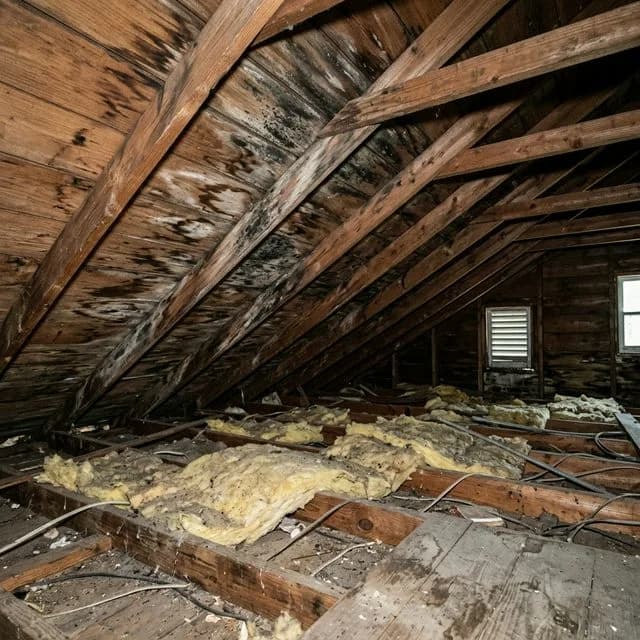

Here's something most Savannah homeowners don't think about: your roof might be perfectly fine on the outside and rotting from the inside. The culprit? Attic mold — and Savannah's climate is basically a mold incubator.
We see it constantly. A homeowner calls us about a leak, and when we climb into the attic, the decking is covered in black mold. No visible leak from outside. The shingles look great. But underneath? The plywood is soft, dark, and deteriorating. The damage is coming from below, not above.
Why Savannah Attics Are a Mold Factory
Savannah's average relative humidity hovers around 72% in spring and climbs above 80% in summer. Mold needs just 60% relative humidity and temperatures above 70°F to thrive. Our attics regularly hit 130°F+ in summer with trapped moisture — it's basically a petri dish.
When warm, moist air from your living space rises into a poorly ventilated attic, it hits the cooler underside of the roof deck and condenses. That condensation soaks into the plywood decking. Over months, the wood stays perpetually damp. Mold colonies establish. The wood fibers break down. Eventually, the decking loses structural integrity — it gets soft, spongy, and can no longer hold nails or support shingles properly.
5 Warning Signs You Have Attic Mold
- Dark Patches: Black or dark green patches on attic wood surfaces.
- Musty Odor: An earthy smell when you open the attic hatch or on the top floor of your home.
- Condensation: Visible water droplets on the underside of the roof deck or frosted nail tips in winter.
- Soft Decking: Warped, dipped, or soft spots in your roof's plywood when walked on.
- Damp Insulation: Stained or compressed insulation with no corresponding visible roof leak above it.
What Causes Attic Mold in Coastal Georgia?
1. Inadequate Ventilation
This is the #1 cause. If your attic doesn't have enough intake (soffit vents) and exhaust (ridge vents or power vents), moisture gets trapped. Savannah building codes require 1 square foot of ventilation per 150 square feet of attic space, but many older homes fall short.
2. Bathroom and Kitchen Exhaust Vented Into Attic
This is shockingly common. We see bathroom fans and dryer vents that terminate inside the attic instead of going through the roof or soffit to the outside. Every shower pumps gallons of moisture directly into your attic space.
3. Minor, Undetected Roof Leaks
Sometimes there is a small leak — around a pipe boot, a piece of cracked flashing, or a nail pop — but it's so minor that water never reaches the ceiling below. Instead, it dampens the decking just enough to feed mold growth for months before anyone notices.
Professional Remediation & Roof Replacement
Professional mold remediation in an attic typically involves sealing off the area, removing contaminated insulation, and treating all wood surfaces. However, if a mold inspection reveals that more than 30% of your decking is compromised structurally, remediation alone won't cut it. At that point, a full tear-off and re-deck is the safest and most cost-effective long-term solution.
Stop Mold Before It Destroys Your Roof
Don't wait until your roof decking is completely rotted. Have Talya Roofing's professionals inspect your attic ventilation and roof integrity today.
Identifying and Preventing Attic Mold in Savannah
Attic mold is one of the most underdiagnosed problems in Savannah homes because homeowners rarely inspect their attic spaces. By the time mold becomes visible from living spaces — typically as dark spots on ceilings or a musty smell — significant damage to roof decking, insulation, and structural members has already occurred.
The root cause is almost always a ventilation failure combined with Savannah's extreme humidity. When warm, moist air from living spaces rises into a poorly ventilated attic, it condenses on the cooler underside of the roof deck, creating the persistent moisture that mold requires to colonize.
Warning Signs of Attic Mold
- Musty or earthy smell in upper-floor rooms, especially in closets and hallways
- Dark staining on ceiling drywall that doesn't correspond to a roof leak location
- Visible mold growth on attic rafters, decking, or insulation (often dark green or black)
- Peeling or bubbling paint on upper-floor ceilings
- Allergy symptoms that worsen when the HVAC system runs (mold spores distributed through ductwork)
Prevention Strategy
The most effective prevention is ensuring your attic ventilation meets or exceeds the 1:100 ratio recommended for Savannah's humid climate. This means for every 100 sq ft of attic floor space, you need at least 1 sq ft of net free ventilation area, split evenly between intake (soffit vents) and exhaust (ridge or powered vents).
Professional Mold Remediation: What to Expect
If you discover mold in your Savannah attic, professional remediation typically costs $1,500-$5,000 depending on the extent of colonization. The process includes containment (sealing the attic from living spaces), removal of affected insulation and any structurally compromised decking, antimicrobial treatment of all surfaces, and ventilation correction to prevent recurrence. Most importantly, remediation without fixing the root ventilation cause is a waste of money — the mold will return within 6-12 months in Savannah's humidity.
DIY Mold Prevention Measures
While mold remediation requires professionals, prevention is largely a homeowner responsibility. Ensure bathroom exhaust fans vent to the exterior (not into the attic — a shockingly common code violation in older Savannah homes), keep soffit vents clear of insulation by installing baffles, and run a dehumidifier during summer months if your attic has a finished space or HVAC equipment. Monitor attic humidity with a $25 digital hygrometer — levels consistently above 60% relative humidity indicate a ventilation problem that will eventually lead to mold colonization.