
Pollen Season and Your Roof
How Savannah's Spring Debris Causes Real Damage
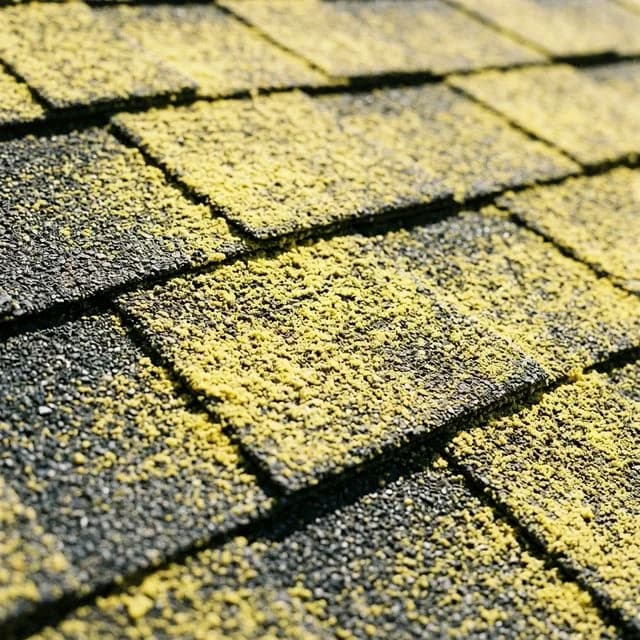
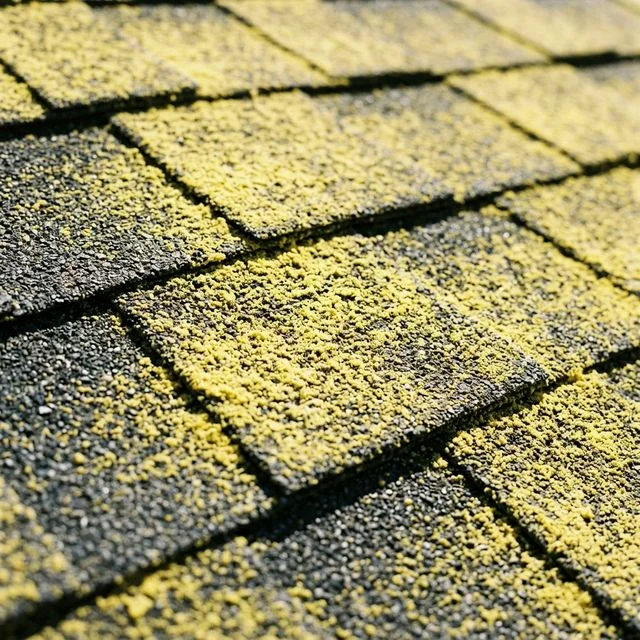
Every March through May, Savannah disappears under a thick blanket of yellow-green pollen. It coats your car, your driveway, your porch furniture — and your roof. Most homeowners treat it as a cosmetic annoyance. But that pollen layer is actually doing slow, measurable damage to your roofing system, and the longer it sits there, the worse it gets.
Why Pollen Is Not Just an Allergy Problem
Pollen itself is a fine organic particle. When it lands on your roof and combines with moisture (morning dew, afternoon rain), it creates a sticky, acidic film that clings to shingle surfaces. Over time, this film feeds algae and moss growth, traps moisture against the shingle granules, and accelerates the biological deterioration of your roof.
The Three Ways Pollen Damages Your Roof
Gutter Clogging and Water Backup
Pollen combines with pine needles, live oak leaves, and seed pods to form a dense sludge that clogs gutters and downspouts. When water cannot drain properly, it backs up under the shingle edges (especially at the eave), pooling on the fascia board and eventually rotting the wood behind it.
Moss and Algae Growth Acceleration
Pollen is an organic nutrient. When it accumulates in shaded areas of the roof (north-facing slopes, areas under tree canopy), it becomes a fertilizer for Gloeocapsa magma — the black streaking algae that causes those dark stains running down Savannah roofs. It also encourages moss, which lifts shingle edges and traps water underneath.
Valley and Flashing Debris Dams
Roof valleys — the V-shaped channels where two roof planes meet — naturally collect debris. Pollen-laden sludge builds up in these valleys, creating dams that redirect water laterally under the shingles instead of down the channel. This is one of the most common causes of "mystery leaks" in Savannah homes during spring.
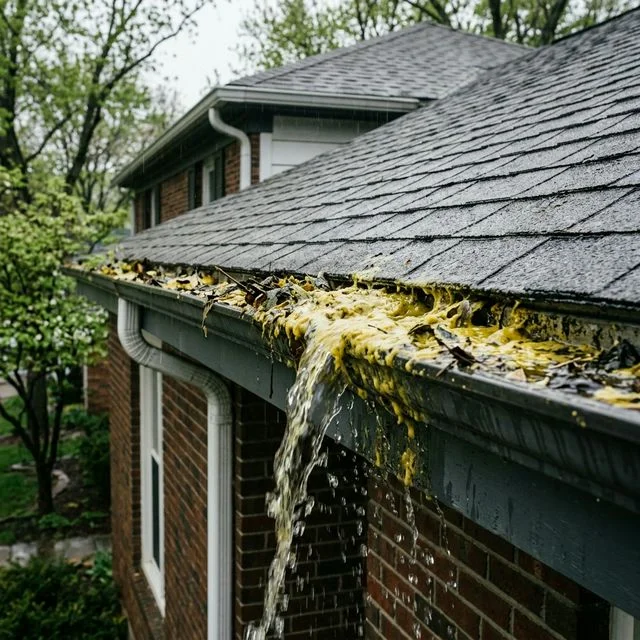
This gutter is completely blocked by spring pollen and pine debris — a common sight in Savannah that leads to fascia rot and water backup.
What to Do About It
You do not need to pressure-wash your roof every April (in fact, pressure washing can strip granules and void your shingle warranty). But there are practical steps you should take:
Clean Your Gutters in Late May
Wait until the worst of pollen season is over, then flush out the gutters and downspouts completely. If your gutters clog every spring, consider installing gutter guards — we recommend them for any Savannah home surrounded by mature trees.
Trim Overhanging Branches
Trees that overhang your roof drop significantly more pollen, needles, and seed pods directly onto your shingles. Keeping branches trimmed back 6–8 feet from the roof surface dramatically reduces debris accumulation and limits the shaded zones where moss thrives.
Choose Algae-Resistant Shingles
When it is time for a roof replacement, ask about shingles with copper or zinc granule technology (like Atlas Scotchgard). These shingles release trace metals during rain that inhibit algae growth, keeping the roof cleaner and reducing the impact of pollen-related biological damage.
Schedule Your Post-Pollen Roof Checkup
After pollen season ends, let Talya Roofing inspect your roof for debris damage, clogged valleys, and early algae growth. Catching these issues now prevents bigger problems during hurricane season.
Savannah's Pollen Season: A Hidden Roof Threat
Savannah's infamous pollen season (mid-March through late April) deposits a thick layer of pine pollen on every outdoor surface. While the yellow coating looks alarming, pollen itself doesn't directly damage roofing materials. The real threat is what pollen enables: moisture retention.
How Pollen Damages Your Roof Indirectly
- Moisture trapping: Pollen accumulation in valleys and behind dormers holds moisture against shingle surfaces, accelerating granule loss and algae colonization
- Gutter blockage: When wet, pollen creates a thick paste that clogs gutters and downspouts, causing water to back up under drip edge and fascia boards
- Organic substrate: Pollen provides nutrients for Gloeocapsa magma (the algae causing black streaks) and moss, jumpstarting biological growth on clean roofs
What to Do After Pollen Season (May Checklist)
Once Savannah's pollen season winds down in late April or May, take these steps before summer storm season begins:
For more on gutter maintenance specific to Savannah's tree canopy, see our gutter guard guide for Savannah homes.
Pre-season inspection — call (912) 999-7989
We offer complimentary project assessments and estimates for proposed maintenance, repair, or replacement work. A homeowner condition report is a separate $250 documented inspection. City of Savannah business licensed and insured.