
Key Takeaways
- Georgetown is one of Savannah's most established neighborhoods, with homes ranging from 1950s-era ranch styles to modern infill construction — each with distinct roofing challenges.
- Mature tree canopy coverage in Georgetown accelerates shingle deterioration through shade retention, debris accumulation, and biological growth.
- Many Georgetown homes still have original or second-generation roofing systems that are past their effective lifespan and at risk during hurricane season.
- The neighborhood's proximity to salt marshes and tidal creeks increases exposure to salt air corrosion and humidity-driven moisture problems.
- Talya Roofing has completed numerous projects in Georgetown and understands the specific material and installation requirements for this Savannah neighborhood.
Georgetown at a Glance
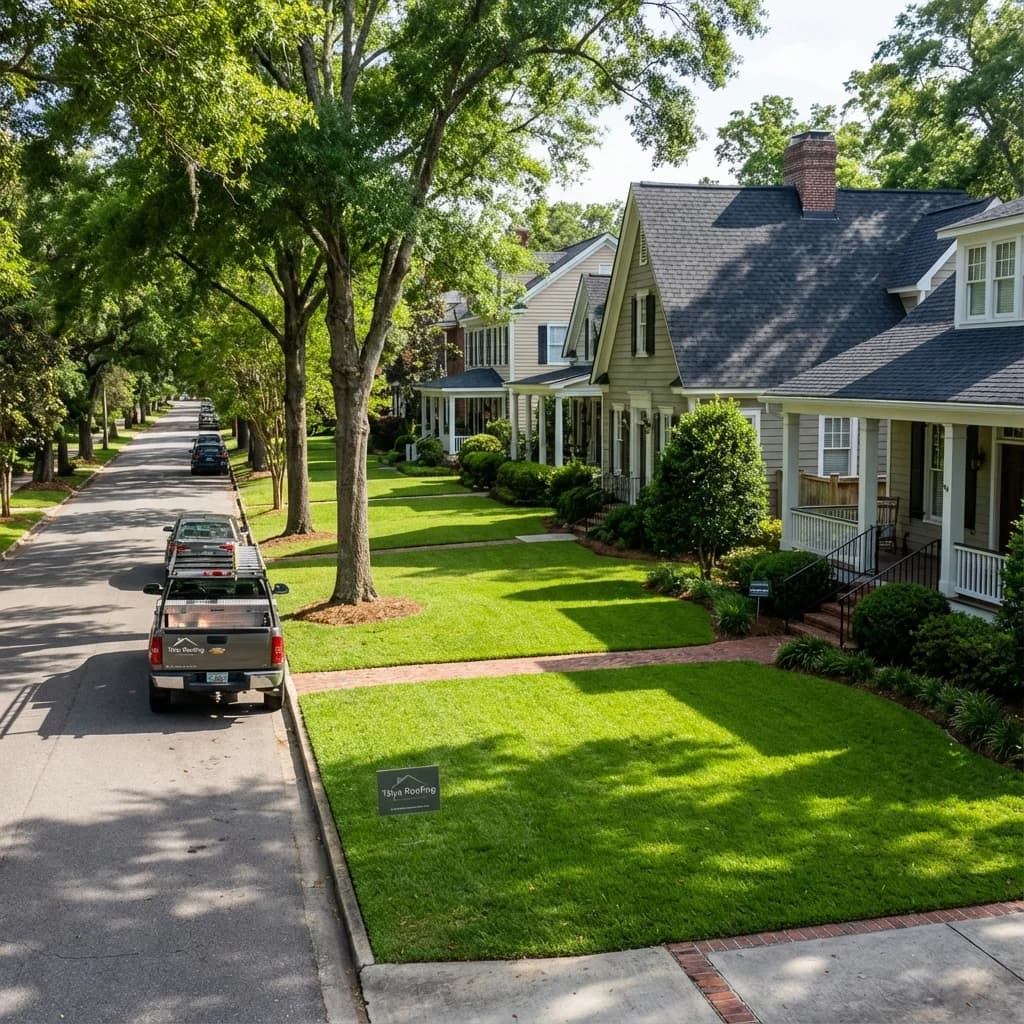
Georgetown sits on the south side of Savannah, bordered by Largo Drive to the north and stretching toward the marshlands of the Moon River. It is a neighborhood of established homes, mature live oaks, and quiet streets that feel worlds away from the tourist bustle of downtown Savannah. The housing stock is predominantly single-family homes built between the 1950s and 1980s, with a growing number of renovations and infill projects bringing the neighborhood into the modern era.
For roofing, Georgetown presents a specific set of challenges. The combination of dense tree cover, coastal proximity, aging building stock, and Chatham County's strict building codes creates conditions that demand expertise from any contractor working in the area. This guide covers everything Georgetown homeowners need to know about their roofs — from common problems to material recommendations to the permit process.
Common Roofing Issues in Georgetown
Tree Damage and Debris Accumulation
Georgetown's iconic live oaks and magnolias create one of the most beautiful canopies in Savannah. They also create one of the most challenging environments for roofing. Overhanging branches drop leaves, twigs, seeds, and Spanish moss onto roof surfaces year-round. This organic debris accumulates in valleys, behind dormers, and in gutter systems, creating several problems:
- Moisture retention. Wet leaves and moss hold moisture against the shingle surface for extended periods. In Savannah's humidity, this creates a permanently damp environment that accelerates granule loss and promotes algae growth.
- Valley blockages. Debris dams in valleys redirect water sideways instead of downhill, forcing it under shingle edges and causing leaks in areas that would otherwise be fine.
- Branch impact. Falling branches during thunderstorms and tropical systems cause direct puncture damage. Georgetown's tall, older trees are especially prone to limb failure during wind events.
- Squirrel and raccoon damage. The abundant wildlife attracted by Georgetown's trees also finds roofs attractive. Animals gnaw through fascia boards, tear up soffit vents, and create openings that admit water.
Aging Roofing Systems
Many Georgetown homes are on their second or third roof. A home built in 1965 with a 20-year roof replaced in 1985 and again in 2005 is now approaching the end of its third roof's lifespan. Some homeowners discover that previous replacements were layovers (new shingles over old) rather than proper tear-offs, further complicating the current situation. During our inspections in Georgetown, we frequently find multiple layers of shingles that need to be fully removed before a new system can be properly installed.
Salt Air Corrosion
Georgetown's position near the Moon River and the Wilmington River salt marshes means roofs are exposed to airborne salt particles. This is less intense than directly coastal Tybee Island, but it still affects metal components. Galvanized flashing, nails, and gutter hardware corrode faster in Georgetown than in inland Savannah neighborhoods. We specify salt-air-resistant materials — stainless steel or aluminum flashing, hot-dipped galvanized ring-shank nails, and marine-grade fasteners — for every Georgetown project.
Ventilation Deficiencies
Homes built in the 1950s through 1970s in Georgetown were not designed with modern ventilation standards. Many have inadequate soffit venting, blocked ridge areas, or gable vents that create short-circuit airflow instead of balanced intake-exhaust ventilation. Poor ventilation in Savannah's climate leads to extreme attic heat in summer (160°F+), moisture condensation in winter, and premature shingle aging year-round.
Material Recommendations for Georgetown Homes
Not every roofing material performs well in Georgetown's specific conditions. Based on our extensive experience in the neighborhood, here are our recommendations:
| Material | Georgetown Suitability | Key Consideration |
|---|---|---|
| Atlas Pinnacle Pristine (shingles) | Excellent | Scotchgard algae protection critical under tree canopy |
| Standing seam metal | Very good | Debris slides off; must specify Galvalume or Kynar for salt resistance |
| Standard 3-tab shingles | Adequate | Shortest lifespan in Georgetown's conditions; poor wind resistance |
| Wood shakes | Poor | Moisture retention and biological growth in Georgetown's shade make wood impractical |
| Tile (concrete or clay) | Fair | Heavy weight; most Georgetown roof structures need reinforcement |
For most Georgetown homeowners, Atlas Pinnacle Pristine architectural shingles offer the best combination of performance, aesthetics, and value. The integrated Scotchgard Protector prevents the black algae streaking that plagues shaded roofs, and the Class H wind rating (150 mph) meets the most demanding Chatham County code requirements.
The Georgetown Roof Replacement Process
Replacing a roof in Georgetown involves several neighborhood-specific considerations beyond the standard process:
Tree Assessment Before Work Begins
Before any roofing work starts, we evaluate overhanging branches that could interfere with the project or damage the new roof. We recommend trimming branches back to at least 6 feet from the roof surface. While we do not provide tree services, we can recommend trusted arborists in Savannah who understand the permitting requirements for tree work in Chatham County.
Narrow Driveway and Lot Access
Many Georgetown homes sit on modest lots with narrow driveways and limited staging space. Our crews plan material delivery and waste removal carefully to minimize impact on your property and your neighbors. We use targeted debris chutes instead of free-throwing old shingles, and we schedule dumpster placement to keep streets passable.
Decking Assessment
Older Georgetown homes often have original plank decking instead of modern plywood or OSB sheathing. During tear-off, we inspect every square foot of decking and replace deteriorated sections. Plank decking with gaps between boards requires a full overlay of OSB or plywood to provide a solid nailing surface for modern shingle systems.
Ventilation Upgrade
Nearly every Georgetown roof replacement includes a ventilation upgrade. We convert outdated gable-vent-only or turbine-vent systems to balanced ridge-and-soffit ventilation. This requires adding continuous soffit intake vents (or individual soffit vents where continuous venting is not feasible) and a ridge vent along the entire peak. The improvement in attic temperature and moisture control extends the new roof's lifespan by years.
Permits and Inspections in Georgetown
Georgetown falls within the City of Savannah's jurisdiction for building permits. Every full roof replacement requires a permit from the City of Savannah Development Services department. The process typically takes 3–5 business days for residential roofing, and Talya Roofing handles the entire application, scheduling, and inspection process on your behalf.
Key permit requirements for Georgetown roofing projects:
- Material specifications must be submitted with the permit application, including wind-resistance ratings and fire classifications.
- The property must pass a mid-roof inspection (after decking and underlayment, before shingles) and a final inspection.
- If more than 25% of the decking is replaced, additional structural documentation may be required.
- Georgetown is not within the Savannah Historic District, so historic preservation review is not required for roofing projects. However, homes near the district boundary should verify with the Metropolitan Planning Commission.
Maintenance Tips for Georgetown Roofs
Given Georgetown's tree-heavy environment, regular maintenance is especially important for extending your roof's lifespan:
- Clean gutters at least quarterly. Georgetown's live oaks drop leaves year-round (not just in fall), and clogged gutters cause fascia rot and water backup under the roof edge.
- Remove debris from valleys and dormers. Use a leaf blower from the ground or hire a professional. Never power-wash your shingles.
- Trim branches annually. Maintain at least 6 feet of clearance between tree limbs and the roof surface.
- Schedule annual inspections. A professional roof inspection catches developing problems — loose flashing, deteriorating pipe boots, early signs of biological growth — before they become expensive repairs.
- Check attic ventilation seasonally. Ensure soffit vents are not blocked by insulation or debris, and verify that the ridge vent is functioning.
Insurance Considerations for Georgetown Homeowners
Georgetown homeowners should be aware of several insurance trends affecting Coastal Georgia roofing:
Many insurers in Chatham County now base their roof coverage on the roof's age and condition. Roofs over 15 years old may be placed on Actual Cash Value (ACV) coverage instead of Replacement Cost Value (RCV), meaning depreciation is deducted from any claim payout. A new roof with proper documentation can restore RCV coverage and may qualify for premium discounts of 10–25%.
Impact-resistant shingles (UL 2218 Class 4) and IBHS FORTIFIED Roof designations may qualify for insurance savings depending on the policy and carrier. Talya Roofing can provide roof-condition photos, measurements, and an itemized construction estimate and, when requested, explain the construction scope on site. The policyholder or an appropriately licensed representative handles submissions and negotiations; the carrier determines eligibility, coverage, and any savings.
Georgetown's Trusted Roofing Contractor
Whether your Georgetown home needs a full replacement, storm damage repair, or a maintenance inspection, Talya Roofing brings local experience and Atlas PRO+ Silver membership to the conversation. Any Atlas warranty remains specific to the quoted products, system, installation, registration or application, project eligibility, and current written terms.
Get Your Free Georgetown Roof Assessment
Or call us directly: (912) 999-7989