
Key Takeaways
- Georgia HOAs have broad authority to enforce architectural standards, including requiring roof replacements when existing roofs violate community covenants.
- HOA demands for roof replacement are most commonly triggered by aesthetic deterioration, mismatched repairs, unapproved materials, or age-related decline.
- Homeowners have rights: HOAs must follow their own procedures, provide reasonable timelines, and apply rules consistently across all members.
- Understanding your CC&Rs, documenting everything, and working with an experienced contractor are your best protections.
When Your HOA Says "Replace Your Roof"
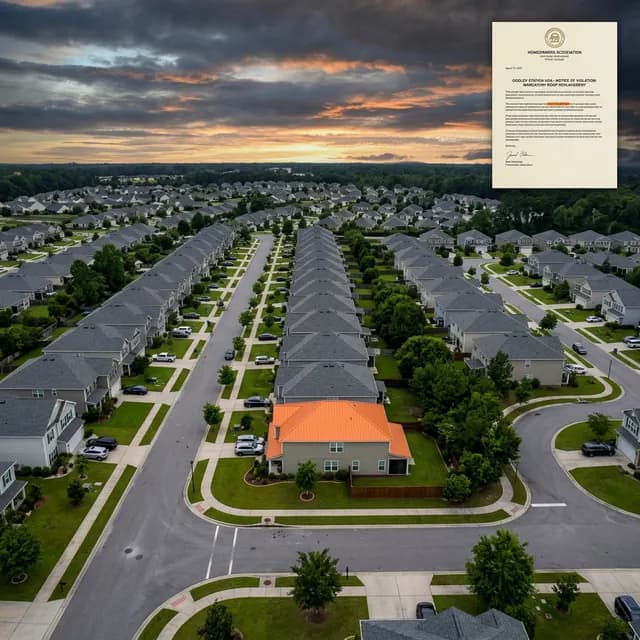
You open your mailbox and find a letter from your homeowners association: your roof has been deemed non-compliant and must be replaced within 90 days, or fines begin. For homeowners in HOA-governed communities throughout Pooler, Richmond Hill, and Savannah's newer subdivisions, this scenario happens more often than you'd think — and it raises immediate questions. Can they really make you replace your roof? What are your rights? And how do you navigate the process without overpaying or violating the rules?
Can an HOA Force a Roof Replacement?
The short answer under Georgia law: yes, in most cases they can. When you purchased your home, you agreed to the community's Covenants, Conditions, and Restrictions (CC&Rs) — a legally binding contract that gives the HOA authority to enforce architectural standards. Those standards typically include the appearance, condition, and materials of your roof.
Georgia's Property Owners' Association Act (O.C.G.A. § 44-3-220 et seq.) grants HOAs the power to:
- Establish and enforce architectural standards for all properties in the community
- Require homeowners to maintain their property to community standards
- Impose fines for non-compliance after proper notice
- Place liens on properties for unpaid fines and assessments
- In extreme cases, pursue foreclosure on liens (though this is rare for maintenance violations)
Common Triggers for HOA Roof Replacement Demands
1. Visible Deterioration
Algae streaking, moss growth, curling shingles, missing shingles, and general weathering that significantly impacts the home's appearance from the street. In Savannah's humidity, algae growth is particularly aggressive and can make a 15-year-old roof look 25 years old. HOA boards conducting routine drive-by inspections flag these issues regularly.
2. Mismatched Repairs
Patching a section of roof with shingles that don't match the original — different color, different profile, or different brand — creates a patchwork appearance that violates most HOA aesthetic standards. This is especially common after storm damage repairs where the homeowner's insurance only covered the damaged section and the exact shingle was discontinued.
3. Unapproved Materials
Many HOAs in Pooler and Richmond Hill have specific approved material and color lists. Installing a metal roof in a shingle-only community, choosing an unapproved color, or using three-tab shingles where architectural shingles are required all trigger violation notices. Some communities require pre-approval from an Architectural Review Committee (ARC) before any exterior modification, including roofing.
4. Age-Based Replacement Requirements
Some HOAs include age-based replacement triggers in their CC&Rs — for example, requiring roof replacement if the roof is more than 20 or 25 years old, regardless of apparent condition. These provisions are less common but exist in some Savannah-area communities, particularly planned communities and gated developments.
Your Rights as a Georgia Homeowner
While HOAs have significant authority, Georgia law and your community's governing documents also protect homeowners:
Right to Due Process
The HOA must follow its own enforcement procedures as outlined in the CC&Rs and bylaws. This typically includes written notice of the violation, a specific description of what's non-compliant, a reasonable timeframe to cure the violation, and an opportunity to be heard (appeal or hearing) before fines are imposed. If the HOA skips any of these steps, their enforcement action may be challengeable.
Right to Consistent Enforcement
Georgia courts have ruled that HOAs must apply their rules consistently. If your neighbor's roof is in similar condition and they haven't received a violation notice, you have grounds to challenge selective enforcement. Document comparable properties in your community as evidence.
Right to Reasonable Timelines
An HOA cannot demand instant compliance. The timeline must be reasonable considering the scope of work, contractor availability, weather conditions, and material supply. For a full roof replacement, 60–120 days is a typical reasonable window. In the current 2026 material shortage environment, you may be able to argue for additional time.
Right to Review CC&Rs
You have the right to review the specific covenant provision the HOA is citing. Request the exact section and language in writing. If the CC&Rs don't specifically address the issue cited in the violation, the HOA may be overreaching.
Steps to Take When You Receive a Violation Notice
- Don't ignore it — ignoring the notice starts the fine clock and weakens your position; respond in writing within the specified timeframe
- Read your CC&Rs — review the specific provision cited and verify the HOA has authority over the issue
- Get a professional roof inspection — an independent assessment documents the actual condition of your roof; if the inspector finds the roof is structurally sound with years of remaining life, that report supports your case for repair versus full replacement
- Respond in writing — acknowledge receipt, state your position, and provide a timeline for compliance or your intent to appeal
- Request an ARC meeting — most HOAs have an Architectural Review Committee; present your inspection report, proposed solution, and timeline
- Get estimates — obtain 2–3 estimates for the required work and present these to the HOA if you're requesting a timeline extension
- Negotiate — some HOAs will accept a targeted repair or treatment (such as professional algae cleaning) instead of a full replacement if the underlying structure is sound
Navigating the Replacement When Required
If replacement is unavoidable, approach it strategically:
- Get the approved materials list — request the specific brands, styles, and colors your HOA approves before getting estimates
- Submit your plan to the ARC before starting — get written approval of your material selection, color, and contractor choice
- Choose a contractor familiar with HOA projects — experienced contractors know the approval process and can help you navigate material restrictions
- Use the opportunity wisely — if you're forced to replace, invest in quality materials with strong warranties and algae-resistant technology to delay the next cycle
- Document the installation — keep photos, contracts, warranty registrations, and ARC approval letters; you may need them years later
Can Your HOA Pay for Any of It?
In most single-family home HOAs, the roof is the homeowner's responsibility. However, some community associations — particularly townhome and condo associations — include exterior maintenance in their common area responsibilities. Review your CC&Rs carefully. If the association has any obligation for exterior building maintenance, they may share the cost. Additionally, some HOAs have community-wide roof replacement programs that provide bulk pricing through a preferred contractor — these programs can save 10–20% compared to individual replacement.
HOA Compliance Made Simple
Talya Roofing works with HOA communities throughout Savannah, Pooler, and Richmond Hill. We handle ARC submissions, ensure material compliance, and deliver quality installations that exceed community standards.
Get Your HOA-Compliant EstimateOr call us: (912) 999-7989