
Key Takeaways
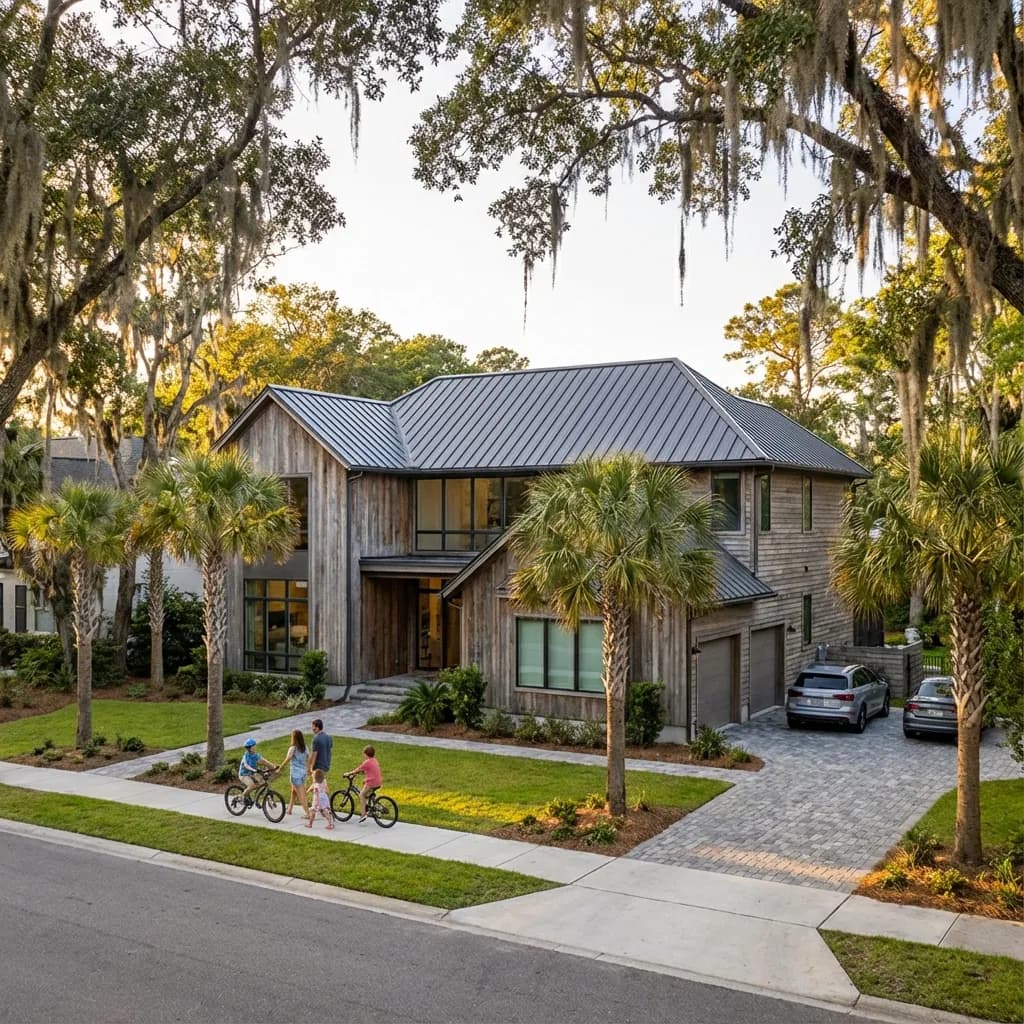
- Richmond Hill is one of Bryan County's fastest-growing communities, with homes spanning five decades of construction standards — each era has its own common roofing issues.
- Newer subdivisions like J.F. Gregory Park, Heartwood, and Richmond Hill Plantation feature builder-grade roofs that are approaching their first major maintenance milestones.
- Active HOAs in many Richmond Hill neighborhoods enforce strict roofing material, color, and contractor requirements — verify your covenants before starting any project.
- Richmond Hill's proximity to Fort Stewart and I-95 creates a strong resale market where roof condition significantly impacts buyer decisions and appraisal values.
- Talya Roofing provides Richmond Hill repair and replacement services, complimentary project assessments and estimates, and a separate $250 documented homeowner inspection. Annotated inspection documentation may support an insurance review; coverage decisions remain with the carrier.
Richmond Hill: A Growing Community with Diverse Roofing Needs
Richmond Hill sits at the intersection of Bryan County's suburban growth and Coastal Georgia's natural beauty. Located just south of Savannah along I-95 and roughly 30 minutes from both downtown Savannah and Fort Stewart, the city has exploded in population over the past two decades. What was once a quiet town centered around the historic Ford Plantation has become a sprawling community of subdivisions, shopping centers, and schools — all built to serve families who want proximity to Savannah's amenities and Fort Stewart's employment without big-city congestion.
This growth means Richmond Hill has an unusually wide range of home ages and construction quality, from meticulously maintained 1980s brick ranches to spec-built 2024 tract homes. Each generation of construction brings its own roofing profile, and understanding where your home falls in that spectrum is the first step to making smart roofing decisions. Talya Roofing has served Richmond Hill homeowners across all eras and neighborhoods.
Roofing Issues by Construction Era
1980s–1990s Homes (Belfast, Oak Level, Harris Neck Road)
Richmond Hill's oldest established neighborhoods contain homes that are 30–45 years old. Many still have original roofs or first-generation replacements that are themselves now aging. Common issues include:
- Original 3-tab shingles well past their 20-year expected lifespan
- Deteriorated pipe boots and vent flashing causing slow attic leaks
- Inadequate attic ventilation by modern standards — many homes from this era have only gable vents with no ridge or soffit intake
- Multiple layers of shingles (second layer installed over the original) which adds weight and traps heat, accelerating decay
- Outdated flashing techniques around chimneys and wall transitions
If your Richmond Hill home was built before 1995 and hasn't had a roof replacement in the last 15 years, a professional inspection should be a priority. We regularly find that homeowners in these neighborhoods are one storm away from significant water damage that could have been prevented.
2000s Homes (Richmond Hill Plantation, Magnolia Crossing, Coffee Pointe)
The 2000s building boom brought thousands of new homes to Richmond Hill. Many were built with builder-grade 25-year architectural shingles, which are now 15–25 years old. These roofs are in the zone where they still look acceptable from the ground but may have developing issues only visible from the roof surface or in the attic:
- Significant granule loss on south- and west-facing slopes (the sides that take the most sun and rain)
- Cracking or curling shingle edges, especially on cheaper builder-grade products
- Algae streaking that's moved beyond cosmetic into granule degradation
- Nail pops from decking expansion and contraction over the years
2010s–Present Homes (Heartwood, J.F. Gregory Park, Savannah Quarters)
Richmond Hill's newest subdivisions generally have quality architectural shingles installed to current building codes. These roofs are still under manufacturer warranty and shouldn't need replacement for many years. However, we occasionally see issues related to rush construction during the building boom: improper starter strip installation, inadequate drip edge coverage, and insufficient attic ventilation that doesn't meet the 1:150 ratio specified by modern codes. A warranty-period inspection at the 5-year mark can catch these issues while builder warranty or manufacturer defect coverage may still apply.
HOA Requirements Across Richmond Hill
Many Richmond Hill subdivisions have active HOAs with architectural review requirements. Here's what to expect:
| Common HOA Requirement | Details |
|---|---|
| Material Type | Most require architectural shingles minimum — 3-tab may be prohibited |
| Color Restrictions | Approved palette varies by neighborhood; earth tones and grays are universally safe |
| Pre-Approval | Written ARC approval required before any work begins in most communities |
| Contractor Insurance | Minimum liability coverage required; some require workers' comp documentation |
| Project Timeline | Some HOAs limit construction noise hours and require debris removal within 48 hours of completion |
Talya Roofing is experienced with HOA processes across Richmond Hill, Pooler, Savannah, and Rincon. We prepare the full application package and coordinate with your HOA's architectural review committee to avoid any delays or compliance issues.
Insurance and Storm Damage in Richmond Hill
Richmond Hill sits in a corridor that catches severe weather from both coastal tropical systems and inland thunderstorms that develop over the Georgia interior. Bryan County regularly sees hail events, straight-line wind damage, and tropical storm impacts that generate significant insurance claim volume.
Filing a Successful Roof Claim
- Document Immediately: Photograph all visible damage from the ground and (safely) from a ladder. Date-stamped photos are your most important evidence.
- File Promptly: Most Georgia homeowner policies require claims to be filed within 1 year of the damage event, but sooner is always better. Some carriers have moved to stricter timelines.
- Get a Professional Assessment: Schedule a professional inspection before the adjuster arrives. A contractor's detailed damage report with measurements and photos gives you leverage to ensure the full scope of damage is recognized.
- Understand Your Deductible: Many Bryan County policies have switched from flat-dollar deductibles to percentage-based wind/hail deductibles (typically 2–5% of dwelling coverage). On a $350,000 home, a 2% wind deductible means $7,000 out of pocket before coverage kicks in.
- Review the Carrier Estimate: Compare the carrier's document with the contractor's itemized construction estimate and ask questions about differences. Talya Roofing can provide photos, measurements, and an updated repair estimate, but we do not negotiate coverage or payment. Consult a licensed public adjuster or attorney if you need claim advocacy.
Proactive Steps to Lower Premiums
Upgrading to impact-resistant (Class 4) shingles can earn you a 15–28% discount on your wind/hail premium with most carriers. For a Richmond Hill home paying $2,500/year in insurance, that's $375–$700/year in savings — which covers the upgrade cost within 5–8 years while also giving you a genuinely tougher roof. We provide the documentation your insurer requires to apply the discount upon project completion.
Recommended Roofing Materials for Richmond Hill
The best material choice depends on your home's style, your budget, and your long-term plans. Here's what we most commonly install in Richmond Hill:
- Standard Architectural Shingles (GAF Timberline HDZ, CertainTeed Landmark): The workhorse choice for most Richmond Hill subdivisions. 130 mph wind rating, algae resistance, 25–30 year realistic lifespan. Best value for homes in the $250K–$400K range.
- Impact-Resistant Architectural (Atlas StormMaster Shake, Owens Corning Duration FLEX): Class 4 rated for hail and 130+ mph winds. Higher upfront cost pays back through insurance savings and extended lifespan. Ideal for homeowners planning to stay 10+ years.
- Designer Architectural (GAF Grand Sequoia, CertainTeed Grand Manor): Premium aesthetics with thick, dimensional profiles. Best for higher-value homes where curb appeal directly impacts property value.
- Standing Seam Metal: Growing in popularity in Richmond Hill's newer neighborhoods. 40–60 year lifespan, superior storm resistance, and modern low-country aesthetic. Higher initial cost but virtually maintenance-free.
Bryan County Permitting
Bryan County requires building permits for roof replacements. The county follows the International Residential Code with Georgia amendments, which specify minimum wind resistance ratings, underlayment requirements, and proper fastener patterns for the region's wind zone classification. Talya Roofing handles all permitting — from application through final inspection — as a standard part of every project. You never have to visit the county office or manage paperwork.
Why Richmond Hill Homeowners Choose Talya Roofing
We're a Savannah-area roofing company that serves Richmond Hill, Pooler, Rincon, Tybee Island, and all of Chatham and Bryan counties. We're not a storm-chasing outfit from out of state — we live and work in this community, and our reputation depends on every single project meeting the high standards our neighbors expect.
- $250 documented homeowner inspection with a physical assessment when safe, annotated photographs, AI-assisted image organization with human review, and a written report
- Deep experience with Richmond Hill HOA processes and Bryan County permitting
- Roof-condition photos, measurements, and itemized construction estimates for the property owner
- Current Atlas PRO+ Silver membership and project-specific written warranty terms
- Flexible financing options to fit any budget
Richmond Hill's Trusted Roofing Partner
From established neighborhoods to brand-new builds, Talya Roofing delivers expert inspections, quality installations, and honest guidance to Richmond Hill homeowners. Your roof protects everything that matters — let's make sure it's ready for whatever Bryan County weather throws at it.