
Key Takeaways
- Roof sagging is always a structural warning sign that demands prompt professional evaluation
- Common causes include water damage to rafters, undersized framing, excessive roof loads, and termite damage
- Savannah's humidity and storm exposure accelerate the structural deterioration that leads to sagging
- Repair options range from sistering damaged rafters to full structural rebuilds depending on severity
- Ignoring a sagging roof risks catastrophic collapse and dramatically increases eventual repair costs
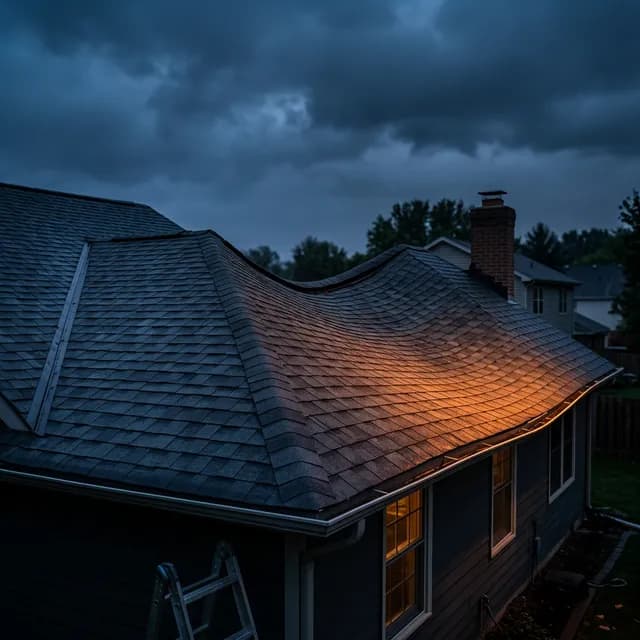
You glance at your roofline from the street and notice something unsettling — a dip, a wave, or a gentle curve where there should be a straight, level ridge. A sagging roof isn't a cosmetic issue. It's your home's structure telling you something is wrong, and in Savannah's demanding coastal climate, the problem only gets worse with time. Understanding why roofs sag, how to identify the severity, and what repair options exist can mean the difference between a manageable fix and a catastrophic failure.
What Causes a Roof to Sag?
Water Damage and Wood Rot
In Savannah's subtropical climate, water infiltration is the leading cause of structural roof failure. When leaks go undetected — even small ones around flashing, valleys, or pipe boots — moisture saturates the wooden framing members over months and years. In our 75–85% humidity environment, that moisture doesn't dry out quickly. Instead, it fosters wood-decay fungi that literally consume the cellulose fibers that give rafters and joists their strength. A rafter that was designed to support 40 pounds per linear foot may retain only a fraction of that capacity after years of fungal decay.
The insidious nature of water damage is that it often progresses invisibly. The leak stains your attic insulation, which absorbs the water and holds it against the wood. By the time you notice a sag from outside, the internal damage may be extensive.
Undersized or Overspanned Framing
Many older homes in Savannah, Pooler, and Richmond Hill were built to building codes far less stringent than today's standards. Rafters that span too far without adequate support, collar ties that were removed during attic conversions, or load-bearing walls that were altered during renovations can all lead to progressive sagging. The roof structure slowly deflects under its own weight and the weight of the roofing materials above.
Termite and Pest Damage
Eastern subterranean termites are a persistent threat in coastal Georgia. These insects can hollow out rafters, ridge boards, and ceiling joists from the inside, leaving a thin shell of intact wood that eventually buckles under load. Carpenter ants, powder post beetles, and wood-boring beetles also cause structural damage, though typically at a slower rate than termites.
Excessive Roof Loads
Adding a second layer of shingles over the first — a practice once common in Georgia — places significant additional weight on the framing system. An architectural shingle roof weighs approximately 400 pounds per square (100 square feet). Doubling that load may exceed the design capacity of the original framing, particularly on older homes built with smaller lumber dimensions. Hurricane debris accumulation, improperly installed solar panels, or heavy HVAC equipment placed on the roof can also contribute.
Warning Signs Beyond the Visible Sag
A visible roofline sag is the most obvious indicator, but several other signs may precede or accompany structural problems:
- Interior ceiling cracks: Cracks that radiate from corners of rooms or run along the ceiling-wall junction often indicate framing movement
- Doors and windows that stick: As the roof structure deflects, it transfers forces to the walls below, racking door and window frames out of square
- Cracking or separating trim: Crown molding pulling away from the ceiling or gaps appearing at exterior fascia boards
- Bowed or leaning walls: In severe cases, the outward thrust of sagging rafters pushes exterior walls outward at the top
- Attic floor bounce: Ceiling joists that have lost support from above feel springy or bouncy when walked on
- Visible daylight in the attic: Gaps at the ridge or between framing members that weren't present before
Assessing the Severity
Not all sagging requires the same response. A professional roof inspection categorizes structural issues by severity:
Minor (cosmetic): Slight waviness in the roof plane caused by warped sheathing or minor rafter deflection within acceptable limits. Often repairable during a standard roof replacement by replacing damaged sheathing panels and adding supplemental support.
Moderate (structural concern): Visible sag of 1–2 inches over a span, indicating compromised framing members that need reinforcement or replacement. This level typically requires opening up the roof to access and repair the affected structure before new roofing materials can be installed.
Severe (safety hazard): Deep sags exceeding 2 inches, broken or split framing members, or evidence of progressive movement. This level may require temporary shoring to prevent collapse while permanent repairs are planned and executed.
Repair Options
Sistering Damaged Rafters
When individual rafters are weakened but the overall structure is sound, sistering — attaching a new full-length rafter alongside the damaged one — restores load-bearing capacity without a complete rebuild. The new rafter is bolted through the existing member and bears on the same wall plates, effectively doubling the structural support at that location.
Adding Support Beams and Collar Ties
Sagging caused by overspanning can often be corrected by adding intermediate support. A structural ridge beam supported by posts to the foundation eliminates the outward thrust that causes rafter spread. Collar ties or rafter ties installed at the proper height reconnect opposing rafters and prevent further deflection.
Partial or Full Reframing
When damage is extensive — multiple compromised rafters, a rotted ridge board, or widespread termite damage — partial or full reframing may be the only viable solution. This involves removing the roofing materials, stripping the damaged framing, and rebuilding with properly sized modern lumber or engineered trusses. While more expensive, reframing provides the opportunity to bring the structure up to current building code standards for wind resistance — a significant benefit for homes in Tybee Island and other storm-exposed areas.
The Cost of Waiting
Every month a sagging roof goes unrepaired, the damage compounds. Water continues entering through gaps created by the deflection. Structural members bear loads at angles they weren't designed for, accelerating fatigue. Pest damage spreads from compromised members to adjacent sound ones. What starts as a $3,000–$5,000 roof repair can escalate to a $15,000–$30,000 structural rebuild if left untreated. In extreme cases, insurance companies may deny coverage for damage that resulted from deferred maintenance.
If you've noticed any sagging, waviness, or other warning signs, don't wait for the next hurricane season to find out how compromised your structure really is.
Concerned About a Sagging Roof?
Talya Roofing provides thorough structural assessments for homeowners across Savannah, Pooler, Richmond Hill, and Tybee Island. We identify the root cause and deliver lasting repairs — not band-aids.