

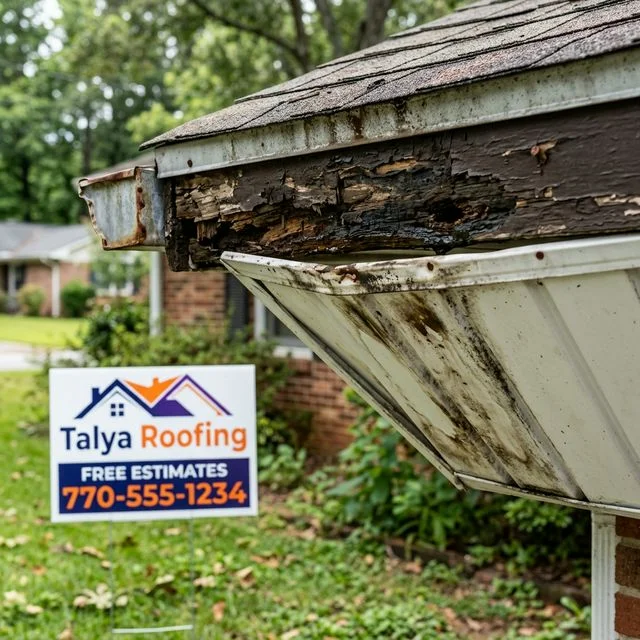
Soffit & Fascia Damage
Damaged soffit and fascia let moisture, pests, and mold into your attic. Learn the warning signs and why Savannah's climate makes this problem worse.
The Hidden Roof Problem Homeowners Miss
Most homeowners in Coastal Georgia never look straight up when standing next to their exterior walls. Because of this, rotting fascia boards and sagging soffits often go unnoticed until a major problem—like a squirrel infestation or severe attic mold—forces an emergency repair.
What Are Soffit and Fascia?
-
✓
Fascia: The long, straight board that runs along the lower edge of the roof (where the gutters are attached). It protects the roof edge from weather and supports the gutter system.
-
✓
Soffit: The exposed surface beneath the overhanging section of a roof eave. It connects the roof overhang to the side of the building and is often perforated to provide essential attic ventilation.
How Coastal Georgia Humidity Wrecks Wood Elements
Traditional wood fascia and soffit systems are highly vulnerable in Savannah's climate. The constant high humidity, frequent thunderstorms, and salty coastal air create the perfect storm for wood rot. Once the paint cracks or blisters, moisture penetrates the wood fibers, accelerating decay.
Sign #1: Peeling Paint and Visible Wood Rot
If the paint on your fascia is peeling, bubbling, or flaking off, moisture is already trapped inside the wood. Soft, spongy, or crumbling wood means the structural integrity of the fascia is gone, and the gutters are at risk of tearing away.
Sign #2: Sagging or Missing Ventilation Panels
Soffit panels should sit flush and secure. If they are sagging, buckling, or pulling away from the wall, strong wind gusts can completely rip them down during a storm, exposing your entire attic to water damage.
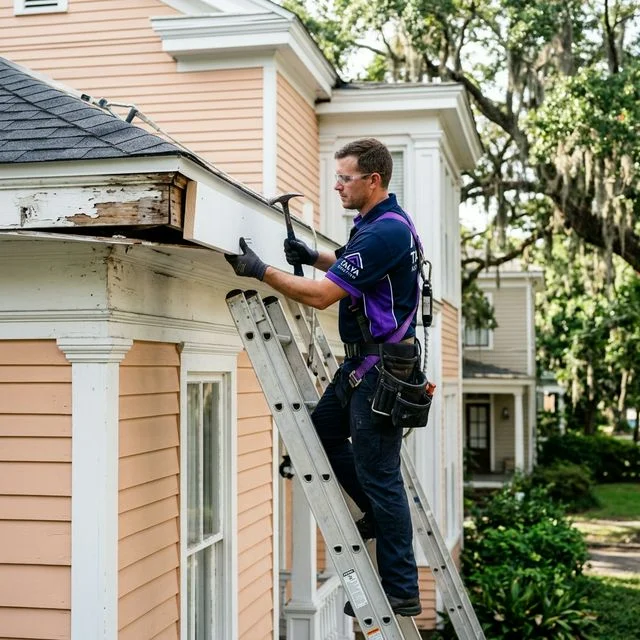
Even a small hole in rotted soffit provides an open door for pests to enter your attic.
Sign #3: Pest Intrusions (Squirrels, Birds, Wasps)
Rotting wood is easy for pests to chew through. If you hear scratching in your attic or notice wasps constantly swarming near your eaves, there is a high probability they have breached a compromised section of your soffit or fascia.
Sign #4: Moisture and Mold in Your Attic
When soffit vents are blocked by paint, debris, or damaged panels, your attic loses its intake ventilation. This traps heat and humidity inside, leading to severe condensation, warped roof decking, and dangerous black mold growth on your rafters.
Why Clogged Gutters Are the Primary Culprit
The most common cause of fascia rot is a malfunctioning gutter system. When gutters are clogged with leaves, pine needles, or pollen sludge, water backs up and overflows behind the gutter directly onto the wood fascia. This constant water exposure rots the wood surprisingly fast. Seamless gutters and regular maintenance are critical for protecting your roofline.
Repair vs. Replacement: When Upgrading to Vinyl Pays Off
While minor wood rot can sometimes be patched, extensive damage requires replacement. For Coastal Georgia homeowners, replacing wood with modern, durable materials is highly recommended:
- » Custom-bent aluminum fascia wrap prevents moisture penetration and eliminates the need for repainting.
- » Vented vinyl soffit panels will never rot, warp, or rust, ensuring permanent, maintenance-free attic airflow.
Protecting Your Home's Roofline
Ignoring damaged soffit or fascia inevitably leads to much more expensive repairs, from full gutter failure to structural attic mold. If you suspect your roof overhangs are compromised, have them professionally inspected immediately.
Expert Soffit & Fascia Replacement
Talya Roofing specializes in full exterior protection. Let us upgrade your failing wood system to durable, maintenance-free materials.