
Key Takeaways
- Coastal Georgia is warming faster than the national average, with average temperatures increasing 2.5°F since 1970 — this accelerates UV degradation, thermal cycling stress, and attic heat buildup in roofing systems.
- Atlantic hurricane intensity is increasing, with a documented shift toward stronger Category 3+ storms and higher rainfall rates that overwhelm traditional roofing and drainage designs.
- Sea level rise along the Georgia coast (measured at Fort Pulaski: 3.4mm/year) increases flood risk, saltwater intrusion, and humidity exposure that degrades roofing materials faster than historical norms.
- Insurance markets are retreating from coastal regions, making premium reduction strategies — like fortified roofing systems — increasingly critical for Savannah-area homeowners.
- Adapting your roofing strategy now — through material selection, installation techniques, and proactive maintenance — is significantly cheaper than reactive repairs after climate-driven damage events.
Climate Change Is Already Affecting Your Roof
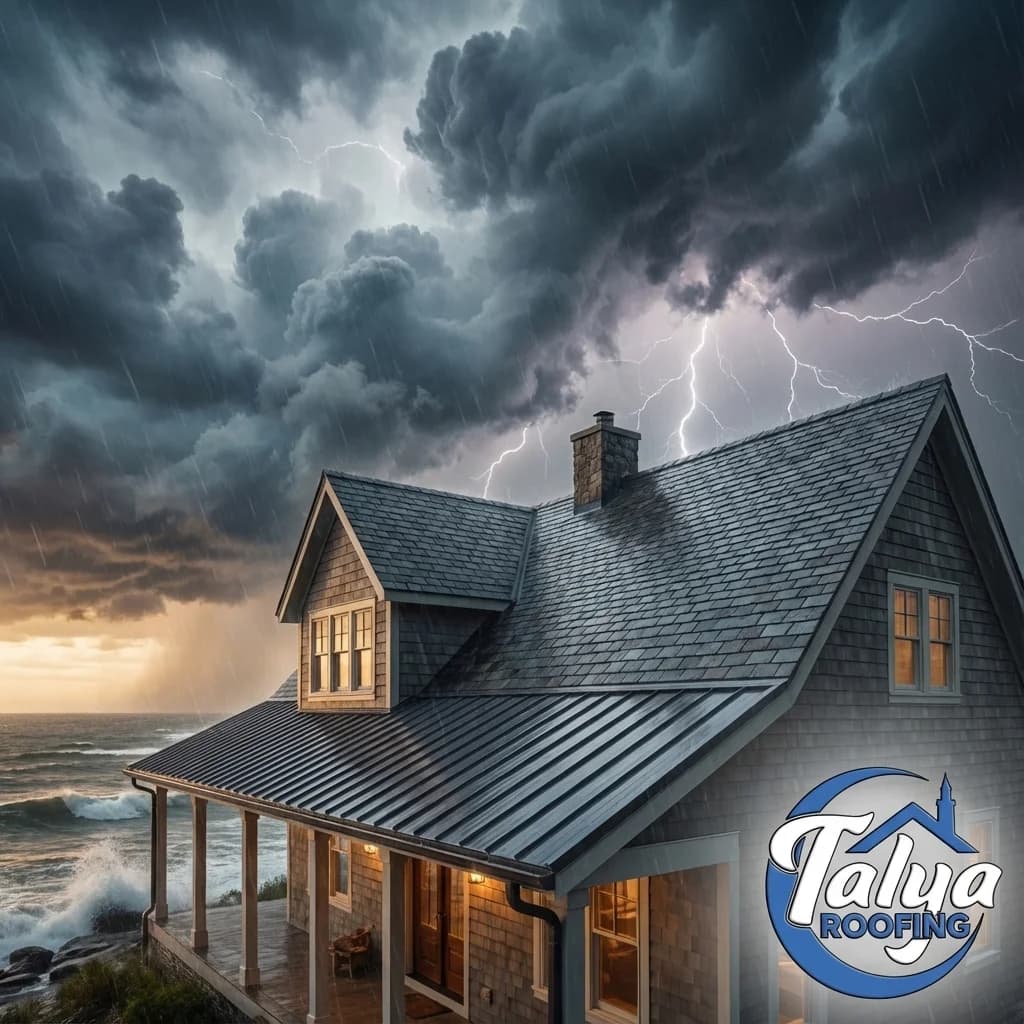
Climate change isn't a future threat for Coastal Georgia homeowners — it's a present reality that's already impacting roofing performance, insurance availability, and property values across Savannah, Pooler, Richmond Hill, Tybee Island, and the surrounding communities. The roofing decisions you make today need to account not just for current conditions but for the accelerating changes that scientists, insurers, and building code officials are projecting for the next 20–30 years — the lifespan of your next roof.
At Talya Roofing, we stay current on climate science, building code evolution, and insurance industry trends so our customers don't have to. This guide explains how specific climate changes are affecting Coastal Georgia roofs and what practical steps you can take to protect your home and your investment.
Rising Temperatures and Your Roof
Accelerated UV Degradation
Higher average temperatures mean more intense and prolonged UV exposure on roof surfaces. UV radiation is the primary cause of asphalt shingle degradation — it breaks down the chemical bonds in the asphalt, causing shingles to become brittle, lose flexibility, and shed protective granules. In the Savannah area, south- and west-facing roof slopes already degrade 20–30% faster than north-facing slopes. As temperatures continue rising, this differential will widen, and overall shingle lifespans will shorten.
What this means practically: a shingle rated for 30 years in moderate climates may only deliver 20–25 years of reliable performance in Coastal Georgia's increasingly intense heat. This has direct implications for material selection and warranty expectations.
Increased Thermal Cycling Stress
Coastal Georgia is experiencing more extreme temperature swings — hotter summer highs combined with occasional winter cold snaps driven by disrupted polar vortex patterns. Each thermal cycle causes roofing materials to expand and contract, stressing fastener connections, sealant bonds, and flashing joints. More extreme and frequent cycles accelerate the fatigue failure of these critical components.
Attic Heat Buildup
Rising ambient temperatures push attic temperatures higher, which degrades roof decking and shingles from the underside while increasing cooling costs. Proper attic ventilation has always been important in Coastal Georgia; it's now becoming critical. We recommend powered attic ventilation or enhanced ridge-and-soffit systems for any roof replacement in the Savannah area — the incremental cost is minimal compared to the lifespan extension and energy savings.
Stronger Storms, Heavier Rain
Hurricane Intensification
NOAA data shows a clear trend toward stronger Atlantic hurricanes. Warmer ocean surface temperatures provide more energy for storm development, and the proportion of Category 3, 4, and 5 storms has increased significantly since the 1980s. For Chatham County homeowners, this means the "design storm" your roof needs to survive is becoming more severe over time.
| Metric | Historical (1970–2000) | Recent (2000–2026) | Projected (2026–2050) |
|---|---|---|---|
| Avg. named storms per season | 10 | 14 | 15–17 |
| Category 3+ storms per decade | 15 | 20 | 22–28 |
| Peak wind speed increase | Baseline | +5–8% | +8–15% |
| Rainfall rate in strong storms | Baseline | +10–15% | +20–30% |
Extreme Rainfall Events
Even outside of hurricanes, Coastal Georgia is experiencing more frequent extreme rainfall events — the kind that dumps 3–6 inches in a few hours and overwhelms drainage systems. These events stress roofing systems in ways that steady rain does not: wind-driven rain finds gaps in flashing that normal rain doesn't reach, pooling water on low-slope sections exceeds the design capacity of the waterproofing system, and the sheer volume of runoff can back up gutters and flood soffits.
Savannah already averages 49 inches of rain annually — well above the national average. Climate models project this could increase by 10–20% by 2050, with more of that rainfall arriving in intense bursts rather than steady drizzle.
Sea Level Rise and Humidity
The tide gauge at Fort Pulaski (near Tybee Island) has recorded 3.4mm/year of sea level rise — among the highest rates on the U.S. East Coast due to the combination of global sea level rise and local land subsidence. While sea level rise primarily threatens low-lying properties with flooding, it has secondary effects on roofing throughout the coastal zone:
- Increased Ambient Humidity: Higher water tables and more frequent tidal flooding increase atmospheric moisture, which promotes mold, mildew, and algae growth on roofing surfaces and in attic spaces.
- Saltwater Intrusion: As salt marshes migrate inland, more properties are exposed to salt air that wasn't a factor when the home was built. Properties in Pooler, Garden City, and western Chatham County are increasingly experiencing salt-related corrosion issues that were previously limited to barrier island and waterfront homes.
- Foundation and Structural Shifts: Saturated soils and flooding can cause subtle foundation movement that stresses roof framing connections. After significant flood events, we recommend both foundation and roof inspections.
The Insurance Crisis and What It Means for Your Roof
Climate change is reshaping the insurance landscape for Coastal Georgia homeowners. Several major carriers have reduced coverage in coastal zones or exited the Georgia market entirely. Those that remain are increasing premiums, raising deductibles, and tightening underwriting criteria. Your roof condition and specifications now directly determine not just your premium but whether you can obtain coverage at all.
What Insurers Are Looking For
- Roof Age: Many carriers now refuse to write new policies on homes with roofs older than 15 years, regardless of condition. Some have moved that threshold to 10 years.
- Impact Resistance: Class 4 impact-resistant shingles are increasingly required — not just rewarded with discounts — for new policies in high-risk zones.
- Wind Mitigation Features: Georgia's wind mitigation inspection form documents specific construction features (sealed deck, secondary water barrier, enhanced fastener pattern) that qualify for premium credits.
- FORTIFIED Home Designation: The IBHS FORTIFIED Home program is gaining traction with Georgia insurers. A FORTIFIED roof designation can unlock premium discounts of 25–50% with participating carriers.
Adaptation Strategies for Coastal Georgia Homeowners
Material Upgrades
- Cool Roof Technology: Reflective shingles and metal roofing reduce roof surface temperatures by 30–50°F compared to standard dark shingles. In Savannah's increasingly hot summers, this translates to lower attic temperatures, extended shingle life, and meaningful HVAC savings.
- Impact-Resistant Shingles: Class 4 shingles withstand 2-inch hail impacts without damage. As severe convective storms become more frequent in the Southeast, these shingles provide both physical protection and insurance premium savings.
- Marine-Grade Components: Stainless steel fasteners, corrosion-resistant flashing, and salt-air-rated vent boots should be standard on any Chatham County roof, not just waterfront properties.
Installation Upgrades
- Sealed Roof Deck: Self-adhering membrane covering the entire roof deck — not just at code-required locations — creates a secondary waterproof barrier that protects against both wind-driven rain and the heavier rainfall events we're seeing more frequently.
- Enhanced Fastener Pattern: 6-nail installation patterns increase shingle uplift resistance by approximately 25% over standard 4-nail patterns.
- Improved Ventilation: Powered or enhanced passive ventilation systems that exceed code minimums protect against the higher attic temperatures that rising ambient temperatures are driving.
Maintenance Adjustments
Climate change means maintenance intervals should be shortened, not extended. We recommend annual professional inspections (rather than the traditional every-2-years guideline) for all Chatham County properties, with additional inspections after any named storm or severe weather event. Catching climate-accelerated deterioration early is the most cost-effective way to protect your investment.
Building Code Evolution
Georgia's building codes are evolving to address climate-driven risks. The 2024 Georgia Amendments to the International Residential Code include enhanced wind resistance requirements for coastal counties, stricter underlayment specifications, and updated wind speed maps that reflect current climate data rather than historical averages. When Talya Roofing installs a new roof, we don't just meet today's code — we anticipate where codes are heading and build to exceed current minimums wherever practical.
The Cost of Inaction
Delaying roofing upgrades in a changing climate is a false economy. The compounding effects of rising temperatures, stronger storms, and increasing humidity mean that a roof neglected today will deteriorate faster than the same roof would have 20 years ago. Insurance premiums are rising 8–15% annually for Coastal Georgia properties with older or unfortified roofs, and carrier availability is shrinking. The math increasingly favors proactive investment in a climate-resilient roofing system over reactive repairs and rising insurance costs.
Future-Proof Your Roof Against a Changing Climate
Talya Roofing helps Savannah, Pooler, Richmond Hill, and Tybee Island homeowners make smart roofing investments that account for today's conditions and tomorrow's realities. From material selection to fortified installation techniques, we build roofs designed for the climate we're heading into — not just the one we're leaving behind.