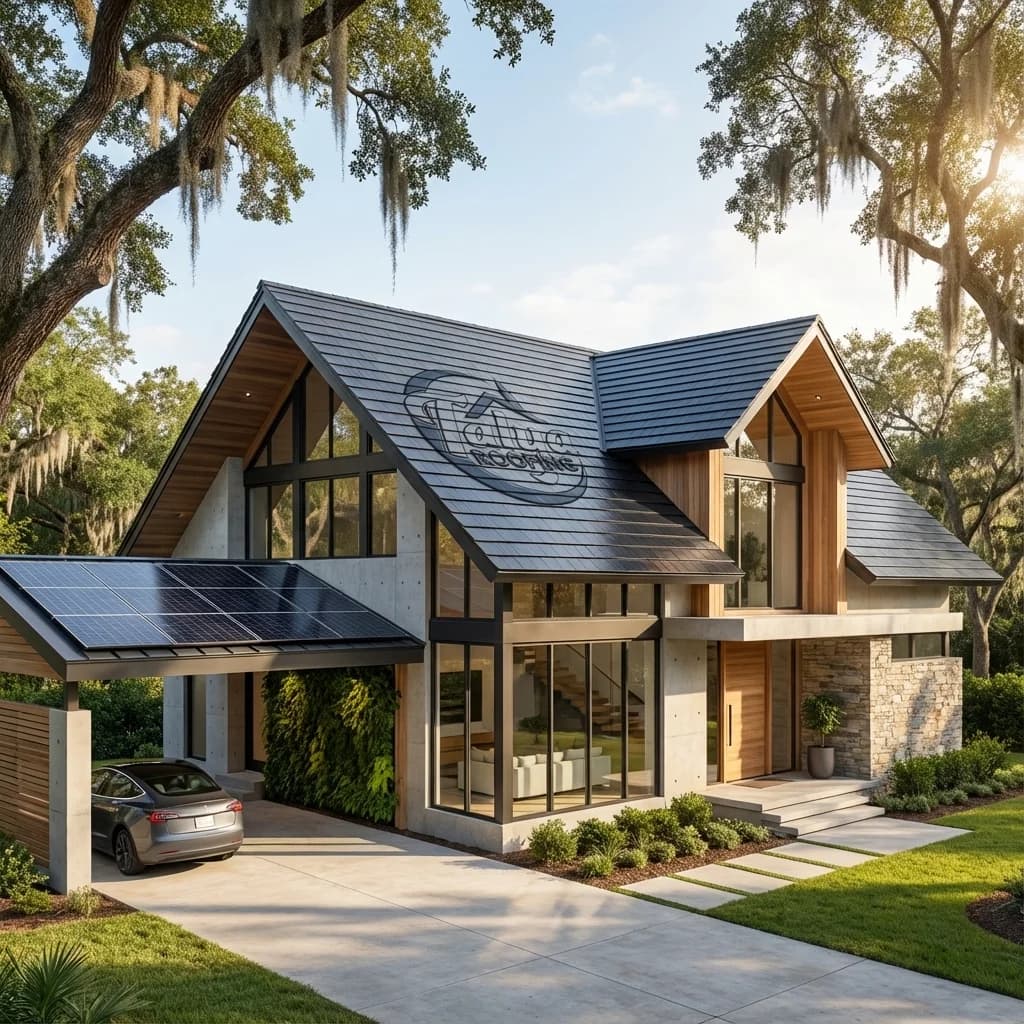

Key Takeaways
- Cool roof technology can reduce attic temperatures by 30–50°F in Savannah's peak summer months. Cooling-cost savings depend on the home, selected roof, insulation, air sealing, cooling system, weather and household use.
- Compare the written cost of preparing the roof for solar during replacement with the cost of adding solar later. Any avoided work or savings depend on the property and proposed installation; no fixed saving is guaranteed.
- The 30% federal residential solar tax credit (IRS Section 25D) expired December 31, 2025 and is no longer available for new installations. Check any state, local or utility incentive directly before including it in a project budget.
- Payback for energy-efficient roofing upgrades is property-specific. Compare the written project cost with supported savings assumptions; no fixed payback period is guaranteed.
- Talya Roofing designs every roof replacement with energy performance in mind, from material selection to ventilation engineering.
The Energy Challenge for Coastal Georgia Roofs
Savannah's subtropical climate creates one of the highest cooling demands in the country. With average summer temperatures regularly exceeding 90°F and humidity levels above 70%, your roof is not just a weather barrier — it is the primary thermal boundary between your living space and an atmosphere that actively works to heat your home. A standard dark asphalt shingle roof in Chatham County can reach surface temperatures of 150–170°F on a July afternoon. That heat transfers through the decking, into the attic, and down through your ceilings, forcing your HVAC system to work overtime.
Energy-efficient roofing and solar panels may reduce purchased electricity, but the effect on your bill depends on the home, system design, energy use and utility terms. Request a property-specific projection with its assumptions rather than assuming a fixed reduction or elimination of your electricity bill.
Cool Roof Technology: How It Works
A "cool roof" is any roofing system designed to reflect more sunlight and absorb less heat than a standard roof. The two key metrics are solar reflectance (how much sunlight the surface bounces back) and thermal emittance (how efficiently the surface radiates absorbed heat). Together, these properties determine the roof's Solar Reflectance Index (SRI).
| Roofing Material | Solar Reflectance | Surface Temp (Peak Summer) | Est. Cooling Savings |
|---|---|---|---|
| Standard Dark Shingles | 5–15% | 150–170°F | Baseline |
| Cool-Color Reflective Shingles | 25–40% | 120–140°F | Property-specific; verify assumptions |
| White Metal Roofing | 60–75% | 100–115°F | Property-specific; verify assumptions |
| Standing Seam (Light Color) | 50–65% | 105–125°F | Property-specific; verify assumptions |
For Savannah homeowners, cool-color reflective shingles offer the best balance between aesthetics and performance. These shingles use specialized granules that reflect infrared radiation (the wavelengths that carry heat) while maintaining the traditional appearance that neighborhood associations and historic districts require.
Radiant Barriers and Attic Insulation
The roof surface is only half the equation. What happens between the roof and your living space matters just as much. A radiant barrier — a reflective foil material installed on the underside of the roof rafters — blocks up to 97% of radiant heat from reaching your attic insulation. In Savannah's climate, a radiant barrier alone can reduce attic temperatures by 20–30°F while any cooling-cost saving requires a property-specific estimate.
When combined with proper attic insulation (R-38 minimum for Chatham County per the 2021 IECC), the thermal performance improvement is dramatic. During a roof replacement, we have full access to the roof deck — the ideal time to install or upgrade a radiant barrier and evaluate your insulation levels.
Ventilation as Energy Efficiency
Proper roof ventilation works in concert with reflective materials and insulation. A balanced ventilation system — with soffit intake vents and ridge exhaust vents — creates continuous airflow that carries heat out of the attic before it can transfer into your home. For homes in Pooler and Richmond Hill, estimate any cooling-cost effect using the attic conditions, air sealing, insulation, cooling system, weather and household use. A ventilation upgrade does not establish a fixed annual saving.
Solar-Ready Roof Installations
If you are considering solar panels now or within the next 5–10 years, the smartest time to prepare is during a roof replacement. A solar-ready installation ensures your new roof can support panels without modification, avoiding the costly and warranty-voiding process of retrofitting.
What Makes a Roof Solar-Ready
- Structural reinforcement — Solar panels add 3–5 pounds per square foot. We verify that your roof structure can handle the additional load and reinforce trusses or rafters where needed.
- Optimized orientation — South-facing roof sections in Savannah receive the most annual sunlight. We plan shingle and flashing layouts to leave the best solar areas unobstructed by vents, pipes, or skylights.
- Conduit pathways — Pre-installed conduit runs from the roof to the electrical panel eliminate the need to drill through finished walls later.
- Enhanced waterproofing at mount points — Solar panel mounts penetrate the roof surface. We install additional layers of waterproofing membrane at planned mounting locations to prevent leaks.
- 30+ year shingle life — Solar panels last 25–30 years. Installing them on a roof with only 10 years of life remaining means you will pay to remove and reinstall panels when the roof needs replacement. We match shingle lifespan to solar panel lifespan.
Solar Tax Credits and Financial Incentives
Compare the written equipment and installation cost with property-specific energy projections. Confirm any state, local or utility incentive directly before counting it as a saving.
Federal Residential Solar Tax Credit (expired)
The 30% federal residential solar tax credit (IRS Section 25D) was repealed by the July 2025 "One Big Beautiful Bill" and expired December 31, 2025. It is no longer available for new residential installations, so homeowners planning solar today should confirm any separate state, local or utility incentive rather than assuming a replacement benefit.
Verify Any State or Local Incentive
Ask the local tax assessor whether any exemption applies to the specific property and solar equipment. Do not assume an exemption or a fixed change in the property tax bill.
Net Metering
Ask the serving utility about current interconnection and export-compensation options for the property. Obtain the applicable eligibility rules and rates before including electricity-export revenue in a payback estimate.
Compare Energy Savings and Project Costs
There is no single payback timeline for a Savannah home. Request a written projection that states the project cost, energy-use baseline, expected system performance, utility terms and ongoing costs. Treat projected savings as estimates, not guaranteed results.
| Upgrade | Cost to Confirm | Savings Basis | Payback |
|---|---|---|---|
| Cool-color reflective shingles | Written project quote | Property-specific cooling estimate | Not a fixed period |
| Radiant barrier | Written project quote | Property-specific cooling estimate | Not a fixed period |
| Ventilation upgrade | Written project quote | Property-specific cooling estimate | Not a fixed period |
| Solar-ready prep | Written project quote | Compare preparing now with adding solar later | No immediate return assumed |
For upgrades proposed during a roof replacement, compare the combined scope and supported savings assumptions. Account for overlapping energy effects and ongoing costs; do not add separate estimates as though every saving will occur independently or continue unchanged.
Choosing the Right Energy-Efficient Materials for Savannah
Not every energy-efficient product performs equally well in Coastal Georgia. High humidity, salt air, and extreme UV exposure narrow the field of materials that deliver long-term results. Based on our experience installing roofs across Savannah, Pooler, Richmond Hill, and Tybee Island, these are the materials we recommend:
- Atlas Pinnacle Pristine shingles — feature Scotchgard Protector by 3M for algae resistance and come in cool-color options with enhanced reflectance. Talya Roofing is an Atlas PRO+ Silver Member; warranty eligibility depends on the quoted product or system, required components, installation, registration or application, property eligibility, and current written Atlas terms.
- Standing seam metal in Galvalume or Kynar finishes — the highest reflectance and longest lifespan, ideal for homes planning solar integration.
- LP TechShield radiant barrier sheathing — replaces standard OSB decking with radiant-barrier-laminated panels, combining structural support and thermal performance in one product.
- GAF Cobra ridge vents — weather-protected exhaust ventilation that maintains airflow even during heavy rain, critical for Coastal Georgia storm performance.
The Talya Roofing Energy-Efficient Installation Process
Every energy-efficient roofing project follows a structured process designed to maximize performance and value:
- A $250 documented homeowner inspection includes a physical assessment when safe, annotated condition photographs, AI-assisted image organization with human review, and a written report. Thermal imaging is not included unless separately quoted.
- Customized material recommendation based on your home's orientation, roof geometry, and energy goals.
- Detailed cost-benefit analysis showing projected savings and payback timelines.
- Coordinated installation of reflective materials, radiant barriers, and ventilation upgrades during a single project.
- Solar-readiness preparation if you are planning panels within the next decade.
- Post-installation energy monitoring recommendations to track real-world performance.
Lower Your Energy Bills with a Smarter Roof
Ready to compare energy-efficient roofing options? Talya Roofing can provide a complimentary project assessment and estimate for proposed upgrades. Actual energy performance and savings depend on the property, selected system, installation, weather, and household use; no thermal-imaging result or savings amount is included or guaranteed.
Get Your Free Energy Assessment
Or call us directly: (912) 999-7989
Energy-Efficient Roof Types Compared for Savannah Homes
Choosing the right energy-efficient roofing material for your Savannah home depends on your roof slope, budget, and long-term savings goals. Here's how the top options compare in our local climate:
| Material | Solar Reflectance | Cooling Savings | Lifespan | Cost per sq ft |
|---|---|---|---|---|
| Cool Metal (light color) | 60-70% | Property-specific | 40-70 years | $7-$14 |
| Reflective asphalt shingles (check the selected product's ratings) | 25-40% | Property-specific | 25-30 years | $4-$7 |
| Clay/Concrete Tile | 30-50% | Property-specific | 50-100 years | $10-$18 |
| TPO Membrane (flat roof) | 70-80% | Property-specific | 20-30 years | $5-$8 |
| Green Roof System | N/A (insulative) | Property-specific | 40+ years | $15-$25 |
Cooling-cost savings and payback depend on the home, selected roof system, insulation, air sealing, ventilation, utility rates and household use. Compare options using a property-specific written projection with stated assumptions; no fixed percentage saving or payback period is guaranteed.
Roof Ratings and Tax Eligibility
Roof-performance ratings help compare products; they do not establish tax-credit eligibility. Evaluate the selected roof separately from any solar-electric equipment and apply the installation-date restrictions described above.
Sources: DOE — Solar Energy • ENERGY STAR — Roof Products