
Flat roofs are ubiquitous across Savannah's Historic District, commercial buildings in Pooler, and modern coastal home additions. Unlike pitched asphalt roofs which use gravity to rapidly shed rainwater, flat roofs—which actually have a very slight, barely-perceptible slope—suffer entirely different hazards. If water isn't draining correctly, a flat roof can quickly turn into a shallow rooftop swimming pool, exposing every microscopic seam to massive hydrostatic pressure.
Whether you have a TPO (Thermoplastic Polyolefin), EPDM (Rubber), or Modified Bitumen (Torch-Down) system, proactive maintenance is the only way to avoid catastrophic interior leaks. Here is Talya Roofing's professional maintenance protocol for low-slope properties in Coastal Georgia.
🛑 The Danger of "Ponding"
- Ponding occurs when water remains on a flat roof 48 hours after a rainstorm.
- Water is heavy (roughly 8.3 lbs per gallon). A 10x10 foot puddle that is 1 inch deep weighs over 500 pounds, pulling the roof deck downward and worsening the low spot.
- Ponding accelerates the breakdown of TPO seams and degrades rubber adhesives. It must be addressed immediately by clearing roof un-clogging drains or adding tapered insulation.
Biannual Flat Roof Maintenance Checklist
Because flat roofs don't self-clear debris, you should walk the roof (or hire a professional) every spring and fall, plus directly after any named tropical storms pass through Chatham County.
1. Clear Scuppers, Drains, and Gutters
The single most important task. Savannah is famous for gorgeous, overhanging Live Oaks dropping Spanish moss, leaves, and twigs directly onto your roof. This debris washes into the primary drains (scuppers), plugging them effortlessly. You must physically remove debris out of every drain box and ensure water flows freely. 80% of flat roof leaks are caused by clogged drains.
2. Inspect Seams and Penetrations
Flat roof membranes are literally glued or heat-welded together. Over time, UV radiation and structural settlement cause these seams to separate slightly (often called "fish-mouthing"). Analyze every seam. Check the flashing around HVAC units, plumbing pipes, and skylights. If you see peeling or separation, contact a roof repair specialist to re-weld or re-seal the area before water intrudes.
3. Look for Blistering and Alligatoring
Particularly common on Modified Bitumen (tar) roofs. "Blistering" looks like large bubbles under the surface, caused by trapped moisture expanding in the heat. "Alligatoring" entails deep cracking that looks like a reptile's skin, signaling the asphalt has entirely lost its elasticity and waterproofing capabilities.
| Flat Roof Material | Common Vulnerabilities | Lifespan Expectancy |
|---|---|---|
| TPO (White Roll) | Seam failure, puncture from foot traffic/HVAC work. | 15 - 20 Years |
| EPDM (Black Rubber) | Adhesive shrinkage, seam separation, extreme heat absorption. | 20 - 25 Years |
| Modified Bitumen | Blistering, alligatoring, edge flashing deterioration. | 12 - 15 Years |
DIY Fixes vs. Calling a Professional
Safe to DIY: Sweeping debris. Removing Spanish moss. Using a leaf blower to clear off leaves. Removing blockages from scuppers physically.
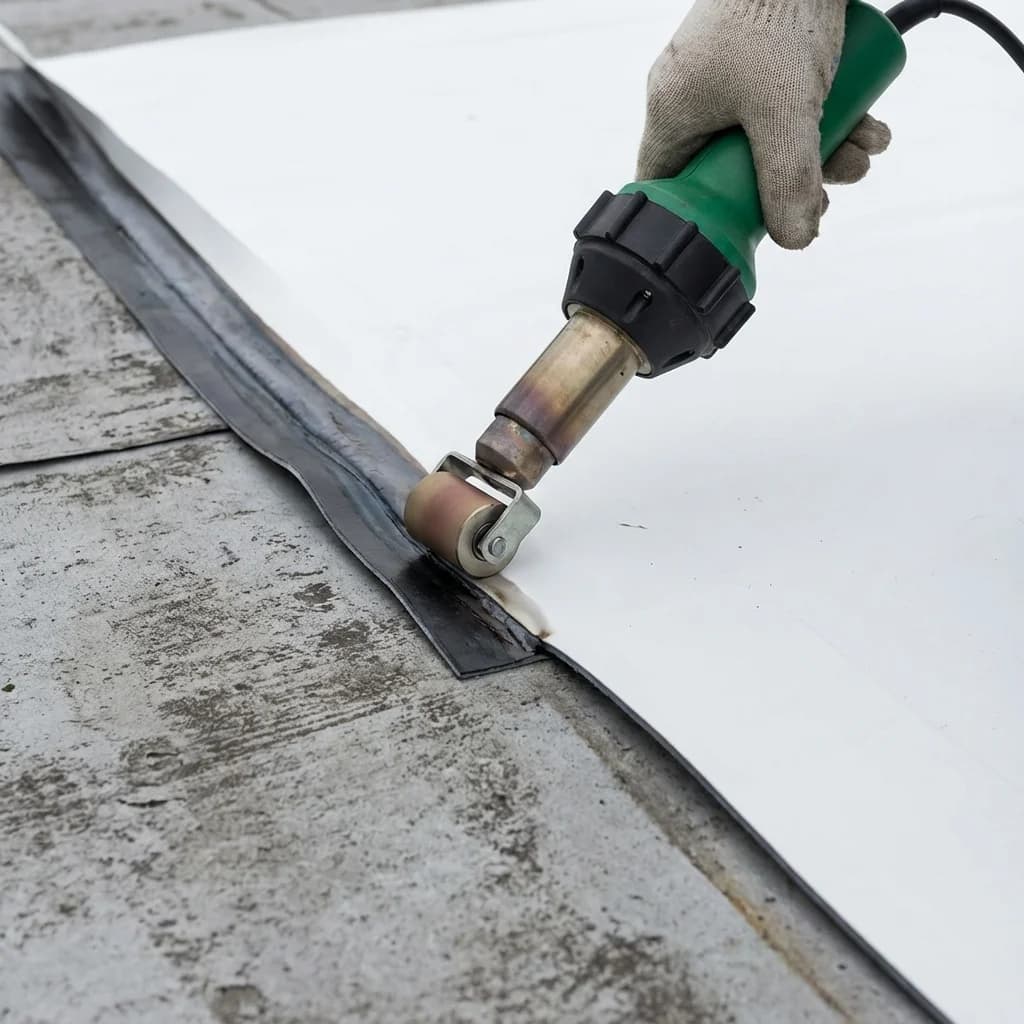
Call Talya Roofing: Do not attempt to patch a TPO or EPDM roof with roofing cement from a hardware store. Asphalt-based cements are chemically incompatible with single-ply membranes and will actually melt holes right through them, destroying the roof. TPO requires specialized hot-air welding equipment. EPDM requires specialized primers and uncured flashing tapes. If you spot a tear or open seam, book an inspection immediately.
Frequently Asked Questions
Can I put a silicone coating over my flat roof to fix leaks?
Elastomeric or silicone coatings are excellent to extend the life of a roof and improve UV reflectivity. However, they are NOT structural quick-fixes. If a seam is completely torn, or the insulation underneath is soaked with water, a coating will just trap the water inside and fail. The roof must be structurally sound before applying a coating.
Are flat roofs required in downtown Savannah?
Many properties in the historic district rely on flat or very low-slope architectures hidden behind historic parapet walls to comply with exact historical society guidelines. Talya Roofing frequently works with these exact constraints.
Flat Roof Maintenance Schedule for Savannah
Flat and low-slope roofs on Savannah commercial buildings and residential additions require more frequent maintenance than pitched roofs because water doesn't shed as quickly, creating standing water risks during our frequent heavy rainfall events.
| Frequency | Task | Why It Matters in Savannah |
|---|---|---|
| Monthly | Clear drains and scuppers of debris | 49" annual rainfall concentrates on flat surfaces |
| Quarterly | Inspect membrane seams and flashings | UV and thermal cycling stress seam adhesion |
| Bi-annually | Professional inspection with moisture scan | Trapped moisture causes membrane blistering |
| After major storms | Check for ponding water and debris impact | Ponding water exceeding 48 hours indicates drainage failure |
The most critical maintenance item for flat roofs in Savannah is ensuring drainage systems remain clear. A single blocked drain during a 2-inch-per-hour summer thunderstorm can accumulate thousands of pounds of water weight on a flat roof section within minutes, creating structural stress and potential collapse risk.
When to Repair vs. Recoat vs. Replace
Flat roof decision-making follows a different logic than pitched roofs. For TPO and EPDM membranes under 10 years old with localized damage (punctures, small seam failures), patch repairs at $200-$500 per location are cost-effective. For membranes 10-15 years old showing widespread seam degradation, a liquid-applied recoating system ($3-$5 per sq ft) can extend life by 8-12 years at a fraction of full replacement cost. Full replacement is warranted when the membrane is 15+ years old, has multiple active leaks, or shows visible membrane shrinkage pulling away from parapets and curbs.
Common Flat Roof Problems in Savannah
Savannah's climate presents a unique combination of challenges for flat roofs that building owners in drier, cooler regions never face. Understanding these specific problems helps you catch them early and budget for repairs before they escalate into interior damage or structural compromise.
Ponding Water
Ponding — standing water that remains on the roof 48 hours after rain stops — is the most common and most destructive flat roof problem in Savannah. With 49 inches of annual rainfall and frequent summer thunderstorms that can dump 2-3 inches per hour, Savannah flat roofs face extraordinary water loads. Ponding occurs when drains are clogged, scuppers are blocked by debris, or the roof deck has sagged and created low spots. The weight alone is destructive: a 10x10 foot area with 1 inch of standing water weighs over 500 pounds, causing the deck to sag further and the ponding area to grow with each rain event. Ponding also accelerates membrane degradation — UV rays reflecting off standing water create a magnifying effect that breaks down TPO and EPDM faster than dry exposure.
Membrane Blistering
Blistering occurs when moisture trapped between the membrane and insulation layer expands in Savannah's intense summer heat. Roof surface temperatures on flat roofs can exceed 170°F during July and August, turning even small amounts of trapped moisture into steam that pushes the membrane upward. Small blisters are cosmetic; large blisters compromise the membrane's waterproofing integrity and eventually rupture, creating active leak points. Blistering is especially prevalent on modified bitumen (torch-down) roofs where installation conditions were humid — a common situation in Savannah where relative humidity rarely drops below 60% even during construction.
Seam Failure
Every flat roof membrane system relies on seams — the joints where membrane sheets or rolls overlap and are bonded together. TPO seams are hot-air welded; EPDM seams are adhesive-bonded; modified bitumen seams are torch-fused. All three seam types are vulnerable to Savannah's thermal cycling. Daily temperature swings of 30-50°F on the roof surface cause constant expansion and contraction stress at every seam. Over time, this cycling fatigues the bond, causing seams to separate or "fish-mouth" — lifting at the edge and allowing water to penetrate beneath the membrane. Salt air accelerates adhesive breakdown on EPDM roofs near the coast, making seam inspections especially critical for Tybee Island and waterfront properties.
Flashing Deterioration at HVAC Equipment
Commercial flat roofs in Savannah typically support HVAC units, plumbing vents, exhaust fans, and sometimes satellite equipment. Each of these penetrations requires custom flashing — and each flashing point is a potential leak source. Vibration from HVAC units gradually loosens flashing connections. Foot traffic from HVAC maintenance technicians can damage the membrane around equipment pads. The sealant compounds used at flashing transitions crack and shrink in Savannah's UV environment within 5-7 years. Regular inspection of every roof penetration is essential preventive maintenance for commercial flat roof systems.
Preventive Maintenance Schedule
Flat roofs in Savannah require a more aggressive maintenance schedule than pitched roofs because problems escalate faster and damage accumulates more quickly in our climate. Here is the maintenance cadence we recommend for commercial and residential flat roofs in Chatham County.
Quarterly Inspections (Owner or Building Manager)
Every three months, the building owner or property manager should perform a basic inspection covering the most critical maintenance items:
- Clear all drains and scuppers: Remove debris (leaves, Spanish moss, twigs) from every drain box, scupper, and internal drain. A single blocked drain during a heavy rain event can flood the entire roof within minutes.
- Check for ponding: After any rain event, observe whether water drains within 48 hours. Mark any ponding areas for professional assessment.
- Walk the perimeter: Look for membrane pulling away from parapet walls, damaged edge flashing, or displaced coping stones.
- Check around HVAC units: Look for membrane damage near equipment, deteriorated pipe boots, and separated flashing at curb mounts.
Annual Professional Inspection
Once per year — ideally in spring before storm season — a professional roofing contractor should perform a comprehensive inspection including:
- Infrared moisture scan: Detects trapped moisture beneath the membrane that is invisible to visual inspection. Moisture-damaged areas can be targeted for localized repair before they spread.
- Seam integrity assessment: Testing seam adhesion at multiple points across the roof to identify early-stage failure before leaks begin.
- Core sample (if warranted): For roofs over 10 years old, a core sample reveals the condition of each layer — membrane, insulation, and deck — providing data to make repair vs. replace decisions.
- Drainage system evaluation: Verifying that all drains, scuppers, and gutters are properly graded and functioning at designed capacity.
- Photo documentation: Creating a dated record of the roof's condition for insurance and maintenance tracking purposes.
Post-Storm Inspection
After severe wind, hail, or debris impact, request a flat-roof assessment as soon as weather, safe access, location, storm volume, and scheduling allow. Debris may puncture membranes and heavy rain may expose drainage problems. Talya Roofing can document visible conditions and prepare a construction estimate; the carrier and policy determine whether that information affects a claim.
Ongoing Drain Maintenance
In Savannah's environment, drain maintenance cannot wait for quarterly inspections. During fall leaf season and spring live oak drop, drains may need clearing every 2-4 weeks. Building managers should establish a relationship with a maintenance provider or assign staff to check drains after every significant storm. The cost of monthly drain clearing ($50-$100 per visit) is negligible compared to the $5,000-$20,000 cost of repairing water damage from a single drain backup event.