
Key Takeaways
- Savannah's historic districts have strict roofing material and design requirements enforced by the Historic District Board of Review
- Period-appropriate materials like slate, wood shake, and standing seam metal are often required for visible roof planes
- Working with a contractor experienced in historic restoration prevents costly compliance violations and project delays
- Modern underlayment and flashing technologies can be used beneath historic-approved materials for superior protection
- Tax incentives and preservation grants can offset the higher cost of historically accurate roofing materials
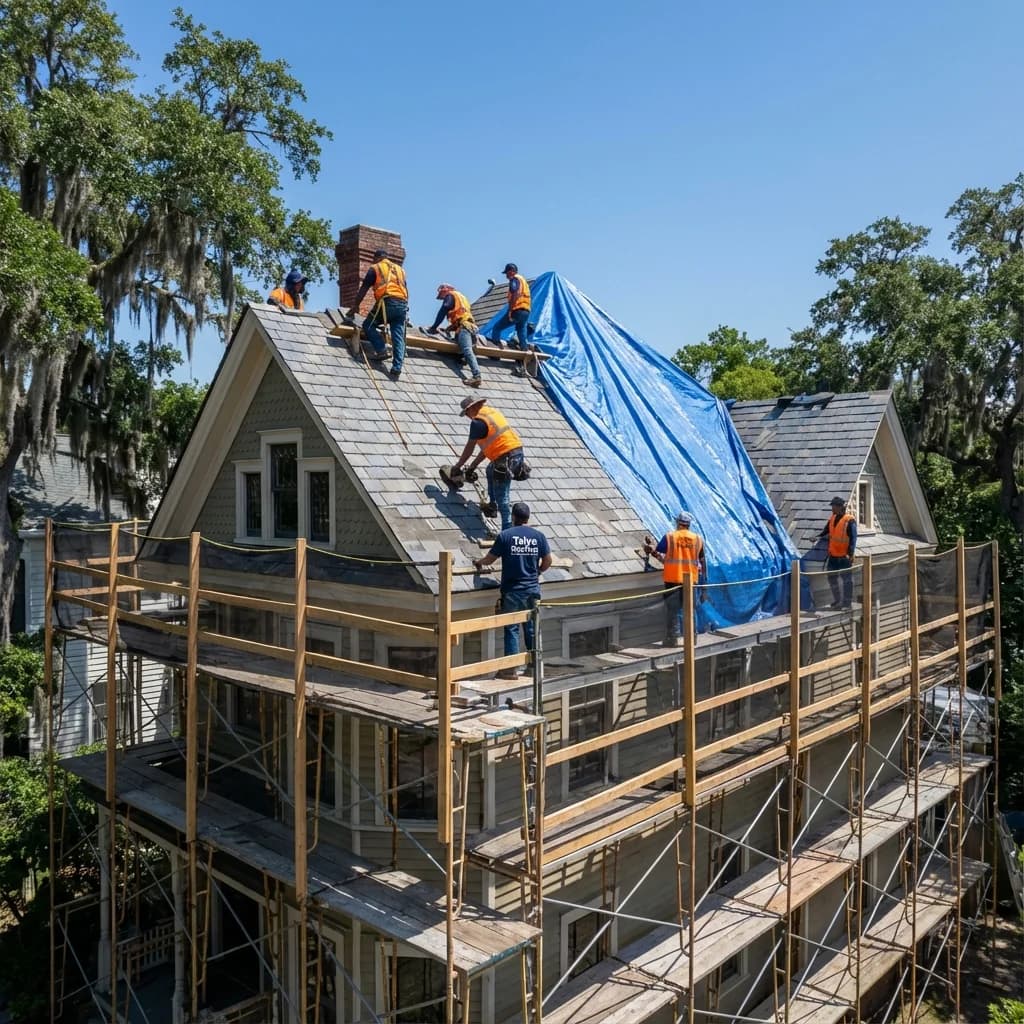
Savannah is one of America's most beautifully preserved cities, with over 20 squares and thousands of historic structures spanning three centuries of architectural history. If you own a home in the Landmark Historic District, the Victorian District, or any of Savannah's protected neighborhoods, your roof isn't just a functional element — it's a visible piece of the city's heritage. Restoring or replacing a historic roof requires specialized knowledge, materials, and techniques that go far beyond standard residential roofing.
At Talya Roofing, we understand the unique intersection of preservation requirements and modern building science. We've guided homeowners throughout Savannah, Pooler, and Richmond Hill through the complex process of historic roof restoration, delivering results that honor the past while protecting the future.
Understanding Savannah's Historic District Requirements
Before touching a single shingle on a historic home, you need to understand the regulatory landscape. The Historic District Board of Review (HDBR) oversees exterior changes to buildings within Savannah's designated historic districts. Roofing projects on contributing structures — buildings identified as historically significant — require a Certificate of Appropriateness (COA) before work begins.
The review process evaluates roofing material, color, profile, and visibility from public rights-of-way. Materials visible from the street face higher scrutiny than those on rear slopes or areas hidden behind parapets. Understanding these distinctions can save you thousands of dollars while still achieving full compliance.
What the Board Looks For
- Material Authenticity: Replacement materials should match the original in composition, size, shape, color, and texture
- Profile Consistency: The roof's silhouette, including ridge lines, hip angles, dormers, and decorative elements, must be preserved
- Color Compatibility: Roofing colors must be consistent with the period and style of the building
- Flashing and Trim: Metal flashing, gutters, and decorative trim visible from public view must use historically appropriate materials, typically copper or painted galvanized steel
Period-Appropriate Roofing Materials
Natural Slate
Slate has crowned Savannah's finest homes since the colonial era. Its unmatched longevity — 75 to 200 years depending on the quarry source — makes it the gold standard for historic restoration. Pennsylvania black slate, Vermont green and purple slate, and Buckingham Virginia slate are all historically documented in Savannah's architecture. A properly maintained slate roof installed in the 1880s may still be performing today, requiring only selective replacement of damaged individual slates rather than a full tear-off.
Slate restoration requires specialized skills: proper nail sizing and placement, headlap calculations specific to Savannah's wind-driven rain exposure, and the use of copper or stainless steel fasteners that won't corrode in our salt-air environment. Our crews are trained in both traditional and modern slate techniques, including the use of synthetic underlayments that outperform the original felt paper while remaining invisible beneath the slate.
Wood Shake and Shingle
Cedar shake and shingle roofs are common on Savannah's Victorian-era and Craftsman-style homes. While beautiful and historically accurate, wood roofing in coastal Georgia faces significant challenges: humidity promotes moss and algae growth, termites are a constant threat, and fire rating requirements have tightened considerably since these homes were built.
Modern pressure-treated cedar shakes with fire-retardant and preservative treatments address most of these concerns while maintaining the authentic appearance required by the HDBR. We also install proper ventilation systems beneath wood roofing to prevent moisture accumulation — something original builders rarely considered but which dramatically extends the lifespan of wood roofing in our climate.
Standing Seam Metal
Terne-coated stainless steel and copper standing seam roofs are historically documented throughout Savannah's commercial and residential architecture. For homes where metal was the original roofing material, modern standing seam systems provide an excellent combination of historical accuracy and contemporary performance. The clean vertical lines of standing seam metal are appropriate for Federal, Greek Revival, and Italianate styles common in the district.
The Restoration Process
Historic roof restoration follows a careful sequence designed to preserve original materials wherever possible and ensure full regulatory compliance:
- Documentation: We photograph and catalog every element of the existing roof — materials, fastening patterns, flashing details, and decorative elements — before any work begins
- Assessment: A thorough roof inspection identifies structural concerns, determines which original materials can be salvaged, and evaluates the decking and framing beneath
- Regulatory Submission: We prepare COA applications with material specifications, color samples, and installation details that demonstrate compliance with HDBR standards
- Selective Removal: Rather than a complete tear-off, we remove only damaged materials, preserving original elements that remain structurally sound
- Structural Repair: Historic roof framing often needs reinforcement. We use period-appropriate timber sizes and joinery methods where visible, with modern engineered solutions where hidden
- Installation: New materials are installed using techniques that match the original methods while incorporating modern best practices for waterproofing and wind resistance
Balancing Preservation With Performance
One of the biggest challenges in historic roofing is the gap between original construction methods and modern building science. Original roofs often had no underlayment, minimal flashing, and ventilation that relied on the natural leakiness of the building envelope. Simply replicating these methods with period materials results in a roof that looks right but performs poorly.
The key is leveraging modern technology in invisible locations. High-performance synthetic underlayments, ice-and-water shield membranes at valleys and penetrations, and engineered ventilation systems can all be installed beneath historically accurate surface materials. The result is a roof that satisfies the Board of Review from the street while delivering 21st-century protection and energy efficiency from within.
Financial Considerations
Historic roof restoration typically costs 2–4 times more than a standard roof replacement with architectural shingles. However, several programs can significantly reduce the financial burden:
- Federal Historic Tax Credit: A 20% tax credit is available for certified rehabilitations of income-producing historic properties
- Georgia State Tax Credit: Georgia offers an additional 25% state tax credit for qualified rehabilitation expenses on certified historic properties
- Historic Savannah Foundation Grants: Limited grants are available for preservation projects in designated districts
- Property Value Premium: Homes with properly maintained historic roofing materials command 10–20% higher resale values in Savannah's historic districts
Ongoing Maintenance
Historic roofing materials demand more attentive maintenance than modern alternatives. Annual inspections should check for cracked or slipped slates, curled or split wood shingles, loose metal seams, and deteriorated flashing. Moss and biological growth need prompt treatment before they retain moisture against the roofing surface. Gutter systems must be kept clear to prevent water backup beneath fragile original materials. Regular roof repair catches small issues before they become major restoration projects.
Preserve Your Historic Home's Legacy
Talya Roofing combines historic preservation expertise with modern roofing science. We navigate the HDBR approval process and deliver restorations that protect your home for generations to come.
Schedule a Historic Roof Consultation or call (912) 999-7989