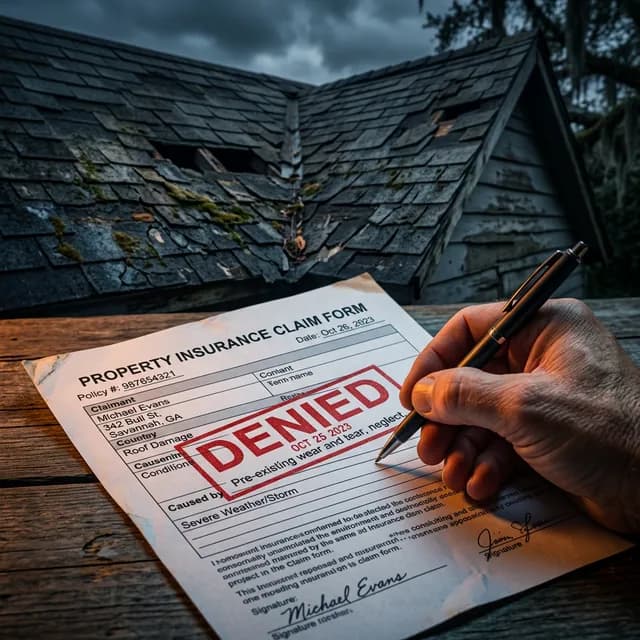

❌ Claim Denied? Your Options
- ✓ You have the right to appeal any denied claim in Georgia
- ✓ Getting a second opinion from a licensed contractor strengthens your appeal
- ✓ The Georgia Department of Insurance handles consumer complaints
- ✓ Public adjusters work on your behalf (typically for 10-15% of the claim)
- ✓ Most denials can be overturned with better documentation
Getting your roof insurance claim denied feels like a gut punch — especially when you are staring at real damage that needs real repairs. But a denial is not the end of the road. In Georgia, homeowners have multiple avenues to challenge a denied claim, and many denials are overturned when the right documentation and professional support are brought to the table.
This guide walks you through why claims get denied, how to appeal successfully, and when to bring in professional help.
Common Reasons for Claim Denial in Georgia
- Pre-existing damage: The adjuster determined the damage existed before the storm event. This is the most common denial reason and often the most challengeable
- Wear and tear: The carrier classifies the damage as normal aging rather than storm-related. Older roofs are more susceptible to this classification
- Insufficient documentation: The claim lacked dated photos, a clear timeline, or evidence connecting the damage to a specific weather event
- Missed filing deadline: Georgia policies have strict reporting windows. Filing late gives carriers grounds for denial
- Policy exclusions: Specific damage types may be excluded by your policy — cosmetic hail damage exclusions are increasingly common
- Improper maintenance: If the carrier can demonstrate the homeowner failed to maintain the roof, they may deny citing negligence
Step-by-Step Appeal Process
- Request the denial in writing: Get the specific reason for denial documented. Do not accept a verbal denial
- Get an independent inspection: Have a licensed roofing contractor inspect the damage and provide a detailed report. Our inspections include photo documentation and Xactimate-format estimates
- Review appeal options: Ask the carrier or an appropriately licensed public adjuster or attorney what written review process and deadlines apply under your policy
- Ask about re-inspection: If safely accessible roof areas were not reviewed, ask the carrier what re-inspection process is available
- Review any appraisal provision: If your policy contains one, ask an appropriately licensed public adjuster or attorney whether it applies and what procedures control
When to Bring in Professional Help
Public Adjusters
A properly licensed public adjuster may represent a policyholder in claim preparation or negotiation within the authority allowed by Georgia law. Services, fees, contracts, and results vary. Verify the license and written fee agreement, and consider independent legal advice for a disputed claim.
Insurance Attorney
For large claims or cases where the carrier is acting in bad faith, an insurance attorney can file a formal complaint or lawsuit. Georgia's bad faith insurance laws provide additional remedies if the carrier unreasonably denied or delayed a valid claim.
Georgia Department of Insurance
You can file a consumer complaint with the Georgia Department of Insurance at any point. While they cannot force a carrier to pay a claim, their investigation can prompt the carrier to reconsider.
How We Help with Denied Claims
Talya Roofing can re-inspect safely observable roof conditions, provide photographs, measurements, and an itemized construction estimate, and attend an on-site re-inspection when requested to explain our repair scope. We do not challenge or appeal the carrier's decision, file supplements, or negotiate coverage; the policyholder or an appropriately licensed representative handles those actions.
Claim Denied? Do Not Give Up.
Request a $250 documented homeowner inspection for a current condition record. It includes a physical assessment when safe, annotated condition photographs, AI-assisted image organization with human review, and a written report. Coverage advocacy belongs with an appropriately licensed public adjuster or attorney.
Step-by-Step Appeal Strategy for Denied Claims
When your roof insurance claim is denied in Georgia, you have several levels of appeal available. The key is acting quickly and building a documented case that addresses the specific denial reason.
Level 1: Internal Appeal (30-60 days)
Request the written denial reason from your insurer, then consider an independent roof inspection to document visible conditions. Include timestamped photos, relevant weather records, and repair estimates from locally established, insured roofers with the credentials applicable to the work. Follow your policy's appeal instructions or consult a qualified insurance professional when appropriate.
Level 2: Georgia Commissioner of Insurance
If the internal appeal fails, file a complaint with the Georgia Office of Insurance and Safety Fire Commissioner. They investigate claim handling practices and can compel insurers to re-review denied claims. This is a free process and takes 30-90 days.
Level 3: Public Adjuster or Attorney
A licensed public adjuster may represent a policyholder for a fee, and an insurance attorney may advise on legal disputes. Verify current Georgia licensing, contract terms, fees, conflicts, and scope before hiring either professional. No representative can guarantee a recovery or percentage increase.
Georgia-Specific Insurance Regulations That Help Homeowners
Georgia has several consumer protection laws that strengthen homeowners' positions when dealing with denied roof claims:
- Georgia Act 277: Insurers cannot non-renew solely based on a weather-related claim if the homeowner made repairs. This prevents retaliation for filing legitimate storm damage claims.
- Bad Faith statute (O.C.G.A. § 33-4-6): If an insurer denies a claim in bad faith, the homeowner can recover the claim amount plus 50% penalty plus attorney's fees. This gives significant leverage in disputes.
- Prompt payment requirement: Georgia requires insurers to pay undisputed portions of claims within 15 business days of receiving proof of loss. Delay beyond this triggers interest penalties.
Knowing these laws gives you negotiating power. When communicating with your insurer about a denial, referencing the specific statute that applies to your situation signals that you understand your rights and are prepared to escalate if necessary.
Documentation That Strengthens Your Appeal
The difference between a successful appeal and a failed one usually comes down to documentation quality. Before-storm photos of your roof in good condition (from a pre-season inspection) establish the baseline. After-storm photos with timestamps prove the damage occurred during the covered event. NOAA weather data for your specific zip code on the date of the storm provides objective evidence of the weather event. A licensed contractor's inspection report with detailed findings and repair estimates gives the adjuster or appeals board concrete information to work with. Compile all of this into a single organized packet referenced in your appeal letter.