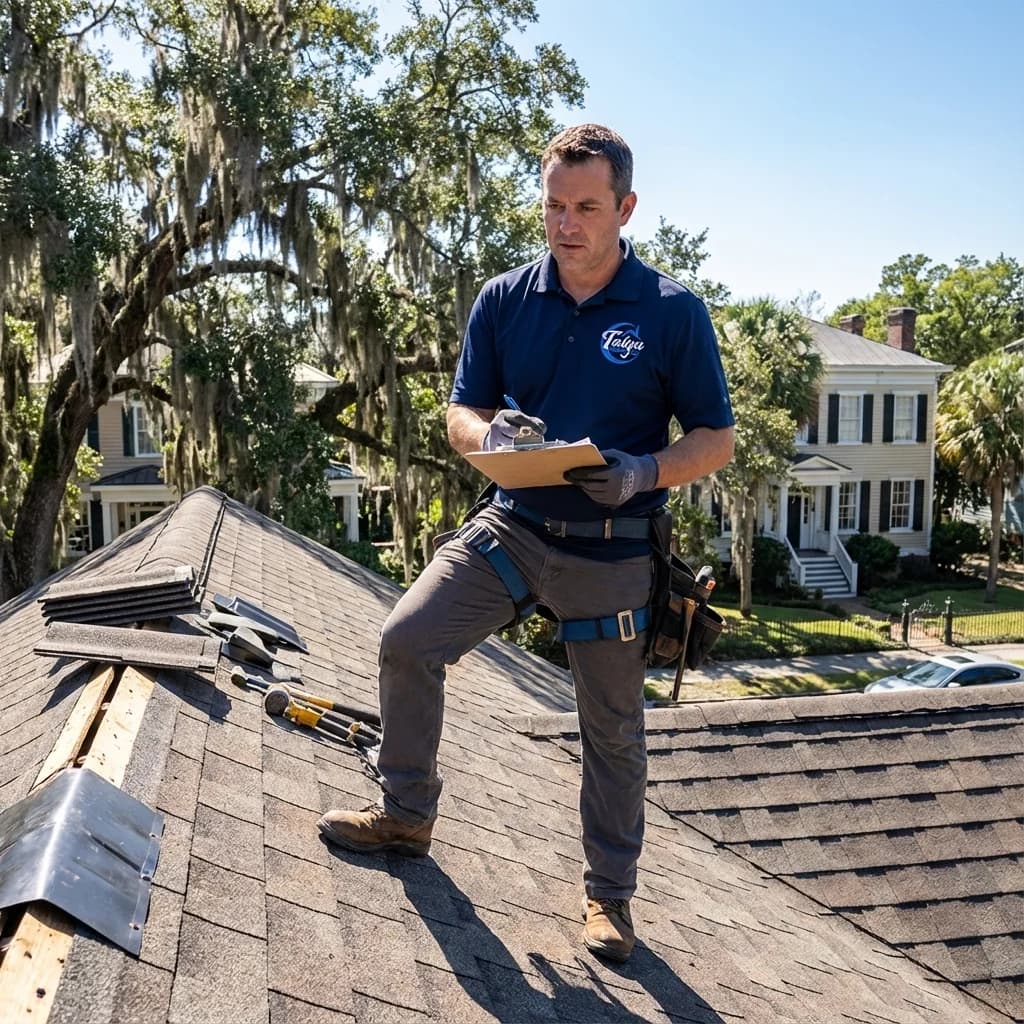

✅ Why Regular Inspections Pay for Themselves
- ✓ Catches minor issues before they become $5,000+ repairs
- ✓ Protects your manufacturer warranty (most require regular maintenance)
- ✓ Provides documentation for insurance claims if storms hit later
- ✓ Extends your roof's lifespan by 3-5 years on average
- ✓ Gives you peace of mind before hurricane season
A professional roof inspection costs a few hundred dollars. Ignoring the small problem that inspection would have caught can cost you $5,000-$15,000. The math is straightforward — regular inspections are one of the best investments a Savannah homeowner can make.
This guide covers when you need inspections, what a thorough inspection includes, what inspectors look for, and how inspection reports protect you financially.
When to Get Your Roof Inspected
We recommend professional inspections in the following situations:
- Annually: Once per year as preventive maintenance, ideally in spring before storm season
- After major storms: Any storm with hail, sustained winds over 50 mph, or visible debris should trigger an inspection
- Before buying or selling a home: Roof condition is a major factor in home value and negotiations
- When you notice interior signs: Ceiling stains, attic moisture, or increased energy bills can indicate roof problems
- At the 15-year mark: When your roof passes the midpoint of its expected lifespan, annual inspections become especially important
What a Professional Inspection Covers
A thorough roof inspection by a qualified contractor examines far more than just the shingles. Our professional inspection includes:
Exterior Roof Surface
- Shingle condition: granule loss, curling, cracking, buckling, or missing shingles
- Flashing integrity: around chimneys, vents, skylights, walls, and valleys
- Ridge cap and hip condition
- Pipe boot and vent condition
- Gutter system: attachment, slope, and drainage
Attic Interior
- Ventilation adequacy: intake and exhaust airflow balance
- Moisture and condensation: signs of trapped humidity
- Insulation condition: displacement, compression, or moisture damage
- Decking integrity: soft spots, delamination, or rot
- Daylight or water penetration points
How Inspections Protect Your Insurance Claim
One of the most valuable benefits of regular inspections is the documentation they create. When you file a storm damage claim, your insurance company wants to know what the roof looked like before the storm. An annual inspection report with dated photos provides that baseline. Without it, the adjuster may attribute storm damage to pre-existing wear, reducing or denying your claim.
Read more about how documentation affects claims in our Georgia insurance claims guide.
Inspection Cost vs Repair Cost
Talya Roofing's current documented homeowner inspection is $250. It includes a physical assessment when access and conditions are safe, annotated condition photographs, AI-assisted image organization with human review, and a written report. Catching problems early may limit secondary damage, although every repair scope and price remains property-specific:
- Cracked pipe boot caught early: localized scope may avoid the larger deck, insulation, and interior work that can follow prolonged water entry
- Lifted flashing identified: $200-$400 repair vs $5,000-$10,000 in mold remediation
- Missing shingles spotted: $100-$300 repair vs $2,000-$4,000 in decking replacement
- Ventilation issue corrected: $300-$600 vs premature roof failure ($8,000-$15,000)
Over 300 roofs completed across Savannah and Coastal Georgia. 5.0 Google rating. We know what to look for because we have seen what happens when problems go undetected.
Request a $250 Documented Homeowner Inspection
Build a written condition baseline before small concerns become larger questions.
Why Professional Roof Inspections Matter in Savannah
A documented roof inspection can help a Savannah homeowner understand visible conditions and establish a written baseline. Talya Roofing's current service is $250 and includes a physical assessment when safe, annotated condition photographs, AI-assisted image organization with human review, and a written report. It does not guarantee that every concealed condition will be found or that a particular repair cost will be avoided.
What a Professional Inspection Includes
| Inspection Area | What They Check | Why It Matters in Savannah |
|---|---|---|
| Shingle Surface | Granule loss, curling, cracking, algae coverage | UV and humidity accelerate deterioration |
| Flashing | Chimney, vent, skylight, wall-to-roof seals | Wind-driven rain exploits any gap |
| Valleys | Debris accumulation, underlayment condition | Heavy rainfall concentrates in valleys |
| Ridge and Hip Caps | Adhesion, nail exposure, wind damage | Highest wind exposure points |
| Gutters | Attachment, slope, debris, granule accumulation | Oversized gutters needed for 49" annual rain |
| Attic Interior | Ventilation, moisture, insulation, daylight penetration | 74% humidity requires superior ventilation |
| Structural | Sagging, wood rot, pest damage | Termites and moisture create hidden rot |
Financial Benefits of Regular Inspections
The math strongly favors preventive inspections over reactive repairs:
- Early leak detection: Catching a flashing failure before it causes drywall and insulation damage saves $3,000-$8,000 in secondary repairs.
- Insurance documentation: A written condition record may be useful when a carrier requests information. Annotated inspection documentation may support an insurance review; coverage and documentation acceptance remain with the carrier.
- Extended roof life: Homes with annual inspections see 15-20% longer roof life compared to homes with no maintenance, according to NRCA data. On a $12,000 roof, that's $2,400-$3,600 in extended value.
- Better resale value: Documented inspection history gives buyers confidence. Savannah homes with maintenance records sell faster and with fewer price negotiations.
- Pre-storm documentation: Inspection photos taken before hurricane season establish your roof's pre-storm condition, making insurance claims smoother and more successful.
How Often Should Savannah Homes Be Inspected?
Minimum: Once annually, ideally in April-May (pre-hurricane season). Recommended: Twice annually — spring (pre-storm) and fall (post-storm season assessment). Always after: Any storm with sustained winds above 50 mph, visible debris impact, or hail larger than 1 inch.
Talya Roofing's current documented homeowner inspection is $250 per requested inspection. It includes a physical assessment when safe, annotated condition photographs, AI-assisted image organization with human review, and a written report. No annual-program price, fixed priority schedule, or insurance acceptance is promised.
What Inspectors Look For
A professional roof inspection is far more thorough than what a homeowner can observe from the ground. Our inspectors follow a systematic checklist covering every component of the roofing system, with specific attention to the failure modes most common in Savannah's coastal climate.
Flashing and Penetration Points
Flashing — the metal material sealing transitions between the roof surface and chimneys, walls, vents, and skylights — is the number one source of roof leaks in Savannah. Inspectors check every flashing point for separation, corrosion, cracked sealant, and proper overlap. In our humid, salt-air environment, flashing deteriorates faster than in inland climates. Chimney flashing, in particular, requires both step flashing along the sides and counter flashing embedded in mortar joints — each with its own failure modes.
Roof Penetrations
Every pipe vent, exhaust fan, and HVAC penetration requires a compatible water-shedding detail. Boots can crack, shrink, or separate over time. A localized failure may require only penetration and flashing work when caught early, while prolonged water entry can expand the scope to decking, insulation, or interior finishes. Inspectors check each accessible boot for deterioration and quote the supported repair after assessment.
Shingle Condition
Inspectors evaluate shingles across the entire roof, not just visible areas from the ground. They check for granule loss (running a hand across the surface and checking gutter accumulation), curling or lifting at tab edges (indicating seal strip failure), cracking (from thermal cycling), buckling (from moisture in the decking below), and algae or moss growth. South- and west-facing slopes receive the most UV exposure and typically show wear first in Savannah's climate.
Gutters and Drainage
Inspectors verify that gutters are properly attached, have correct slope toward downspouts, and are free of debris blockages. They check for excessive granule accumulation (an aging indicator), standing water in gutter sections (slope problems), and proper downspout extension directing water away from the foundation. In Savannah, where annual rainfall averages 49 inches, drainage system performance directly affects roof and foundation longevity.
Ventilation Assessment
Attic ventilation is the single most overlooked factor in roof longevity in Savannah. Inspectors measure the balance between intake ventilation (soffit vents) and exhaust ventilation (ridge vents, turbines, or powered fans). The industry standard is 1 sq ft of net free ventilation area per 150 sq ft of attic floor space. Inadequate ventilation traps heat and moisture against the underside of the decking, accelerating shingle degradation from below and promoting mold growth — a serious concern in our 74% average humidity environment.
Inspection Frequency for Coastal Georgia
The recommended inspection frequency for Savannah homeowners differs from national guidelines because our climate and storm exposure are more demanding than most of the country. Here is what we recommend based on years of experience with Chatham County roofs.
Annual Inspection (Minimum)
Every Savannah home should receive at least one professional roof inspection per year, ideally in April or May before hurricane season begins. This timing serves two purposes: it catches any winter damage before storm season compounds it, and it creates a documented baseline of your roof's condition before potential storm events. If your insurance company disputes a storm damage claim later, pre-storm inspection documentation proves your roof was in good condition before the event.
After Every Major Storm
After severe wind, hail, or visible debris impact, a professional inspection may identify roof conditions that are not visible from the ground. Request an assessment when weather, safe access, storm volume, and scheduling allow. Insurance notice and inspection deadlines vary, so review the policy and ask the carrier to confirm claim-specific requirements in writing.
Twice-Yearly for Older Roofs
If your roof is past the midpoint of its expected Savannah lifespan — roughly 12-15 years for architectural shingles — we recommend inspections twice per year: spring (pre-storm) and fall (post-storm season assessment). Older roofs deteriorate faster and are more vulnerable to storm damage, so the return on investment for a $150-$250 inspection is even higher than on a newer roof.
Before Buying or Selling
A professional roof inspection is essential during any real estate transaction in Savannah. For buyers, it reveals the true condition and remaining useful life of the roof — information that directly affects your negotiating position and budget planning. For sellers, a clean inspection report removes one of the most common objections buyers raise. In today's coastal Georgia insurance market, buyers are especially concerned about roof age and condition because it directly affects their ability to obtain affordable homeowner's insurance.
After Any Maintenance Work
If another contractor has performed work on or near your roof — HVAC installation, satellite dish mounting, solar panel placement, chimney repair, painting — schedule a brief inspection afterward. Foot traffic from non-roofing tradespeople is a leading cause of incidental roof damage. Cracked shingles, displaced flashing, and broken pipe boot seals are common results of careless access by workers unfamiliar with proper roof walking techniques.