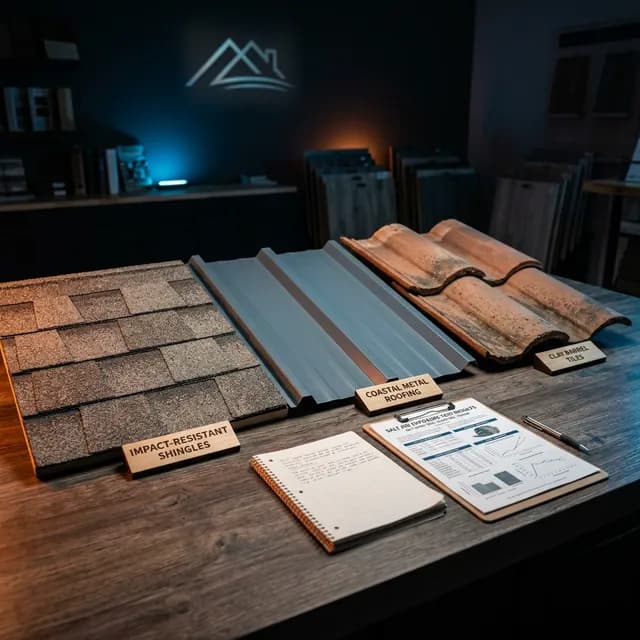

Key Takeaways
- Metal, tile, slate, and synthetic roofing all outperform asphalt shingles in durability and lifespan
- Each alternative has unique advantages and trade-offs for Savannah's coastal climate
- Higher upfront costs are offset by longer lifespans, lower maintenance, and better insurance rates
- Material choice affects everything from energy efficiency to resale value and wind resistance
- Professional installation by an experienced contractor is critical for any premium roofing material
Asphalt shingles dominate the American roofing market for good reason — they're affordable, widely available, and easy to install. But for Savannah homeowners dealing with hurricane-force winds, salt air corrosion, intense UV exposure, and tropical humidity, asphalt's 15–25 year lifespan and moderate wind resistance may not be the best long-term investment. If you're facing a roof replacement, it's worth understanding the alternatives that can deliver decades of additional protection.
Standing Seam Metal Roofing
Standing seam metal has become the fastest-growing roofing category in coastal Georgia, and for compelling reasons. The concealed fastener system eliminates the exposed screws that are the weak point of older metal roof designs, creating a continuous waterproof surface that sheds rain and resists wind uplift far better than any shingle product.
Performance in Savannah's Climate
- Wind Resistance: Rated to 140–160 mph
- Lifespan: 40–70 years with proper installation and minimal maintenance
- Energy Efficiency: Reflective coatings reduce cooling costs by 25–40% — significant in Savannah's 7-month cooling season
- Salt Air: Galvalume (aluminum-zinc alloy coated steel) and aluminum panels resist coastal corrosion far better than exposed fastener systems
- Recyclability: 100% recyclable at end of life, with most products containing 25–95% recycled content
The primary drawback is cost: standing seam metal runs $8–$14 per square foot installed, compared to $4–$7 for architectural shingles. However, when amortized over a 50-year lifespan versus 20 years, metal actually costs less per year of service. Insurance discounts of 10–25% for metal roofing further improve the financial picture.
Clay and Concrete Tile
Tile roofing has a long history in the American South, and its popularity is growing in Savannah's upscale neighborhoods, Pooler's newer developments, and Richmond Hill's custom home market. Both clay and concrete tiles offer exceptional durability and a distinctive Mediterranean or Spanish Colonial aesthetic.
Clay Tile
Natural clay tiles are fired at high temperatures, producing an extremely hard, weather-resistant material that can last over 100 years. They're impervious to rot, insect damage, and UV degradation — three of the primary threats to roofing materials in coastal Georgia. Clay's thermal mass helps moderate temperature swings, keeping attics cooler during the day and warmer at night.
The main considerations for Savannah homeowners are weight and fragility. Clay tile roofs weigh 900–1,200 pounds per square, roughly three times the weight of asphalt shingles. Many existing homes require structural reinforcement before tile installation. Individual tiles can crack under impact from falling branches or during foot traffic, making them less ideal for heavily treed properties.
Concrete Tile
Concrete tiles offer similar aesthetics to clay at a lower price point ($6–$10 per square foot vs. $10–$18 for clay). They're available in profiles that mimic clay barrel tile, flat shake, and slate. Modern concrete tiles include integral color and UV-resistant coatings that maintain their appearance for decades. Lifespan typically ranges from 40–60 years.
Natural Slate
For homeowners seeking the ultimate in roofing longevity and prestige, natural slate stands alone. Properly installed slate roofs routinely last 100–200 years. The material is fireproof, rot-proof, and completely resistant to insect damage. Slate's natural variation in color and texture creates a roof of unparalleled beauty that actually improves with age.
Slate is the most expensive roofing option, typically running $15–$30 per square foot installed. It requires specialized installation skills — improper nailing is the leading cause of premature slate roof failure. The weight (800–1,500 pounds per square depending on thickness) demands robust structural support. For Savannah's historic district homes, however, slate is often the only historically appropriate material and may be required by the Board of Review.
Synthetic Roofing Materials
The newest category of roofing alternatives, synthetic materials use engineered polymers and recycled content to replicate the appearance of premium natural materials at a fraction of the weight and cost.
Synthetic Slate
Made from recycled rubber and plastic, synthetic slate tiles weigh 75% less than natural slate while achieving Class 4 impact resistance (the highest rating) and wind ratings up to 110 mph. They install with standard roofing fasteners, eliminating the need for specialized slate-hanging skills. Lifespan estimates range from 40–60 years, and most carry 50-year warranties.
Composite Shingles
Premium composite shingles combine multiple materials — asphalt, fiberglass, recycled polymers — into products that outperform standard architectural shingles in every measurable category. The best composites offer Class 4 impact resistance, 130+ mph wind ratings, and 30–50 year lifespans. They're the most practical upgrade path for homeowners who want better performance without the dramatically different appearance or structural requirements of metal, tile, or slate.
Comparison at a Glance
When evaluating alternatives to asphalt for your Savannah area home, consider these key factors:
- Budget-Conscious Upgrade: Composite shingles or concrete tile provide the best performance improvement per dollar
- Maximum Wind Resistance: Standing seam metal leads the field at 140–160 mph ratings
- Longest Lifespan: Natural slate (100–200 years) and clay tile (100+ years) are generational investments
- Best Energy Efficiency: Reflective metal roofing delivers the greatest cooling cost reduction
- Lightest Weight: Metal and synthetic materials require no structural reinforcement
- Historic Compatibility: Slate, wood shake, and standing seam metal are approved for most Savannah historic districts
Making the Right Choice
The best roofing material for your home depends on your budget, aesthetic preferences, structural capacity, and long-term plans. A thorough roof inspection evaluates your existing framing, ventilation, and insulation to determine which materials are feasible without structural modifications. At Talya Roofing, we install all of these premium alternatives and can guide you through the pros and cons specific to your home's location in Savannah, Pooler, Richmond Hill, or Tybee Island.
Explore Your Roofing Options
Ready to move beyond asphalt? Talya Roofing provides free consultations to help you choose the perfect roofing material for your home, budget, and climate exposure.