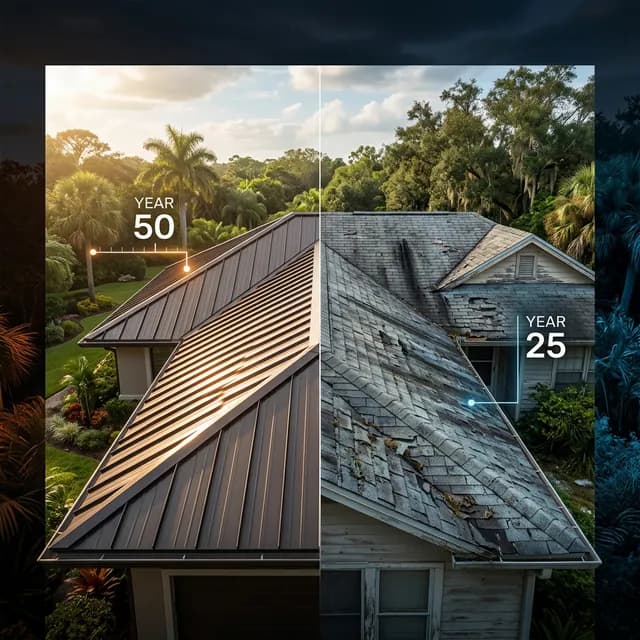

Key Takeaways
- Metal roofs last 40–70 years in the Southeast compared to 20–30 years for architectural asphalt shingles.
- The Southeast's heat, humidity, UV intensity, and storm frequency accelerate asphalt degradation more than in northern climates.
- Metal's upfront cost is 2–3x higher, but its total cost of ownership over 50 years is often lower than two shingle cycles.
- Both materials perform well when properly installed — the right choice depends on budget timeline, insurance incentives, and aesthetic preference.
Why Longevity Comparisons Differ by Region
Manufacturer lifespan ratings for roofing materials are based on average national conditions. But roofing doesn't experience average conditions — it experiences local conditions. And Savannah's climate is among the harshest in the country for roofing materials. The combination of intense UV radiation, sustained summer heat exceeding 90°F for 100+ days per year, humidity averaging 70–80%, frequent thunderstorms with wind-driven rain, and occasional tropical storm events creates an environment that ages roofing materials significantly faster than manufacturer specifications suggest.
This guide compares how metal and asphalt shingle roofing actually perform — not in a laboratory or in a temperate northern climate, but on real homes across Savannah, Pooler, Richmond Hill, and Tybee Island.
Asphalt Shingle Longevity in the Southeast
What Manufacturers Claim vs. Reality
A standard architectural shingle from GAF, Atlas, or CertainTeed carries a manufacturer warranty of 30–50 years (some say "lifetime"). In practice, architectural shingles in the Savannah area deliver 20–30 years of reliable performance — and that's with proper installation, adequate ventilation, and regular maintenance. Three-tab shingles perform even shorter: 12–18 years is common in Coastal Georgia.
The gap between warranty and reality exists because southeastern conditions attack asphalt shingles through multiple degradation mechanisms simultaneously:
- UV degradation — Savannah receives approximately 20% more annual UV exposure than northern cities; UV breaks down the asphalt binder that holds granules in place
- Thermal cycling — daily temperature swings of 30–40°F cause shingles to expand and contract, cracking the asphalt over thousands of cycles
- Humidity and moisture — persistent humidity prevents complete drying between rain events, promoting algae growth and moisture retention beneath lifted shingle tabs
- Wind stress — Savannah averages higher sustained wind speeds than inland Georgia, and tropical events can test wind ratings with gusts exceeding 80 mph
Signs of Age on Shingle Roofs
In the Savannah area, watch for these deterioration markers as your shingle roof ages:
- Years 10–15: granule loss becomes visible in gutters; algae streaking appears (mainly cosmetic)
- Years 15–20: tab edges curl slightly; seal strips may begin to fail on south-facing slopes; first minor repairs typically needed
- Years 20–25: widespread granule loss; noticeable curling; potential for wind-blown shingles; leak risk increases significantly
- Years 25–30: end of effective life for most architectural shingles in our climate; replacement should be planned
Metal Roofing Longevity in the Southeast
Real-World Performance
Metal roofing in the Southeast delivers performance much closer to manufacturer claims. Standing seam metal roofs (the most common premium metal option) last 40–70 years depending on the metal substrate:
- Galvalume steel (26-gauge): 40–50 years with paint finish intact; structural integrity often exceeds 60 years
- Aluminum: 50–70 years; the best choice for salt air environments (Tybee, Wilmington Island) due to corrosion resistance
- Copper: 80–100+ years; develops a distinctive patina; primarily used on historic and high-end properties in Savannah's downtown
- Galvanized steel: 30–40 years; more susceptible to corrosion in coastal environments than galvalume
Why Metal Outlasts Shingles in Our Climate
Metal's longevity advantage in the Southeast comes from its resistance to the same degradation mechanisms that attack shingles:
- UV resistance — metal with Kynar 500/Hylar 5000 paint finishes resists UV degradation for 30+ years without significant color fade
- No thermal cycling damage — metal expands and contracts with temperature changes, but the standing seam design accommodates this movement without damage
- No moisture absorption — metal doesn't absorb water, preventing the rot and algae issues that plague asphalt
- Superior wind resistance — standing seam metal rated to 140–180 mph outperforms even the best shingles in storm events
The 50-Year Cost Comparison
The true cost comparison between metal and shingles requires looking at total cost of ownership over a multi-decade period. For a typical 2,000 square foot Savannah home:
Asphalt Shingle Scenario (50-Year Period)
- Initial installation: $12,000–$16,000
- First replacement at year 25: $15,000–$20,000 (adjusted for inflation)
- Repairs and maintenance: $3,000–$6,000 over 50 years
- Total 50-year cost: $30,000–$42,000
Standing Seam Metal Scenario (50-Year Period)
- Initial installation: $24,000–$36,000
- Replacement: none needed (still within lifespan)
- Maintenance: $1,000–$2,000 over 50 years (minimal — occasional fastener checks and sealant touch-ups)
- Insurance savings: $5,000–$12,000 over 50 years (reduced premiums for metal roofs)
- Total 50-year cost: $13,000–$26,000 (net of insurance savings)
When viewed through the 50-year lens, metal roofing is often the more economical choice despite its higher upfront cost. The breakeven point typically occurs around year 18–22 for Savannah homes.
Making the Right Choice for Your Savannah Home
- Choose shingles if: your budget is constrained to immediate costs, you plan to sell within 10 years, your HOA restricts metal roofing, or you prefer a traditional roofing appearance
- Choose metal if: you plan to stay in the home 15+ years, you live in a high wind zone (Tybee, coastal areas), you want to minimize long-term maintenance, or your insurance carrier offers significant metal roof discounts
Both materials perform well in the Southeast when properly installed. The key is matching the material to your specific situation, budget timeline, and long-term plans. A professional consultation helps you weigh these factors objectively.
Metal or Shingles? We'll Help You Decide
Talya Roofing installs both premium shingle and metal roofing systems across Savannah, Pooler, Richmond Hill, and Tybee Island. Get an honest assessment based on your home's needs.
Get Your Free Comparison EstimateOr call us: (912) 999-7989
Sources: Metal Roofing Alliance • GAF Shingle Product Line
This post is part of our Complete Metal Roofing Guide for Savannah GA — the definitive resource covering materials, costs, installation, warranties, and hurricane performance for Coastal Georgia homes.