

Termites & Wood Rot
How Coastal Georgia's Climate Destroys Roof Decking
Coastal Georgia's high humidity creates perfect conditions for subterranean termites and wood rot in roof decking (plywood/OSB). Learn the signs, prevention, and when full replacement is needed.
The Silent Destroyers of Coastal Roofs
When Savannah homeowners think about roof damage, they usually picture missing shingles from a hurricane or a giant pine tree crashing through the attic. But the most expensive roof repairs in Coastal Georgia aren't caused by sudden storms—they are caused by the slow, silent destruction of wood rot and termites.
Subterranean Termites Don't Just Eat Foundations
Formosan subterranean termites are a massive problem in Savannah and Chatham County. While they typically start at ground level, they will build mud tubes straight up the side of your house—hidden behind brick veneer or siding—to reach the moist, untreated wood of your roof decking and trusses.
Roofing Fact: Termites are drawn to moisture. A slow, undetected roof leak creates the exact damp environment a termite colony needs to establish an aerial nest directly inside your attic.
Wood Rot: The Twin Brother of Termite Damage
Even without insects, Savannah's 90% summer humidity is enough to destroy a roof. If your attic lacks proper ventilation, humidity gets trapped against the underside of the roof decking (the plywood or OSB boards that your shingles are nailed to). Over time, the wood absorbs this moisture, delaminates, and rots until it has the structural integrity of a wet sponge.
Signs Your Roof Decking is Compromised
- ✓ A "spongy" or bouncing roof: If the roof dips or feels soft when a roofer walks on it.
- ✓ Sagging rooflines: A visible dip between the rafters when looking at the house from the street.
- ✓ Dark water stains: Black or dark brown staining on the underside of the wood in the attic.
- ✓ Mud tubes: Pencil-sized dirt lines climbing up your exterior walls or interior attic framing.
Why Patches Don't Work for Severe Rot
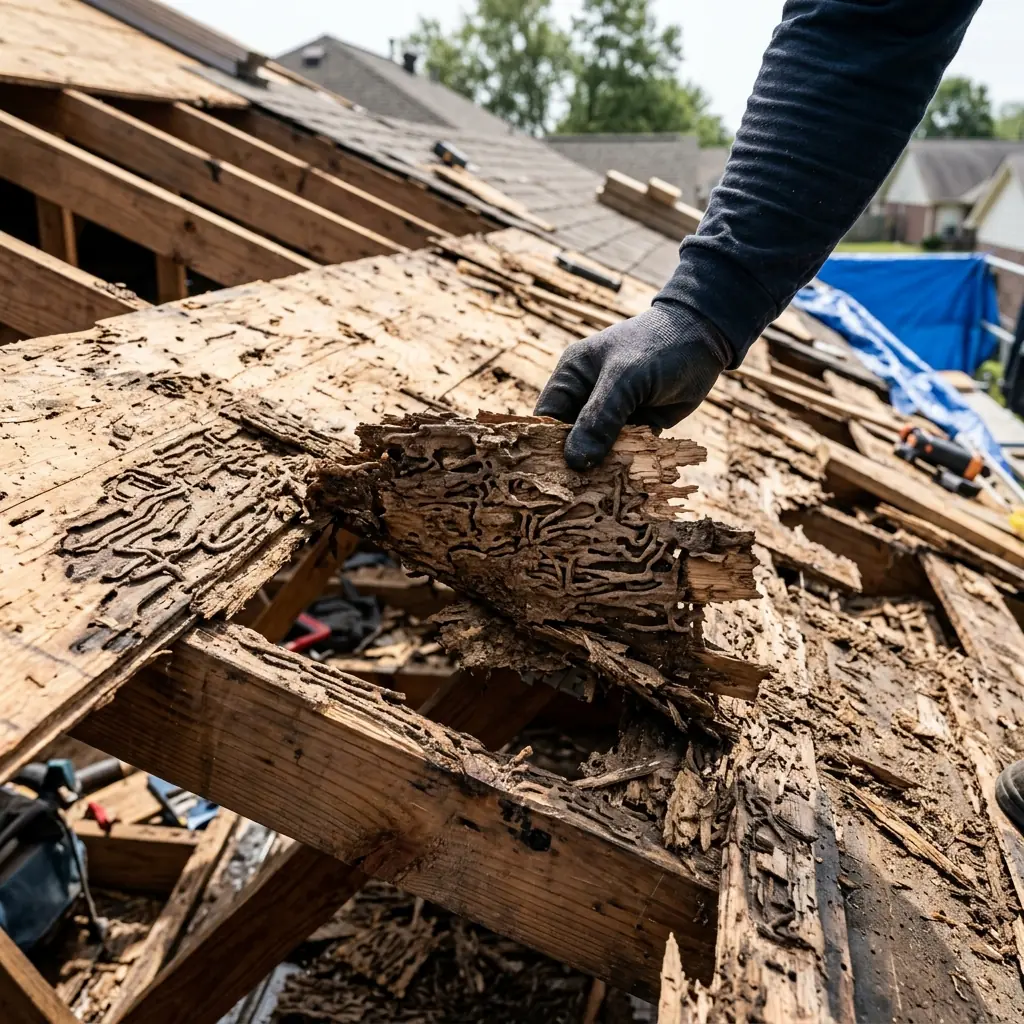
You cannot nail a new shingle into rotten wood. The nail will simply pull out during the next strong wind gust. If the decking is compromised by rot or termites, the damaged wood must be cut out and replaced before any new roofing material is installed.
Severely rotted decking must be completely replaced during a roof tear-off. New shingles cannot hold in soft wood.
The Financial Cost of Waiting
A standard roof replacement involves tearing off old shingles and installing new ones on your existing wood. But if we tear off the shingles and find 15 sheets of rotten plywood, that material and labor must be added to the cost. Delaying a roof replacement allows water mapping to spread, turning a simple re-roof into a major structural carpentry repair.
What Happens During a Re-decking Project?
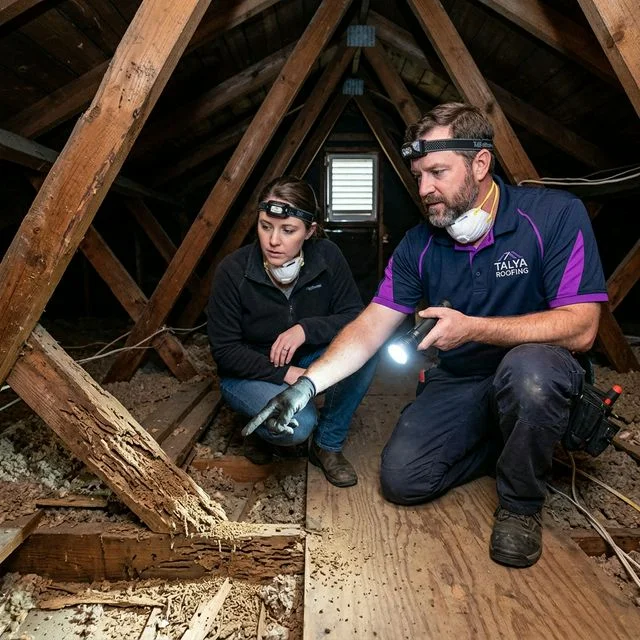
When Talya Roofing uncovers severe termite damage or rot, we immediately halt the shingling process. We use circular saws to cut out the rotten sections, inspecting the structural rafters below. We then install brand new CDX plywood or OSB, secure it to code, and cover it heavily with premium synthetic underlayment to block future moisture.
How to Prevent Rot and Termites From Returning
- Fix the Ventilation: We ensure your new roof has the mathematical balance of intake and exhaust ventilation so the attic stays dry.
- Use Waterproof Underlayment: We install ice and water shield in the valleys and at eaves to prevent water backup.
- Maintain Your Termite Bond: Always keep an active pest control bond that covers subterranean termites, and have annual inspections.
Don't Wait for the Roof to Cave In
If your roof is over 15 years old, or you have noticed sagging or water spots, do not wait. A free inspection today can catch isolated rot before it spreads across your entire home.
Expert Structural Roof Restoration
Talya Roofing's crews aren't just shingle installers; we are experienced carpenters who know how to rebuild compromised roof decks the right way.