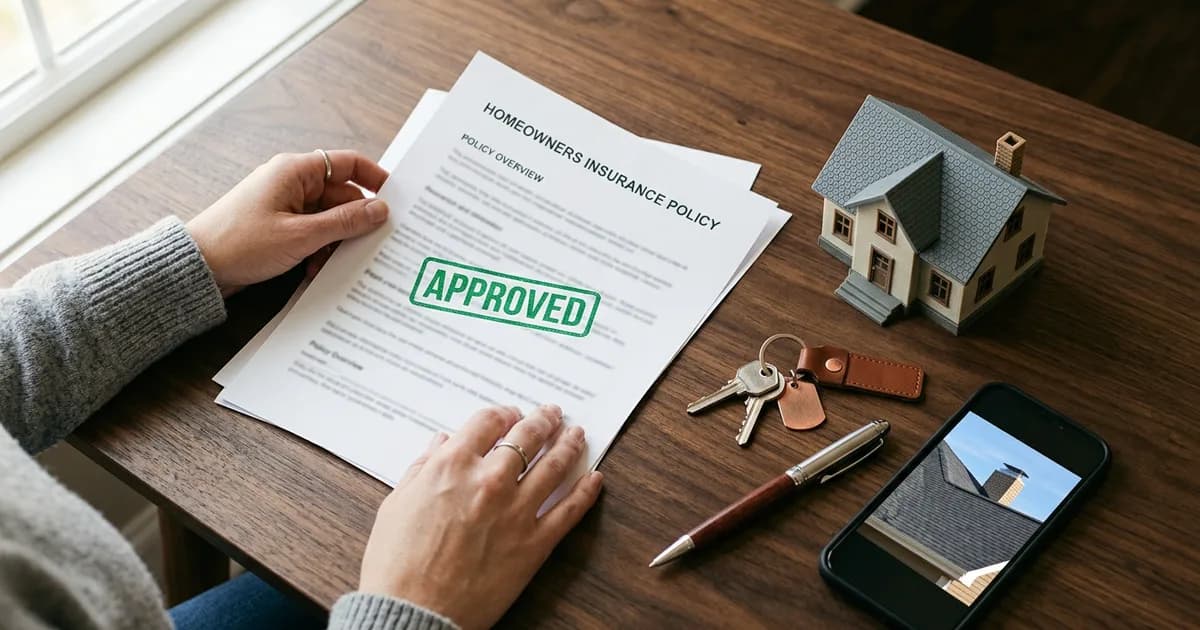

Community notice: On the morning of April 12, 2026, a two-alarm fire at the Georgetown Oak Apartments on King George Boulevard displaced more than 50 Savannah residents across 18 families. If you or someone you know was affected and needs help with insurance questions, call the American Red Cross Coastal Georgia chapter or contact us at (912) 999-7989 for a free roof damage assessment.
Key Takeaways
- ✓Review the policy and contact the carrier or a licensed insurance professional promptly for claim-specific notice requirements
- ✓Photograph and video every inch of damage before anything is moved or cleaned
- ✓ALE (Additional Living Expenses) coverage pays for your hotel and meals while you are displaced
- ✓Renters need their own insurance — the landlord's policy covers the building, not your belongings
- ✓You have the right to dispute a low settlement, hire a public adjuster, or file a complaint with Georgia's Insurance Commissioner
- ✓Request the State Fire Marshal report — it is a public document and a key part of your claim file
What Happened at Georgetown Oaks
Just before 4 a.m. on Sunday, April 12, 2026, Chatham County Fire Department and Chatham County Police Department responded to a two-alarm fire at the Georgetown Oak Apartments at 1015 King George Boulevard in Savannah, Georgia. The fire spread rapidly through the 24-unit building, ultimately affecting 22 of the 24 units and causing partial structural collapse.
Five people were rescued from the building. In one of the night's most dramatic moments, officers Thomas Velte and Brandon Lowe spotted a mother and her two young daughters on an upper-floor balcony with no way down. The mother dropped her children to the officers below, who caught them safely. Both children were transported to Memorial Health University Medical Center for smoke inhalation. The American Red Cross responded to assist 38 people across 18 families. In total, more than 50 residents were left without a home.
The Georgia State Fire Marshal is investigating the cause. Officials have declared the building structurally unsafe, meaning residents cannot return. What follows is a practical guide to the insurance process for everyone affected — and for any Savannah homeowner or renter thinking through what they would do if fire struck their property.
Renters Insurance vs. Homeowners Insurance: Which Covers You?
This is the most important distinction to understand after an apartment fire. The landlord's insurance covers the building — not your belongings, not your temporary housing, and not your liability. If you are a renter and you do not have your own renters insurance policy, you are largely on your own for replacing personal property and covering your own displacement costs.
| Coverage Type | Renters Insurance | Homeowners Insurance | Landlord's Policy |
|---|---|---|---|
| Your personal belongings | ✓ Yes | ✓ Yes | ✗ No |
| Building structure | ✗ No | ✓ Yes | ✓ Yes (the building) |
| Hotel / temporary housing (ALE) | ✓ Yes | ✓ Yes | ✗ Not for tenants |
| Personal liability | ✓ Yes | ✓ Yes | ✗ No |
| Roof / structural repairs | ✗ No | ✓ Yes | ✓ Yes (the building) |
| Average annual cost in Georgia | $180–$300/yr | $1,200–$2,400/yr | Varies |
If you are currently renting and do not have renters insurance, call your insurer or visit geico.com, lemonade.com, or your current auto insurer today. Georgia renters policies typically run $15–$25 per month — less than a streaming service — and cover your belongings, personal liability, and displacement costs. It is one of the highest-value insurance purchases available.
The First 48 Hours: Critical Steps After a Fire
The actions you take (and don't take) in the first two days after a fire have a direct impact on your claim. Here is the priority sequence:
-
1
Ensure safety first. Do not re-enter the building until fire authorities and the structural safety inspector have cleared it. Officials at Georgetown Oaks declared the building structurally unsafe — entering before clearance risks serious injury or legal complications with your insurer.
-
2
Call your insurance company. Report the loss immediately. You will be assigned a claim number and a claims adjuster. Write down every name and phone number. Ask the claims representative to confirm your ALE coverage limit and how to submit receipts.
-
3
Photograph everything. Before any cleanup, before any debris removal, photograph and video every damaged space, surface, and item. Wide shots and close-ups. This documentation is your evidence — do not skip it.
-
4
Save all receipts from day one. Every hotel night, every meal, every Uber, every clothing purchase made necessary by the fire — save the receipt. ALE reimbursement requires documentation. A simple envelope or a phone photo of each receipt works fine.
-
5
Request the incident report and fire marshal case number. Get the Chatham County Fire Department incident report number at the scene. The State Fire Marshal case number comes later — follow up in writing to request a copy of the completed report once the investigation concludes.
-
6
Make a preliminary inventory of lost or damaged belongings. Write down everything you can remember — electronics, furniture, clothing, appliances, jewelry, tools. Use bank statements, Amazon order history, and photos from your phone to help reconstruct the list. The more specific you are (model numbers, approximate purchase dates), the stronger your personal property claim.
How to Document Fire Damage Properly
Insurance adjusters are trained to look for what is visible. Your job is to create a complete documentary record so that no damage gets missed or minimized later. Here is what a thorough documentation effort looks like:
- →Video walkthrough first. Before individual photos, do a continuous video walkthrough of every room and every side of the building exterior. A 3–5 minute uninterrupted video is harder to dispute than a collection of individual photos.
- →Photograph structural damage at multiple distances. Wide shots showing the extent, medium shots showing the room context, and close-ups showing specific damage like charred framing or melted wiring.
- →Capture smoke and soot damage separately. Smoke damage is often as costly as fire damage — smoke travels into HVAC systems, walls, and every fabric surface. Document it in every room, including those that appear only lightly affected.
- →Photograph the roof separately. If safe access is possible, document the roof condition — or have a licensed roofing contractor document it for you. Fire damage to roofing materials, decking, and framing is a separate line item in your claim.
- →Back everything up immediately. Upload all photos and videos to cloud storage (Google Drive, iCloud, Dropbox) the same day you take them. Do not let the only copy live on your phone.
Important: Do not discard any damaged items until your insurer's adjuster has seen them or confirmed you may dispose of them. Throwing out damaged belongings before documentation gives the insurer grounds to dispute the value of those items.
Additional Living Expenses: Your Right to Temporary Housing
ALE (Additional Living Expenses) is arguably the most important coverage for displaced residents, and many policyholders do not fully understand how to use it. Here is what it covers and how to claim it:
What ALE pays for: Hotel or temporary apartment rent, restaurant meals (above your normal food costs), pet boarding if your temporary housing does not allow pets, laundry, storage fees for salvaged belongings, and transportation costs above your normal commute.
What ALE does not pay for: Costs you would have had anyway — your normal grocery budget, normal commuting costs, or entertainment expenses unrelated to displacement.
How long does ALE last? Most policies allow ALE payments for 12–24 months or until the home is repaired or replaced — whichever comes first. The dollar cap is typically 20–30% of your dwelling coverage. On a $200,000 homeowners policy with 20% ALE, you have $40,000 in temporary living benefits available.
How to access ALE: Tell your insurer you need ALE immediately when you file your claim. Ask them to pre-authorize a hotel or temporary rental so you are not waiting for reimbursement while paying out of pocket. Keep a written log of every expense and submit receipts weekly rather than letting them pile up.
What Fire Insurance Covers for Roof and Structural Damage
If you are a homeowner (or the owner of a building like Georgetown Oaks), fire damage to your roof and structure falls under the dwelling coverage portion of your policy. Fire is a named peril in virtually every standard homeowners policy — it is one of the events all policies cover.
Covered roof and structural items in a fire claim typically include:
- ✓Roof sheathing and decking damaged or destroyed by fire or heat
- ✓Shingles, tiles, or metal panels that were directly burned, melted, or heat-warped
- ✓Roof framing and rafters
- ✓Gutters and downspouts damaged by the fire or by the weight of firefighting water
- ✓Flashings and pipe boots
- ✓Interior ceiling and attic damage caused by heat and smoke penetration
- ✓Water damage caused by firefighting efforts (water used to extinguish a fire is a covered loss)
RCV vs. ACV — this matters significantly for roof claims. If your policy uses Replacement Cost Value (RCV), your insurer pays the full cost to replace the damaged roof with a new one of similar quality, minus your deductible. If your policy uses Actual Cash Value (ACV), the insurer deducts depreciation based on your roof's age. A 15-year-old roof with ACV coverage might pay out less than half the replacement cost. Review your policy declarations page to confirm which you have — and if you have ACV, talk to your agent about upgrading before your next renewal.
For a deeper look at how ACV vs. RCV affects your payout, see our guide on Georgia's 2026 roof insurance coverage changes.
Working With Insurance Adjusters
Your insurance company will assign a staff adjuster or an independent adjuster to inspect your property and prepare a damage estimate. Understanding how this process works helps you avoid common pitfalls:
- →The adjuster works for the insurer. This does not mean they are adversaries, but their incentive structure is to settle the claim accurately within policy limits. It is in your interest to have your own documentation and, for significant structural damage, your own contractor estimate.
- →Be present during the adjuster's inspection. Walk every damaged area with the adjuster and point out damage they may not notice from a distance — smoke staining inside attic spaces, heat-warped framing, water infiltration through roof penetrations.
- →Get a roofing contractor's construction estimate. If fire affected the roof, a contractor can document safely observable roof conditions, measurements, materials, and an itemized repair scope before or during the carrier's inspection. Concealed conditions may require additional evaluation after safe access or approved work exposes them.
- →Review the carrier's estimate and explanation. Compare it with the contractor's construction estimate and ask the carrier to explain material, labor, depreciation, deductible, exclusion, or scope differences in writing. The policy and carrier decide coverage and payment.
- →Seek licensed claim or legal advice when needed. If you need representation or negotiation, verify a Georgia public adjuster's or attorney's license, authority, written fees, and contract terms. No representative can guarantee a recovery or settlement amount.
Georgia Laws That Protect You
Georgia has several insurance laws that protect policyholders during the claims process:
- →Claim-specific timing. Claim acknowledgment, investigation, a coverage decision, and payment are separate steps. The applicable deadlines depend on the policy, claim type, governing requirements, and the event that starts each period. Ask the insurer to confirm receipt, identify any missing documents, and explain the next milestone in writing. Keep a dated record of communications. For an unresolved delay, contact Georgia OCI or qualified legal counsel; do not assume that a delay automatically entitles you to interest or a penalty.
- →Request the denial and policy basis in writing. If your claim is denied or partially denied, send a written request for the decision, an explanation, and the specific policy provisions being applied. Keep a copy of your request and the response, and seek qualified advice if the carrier has only communicated a decision verbally.
- →Appraisal rights. Most Georgia homeowners policies include an appraisal provision — if you and your insurer disagree on the amount of a loss, either party can demand an appraisal by an independent appraiser. This is often faster and cheaper than litigation.
- →Georgia Insurance Commissioner complaints. If your insurer is handling your claim in bad faith, you can file a formal complaint with the Georgia Office of Insurance and Safety Fire Commissioner at oci.georgia.gov. The Commissioner's office can investigate and, in serious cases, sanction the insurer.
- →HB 423 — no deductible waivers from contractors. Under Georgia law, no roofing contractor may offer to waive, reduce, or rebate your insurance deductible. If you are offered "free work" in exchange for signing over your claim, that is insurance fraud. Work with licensed, reputable contractors only.
For a separate issue—notice that a policy will not renew—see Georgia Act 277 and its nonrenewal notice requirements. Act 277 does not set fire-claim response or payment deadlines. For an unresolved claim-handling complaint, review Georgia OCI’s consumer complaint process.
Resources for Displaced Savannah Residents
If you were displaced by the Georgetown Oaks fire or any other disaster in the Savannah area, the following organizations can help with immediate needs while your insurance claim is processed:
- →American Red Cross Coastal Georgia Chapter — Provides emergency shelter, meals, and financial assistance for immediate displacement needs. Call 1-800-RED-CROSS or visit redcross.org.
- →Chatham County Emergency Management Agency — Coordinates local disaster response and can connect residents with housing assistance and social services.
- →FEMA Individual Assistance — If the fire is part of a federally declared disaster, FEMA may provide grants for temporary housing and home repair. Check disasterassistance.gov after any state or federal declaration.
- →Georgia Office of Insurance and Safety Fire Commissioner — For insurance complaint filing and policyholder protection resources at oci.georgia.gov.
- →Georgia Legal Aid — Free legal assistance for qualifying low-income residents navigating insurance disputes, landlord-tenant issues, or property claims at georgialegalaid.org.
- →211 Savannah — Dial 2-1-1 for a local referral to housing, food, utility assistance, and social services in Chatham County.
When to Call a Roofing Contractor
If a fire damaged your home's roof — whether from direct flames, heat exposure, firefighting water, or structural compromise — a licensed roofing contractor should assess the roof before permanent repairs are made. Here is where a contractor fits into the insurance timeline:
- ✓Temporary stabilization, when safe and available. If the roof is open or compromised, temporary protection may help limit additional water entry. Document the work and ask the carrier whether the policy covers it; coverage is not guaranteed.
- ✓Independent damage assessment (before adjuster visits). A roofing contractor can document the full scope of roof damage — including items an adjuster may miss — before the insurance inspection. This gives you a baseline to compare against the adjuster's estimate.
- ✓Adjuster meeting support. A contractor can attend when requested to identify photographed roof areas and answer technical questions about measurements, materials, and repair methodology. Attendance does not guarantee approval or payment.
- ✓Updated construction documentation. If hidden conditions change the repair scope, your contractor can give you new photographs, measurements, and an itemized estimate. The policyholder or an appropriately licensed representative handles any claim submission or negotiation.
Talya Roofing's $250 documented homeowner inspection is available throughout Chatham County and the Savannah metro area. It includes a physical assessment when safe, annotated condition photographs, AI-assisted image organization with human review, and a written report. A property-specific repair or replacement estimate can be prepared separately. Annotated inspection documentation may support an insurance review; coverage decisions remain with the carrier. Learn more about our emergency roof repair services or our insurance claims support process.
Sources: WSAV — Georgetown Oaks residents thank first responders · WTOC — Resident describes devastation after Savannah apartment fire · WTOC — Five people rescued from two-alarm fire on King George Boulevard
Fire damaged your roof? We can help.
$250 documented homeowner inspection · Physical assessment when safe · Annotated photographs · AI-assisted image organization with human review · Written report