
Solar Attic Ventilation for Savannah
Included with a full roof replacement when the roof and attic can support it
A solar attic fan can be useful on some vented attics, but it is not an automatic requirement and it should not be selected by roof size alone. The safe starting point is a property-specific ventilation review: identify how outside air enters, how it exits, whether the attic is vented or conditioned, and whether insulation or air-sealing problems are changing the airflow. Through our Green Savannah promotion, Talya Roofing includes a solar exhaust vent with a full roof replacement when the roof and attic conditions support it.
Start With the Attic System, Not the Fan
Attic ventilation works as a system. Intake openings near the lower edge of the roof admit outside air, while exhaust openings higher on the roof allow air to leave. A powered exhaust device does not create balanced ventilation by itself.
If soffit openings are blocked by paint, stored materials, insulation, or missing baffles, a fan can be starved for replacement air. That can reduce the intended airflow and may encourage air to be pulled through ceiling gaps from the conditioned rooms below. Existing ridge vents, box vents, turbines, and gable vents also need to be considered so that one exhaust path does not simply pull from another.
The attic type matters just as much. A conventional vented attic with insulation at the ceiling plane is evaluated differently from an unvented or conditioned attic with insulation along the roof deck. Before recommending a product, the installer should identify the insulation boundary, existing intake and exhaust, attic partitions, bath or dryer exhaust routing, and visible moisture or staining.
How the Solar Attic Fan Works
Sunlight Hits the Panel
An integrated or remotely mounted panel can power the fan when sufficient sunlight reaches it. Some products also support a compatible backup adapter or controller, so the written proposal should identify the selected operating configuration.
The Fan Exhausts Hot Attic Air
The motor draws attic air through the roof opening. Actual installed airflow depends on available sunlight, controls, intake area, attic resistance, placement, debris, maintenance, and the other vents connected to the space.
Fresh Air Enters Through Soffit Vents
Replacement air should enter through documented intake openings. The intake must be sized and kept clear; a fan cannot guarantee a particular temperature, humidity level, or moisture outcome.
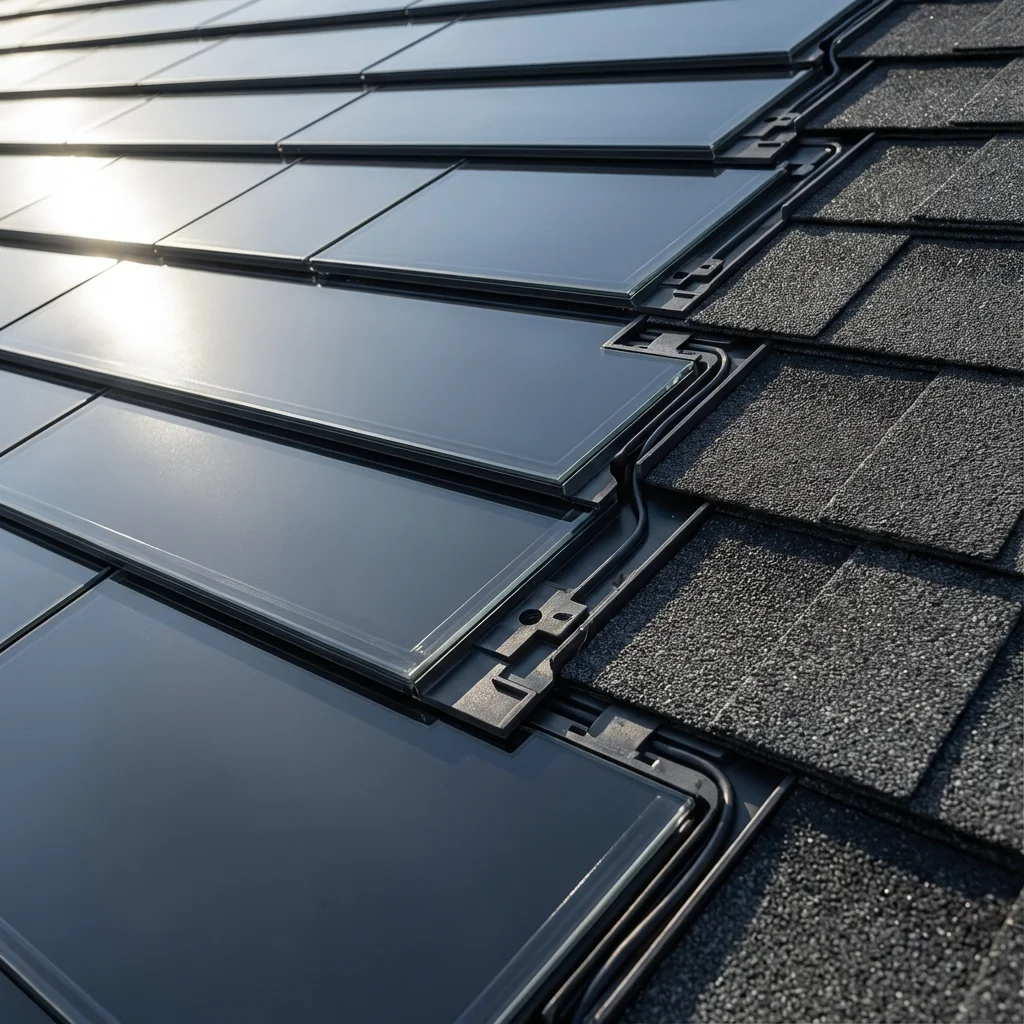
Panel-only and backup-powered models have different operating, wiring, control, and electricity-use requirements.
How to Evaluate Performance
Performance varies with weather, roof orientation, shade, insulation, air sealing, duct location, HVAC efficiency, occupancy, controls, and the complete ventilation design. A before-and-after observation can help when it uses the same measurement locations and comparable conditions, but Talya Roofing does not promise a fixed temperature drop, utility savings, equipment-life extension, or roof-life extension.
When May a Solar Attic Fan Fit?
A solar exhaust vent is included with a full roof replacement through our Green Savannah promotion, or quoted for a standalone install, when a property-specific review finds that powered exhaust is compatible with the roof, attic intake, existing vents, insulation boundary, and selected product.
- ✓ Intake and exhaust paths are documented before sizing the fan
- ✓ Roof opening, flashing, controls, and maintenance access fit the selected system
- ✓ Model, quantity, promotion terms or installed price, and warranty terms appear in the written proposal
Request a Solar Ventilation Quote
Request a project estimate and ask about our Green Savannah promotion. With a full roof replacement, a solar exhaust vent is included when the existing ventilation design can support it, and the signed scope lists the unit.
How the Green Savannah Promotion Works
With a full roof replacement, a solar exhaust vent is included when the roof and attic can support it. Roof geometry, attic intake, existing exhaust, insulation location, shade, product compatibility, controls, electrical responsibility, and flashing requirements change from one property to another. When a fan fits the design, the written proposal identifies the exact model, quantity, promotion terms, the price of any extra units, backup-power arrangement, and applicable warranty documents. If the roof or attic intake cannot support a vent, the promotion does not apply to that project.
Designing and Maintaining a Solar Ventilation Option
Powered exhaust needs a documented path for replacement air. The scope should state which soffit or other intake openings support the fan, whether baffles or other corrections are included, how existing ridge, box, turbine, gable, or powered vents will interact, and where the fan and panel will be placed. Maintenance follows the current instructions for the selected product; no generic solar fan should be represented as maintenance-free or assigned a universal service life.
Solar Vent Performance in Savannah's Climate
Solar-powered and hardwired exhaust options use different power sources and controls. The practical comparison must use the current documents for the exact products being considered:
| Factor | Hardwired Electric Vent | Solar Vent |
|---|---|---|
| Annual operating cost | Depends on motor, controls, runtime, and utility rate | Panel-only or backup-powered, depending on the model |
| Works during power outage | Depends on available backup power | Depends on sunlight and any compatible backup option |
| Peak performance timing | Depends on thermostat, humidistat, or other controls | Depends on solar exposure, shade, and controls |
| Installation complexity | Electrical scope depends on the selected unit | Panel-only and backup-powered models differ |
Neither powered option is automatically better for every Savannah home. Compare the intended airflow path, intake area, operating controls, roof opening, maintenance access, installed price, and written warranty terms. See our residential roofing page for the broader roof-system context.
Ask about solar ventilation with your next re-roof — call (912) 999-7989
Included with a full roof replacement through our Green Savannah promotion when the roof and attic intake can support it. City of Savannah business licensed and insured.