
Key Takeaways
- Storm chasers are out-of-town contractors who flood disaster areas seeking quick insurance-funded roofing jobs
- Red flags include door-to-door solicitation, pressure tactics, requests for large deposits, and out-of-state license plates
- Georgia law gives you 3 business days to cancel any home improvement contract signed at your door
- Legitimate local contractors don't need to canvass neighborhoods — their reputation brings business
- Signing with a storm chaser can void manufacturer warranties and leave you without recourse for defective work
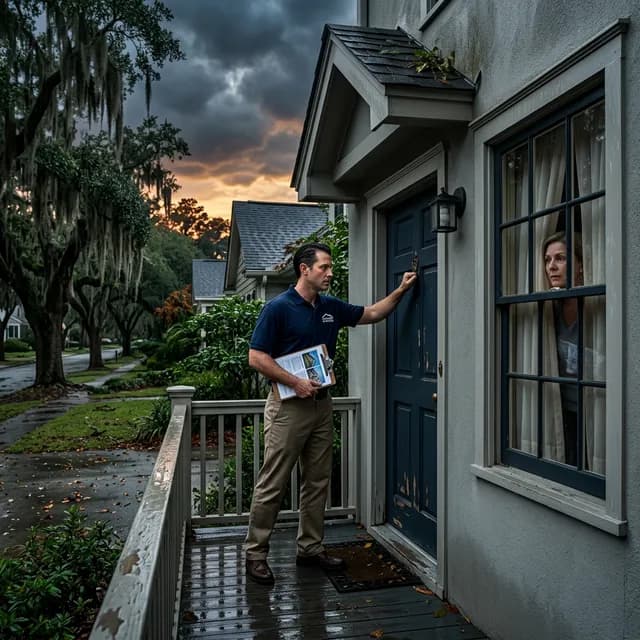
The storm barely passes and they're already in your neighborhood. Trucks with out-of-state plates line up along your street. A knock at the door, a clipboard in hand, and a confident pitch about "free roof inspections" and "we'll handle everything with your insurance company." If you live in Savannah, Pooler, Richmond Hill, or Tybee Island, you've probably experienced this — storm chasers show up within hours of every significant weather event, targeting homeowners who are stressed, uncertain, and vulnerable.
Here's what you need to know before you open that door.
What Are Storm Chasers?
Storm chasers — also called storm followers — are contractors or sales teams who travel from city to city following severe weather events. They descend on storm-affected areas with one goal: sign as many roofing contracts as quickly as possible, collect insurance payments, and move on to the next disaster before quality issues surface. They may operate under a legitimate-sounding business name registered days before the storm, or they may subcontract all work to the lowest bidder while pocketing the difference.
Not every door-to-door roofer is a scammer. But the business model of storm chasing is inherently misaligned with your interests. These companies have no long-term stake in your community, no reputation to protect in Savannah, and no intention of being around when your "new" roof starts leaking six months later.
Red Flags to Watch For
Unsolicited Door-to-Door Contact
Established local roofing companies like Talya Roofing don't need to knock on doors. Our schedule fills through referrals, online presence, and reputation. A stranger knocking on your door immediately after a storm — especially one who "happened to be in the neighborhood" and "noticed some damage on your roof from the street" — is exhibiting the classic storm chaser entry point.
Pressure to Sign Immediately
Storm chasers thrive on urgency. Common pressure tactics include: "We only have a few crew slots left this week," "Your insurance only covers the claim if you act within 48 hours" (false), "If we don't tarp it today the damage will double" (possibly manipulative), and "This price is only good today." Legitimate contractors understand that you need time to evaluate your options, get multiple estimates, and make an informed decision.
Request for Large Upfront Payment
Demanding a substantial deposit — especially one payable to an individual rather than a company — is a major red flag. Reputable contractors may require a materials deposit for special-order products, but asking for 30–50% upfront before any work begins is not standard practice for established roofing companies in Georgia.
No Local References or Physical Address
Ask for references from homeowners in your neighborhood or the Savannah metro area. Storm chasers can't provide them because they don't have local history. Ask for a physical business address — a P.O. box or "we're opening a local office soon" aren't the same as a verifiable place of business. Check the Georgia Secretary of State's website for business registration and verify their contractor's license.
Offering to Pay Your Insurance Deductible
If a contractor offers to "cover" or "waive" your insurance deductible, walk away immediately. This practice is insurance fraud under Georgia law. The contractor inflates the claim amount to cover the deductible, which constitutes a false insurance claim. Both you and the contractor can face legal consequences.
What to Say When They Knock
You don't owe a stranger at your door an extended conversation. Here are direct, polite responses that protect you:
- "I already have a roofing contractor I work with." Simple, final, and requires no further explanation
- "Leave your card — I'll call if I'm interested." Takes no commitment and lets you research the company later
- "I don't sign contracts at the door." Sets a clear boundary that protects you legally
- "Can you provide your local business-license documentation and proof of insurance?" A legitimate local contractor should be able to provide the credentials applicable to the work and jurisdiction
- "No thank you." You don't need a reason. Close the door
Your Rights Under Georgia Law
Georgia's Home Solicitation Sales Act provides important protections for homeowners who sign contracts at their door. You have the right to cancel any home improvement contract signed at your residence within 3 business days of signing, with no penalty. The contractor is required to provide you with a written cancellation form at the time of signing. If they don't provide this form, the cancellation period extends indefinitely until they comply.
If you've already signed with a storm chaser and are having second thoughts, exercise your cancellation right immediately. Send written cancellation via certified mail to the address on the contract, and keep a copy for your records.
How to Choose the Right Contractor After a Storm
After severe weather hits Savannah, take these steps to protect yourself and your home:
- Document visible damage with photographs before anyone touches the roof
- Contact your insurance company to file a claim
- Get estimates from 2–3 established local contractors with verifiable track records
- Verify each contractor's applicable local business or occupational license, current insurance, permits, manufacturer-program status, and any credential required for the project scope
- Ask for references from recent local projects
- Never sign a contract under pressure — a day of consideration won't change your roof's condition
- Schedule a professional roof inspection with a trusted local company
Your roof will still need repair or replacement tomorrow. Taking a day to make the right choice protects your home, your insurance claim, and your peace of mind.
Choose a Local Contractor You Can Trust
Talya Roofing is Savannah's own. We've been here before the storm and we'll be here long after. When you need honest storm damage assessment, call the team that calls Savannah home.
Contact Talya Roofing or call (912) 999-7989