
Key Takeaways
- ✓ Older homes on the 1700s-platted Isle of Hope lots can have old plank decking under a 1980s plywood overlay, sister-rafter additions, and original fasteners that match no current nailing schedule.
- ✓ Salt exposure is rated High in Thunderbolt and Very High on Isle of Hope, so fasteners and flashing get chosen for the exposure and checked for condition on every older roof.
- ✓ Isle of Hope is a National Register district, which is not local design review. An ordinary reroof there needs a building permit, not a Certificate of Appropriateness. We have no Thunderbolt design-review requirement on file.
- ✓ We open the deck before choosing a fastening pattern and price deck repair as its own line: $500-$2,500 inside a replacement, or $1,500-$4,500 for a leak-plus-decking repair.
Why are older Thunderbolt and Isle of Hope roofs different from the rest of Savannah?
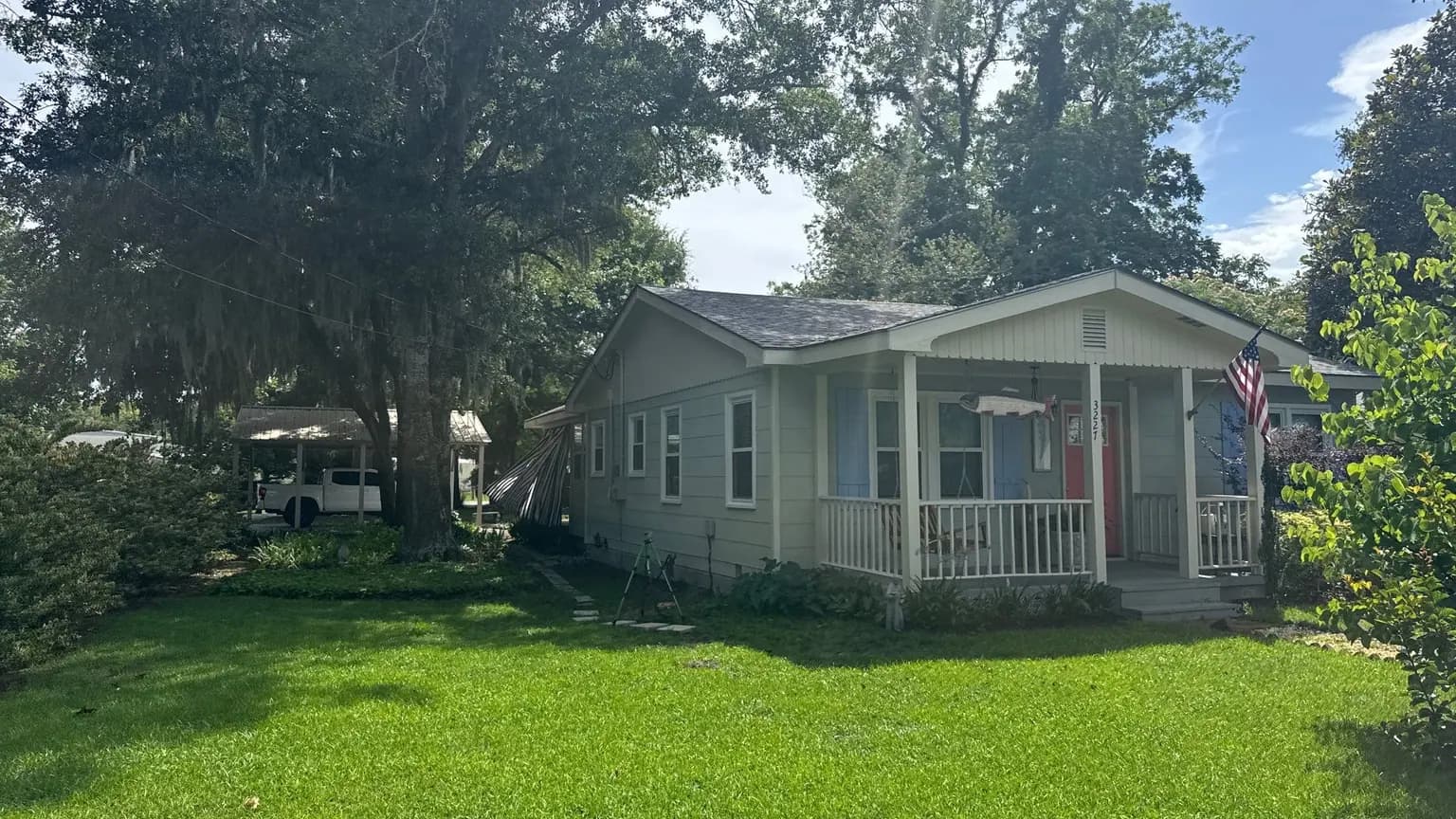
Both communities sit on open river water with mature live oaks overhead, and both carry a High hurricane-risk rating, but they are not the same roof problem. Thunderbolt is a bluff town on the Wilmington River with a High salt rating. Isle of Hope is an island on the Skidaway River with a Very High salt rating and older framing underneath.
Thunderbolt is a small riverfront town of about 3,000 people in ZIP 31404. Its oldest fabric is the town grid east of the bridge under the Victory Drive live oaks, the bluff-top streets along River Drive, the marina district on the Bonaventure Road approach, and the Thunderbolt Harbour condos on the water. River-facing slopes on the bluff take wind straight off the river with no canopy in front of them.
Isle of Hope is an island community of about 2,500 people in ZIP 31406, under a heavy live oak canopy. Its historic streets include the Bluff Drive riverfront, the Parkersburg Road neighborhood founded by freedpeople connected to nearby Wormsloe, and the Wymberley subdivision lots. The lots between Bluff Drive and Parkersburg Road were platted in the 1700s, and that history shows up under the shingles.
What can be under a roof that has already been replaced?
On the oldest Isle of Hope lots, a roof that looks like one layer of decking can be two eras of carpentry. Older homes between Bluff Drive and Parkersburg Road can have old plank decking under a 1980s plywood overlay, sister rafters added during past repairs, and original fasteners that match no current nailing schedule. None of that shows from the street.
So we open the deck where it matters before we commit to a fastening pattern, write down the existing conditions, and price deck repair separately from the new roof. You get a record of what is up there and a deck line you can question on its own. Assuming old framing meets a modern nailing spec without looking is how a coastal reroof fails in the next tropical system.
Thunderbolt's older housing raises the same question for a different reason: the bluff and marina slopes are where hardware works hardest, so the condition of the existing fasteners and flashing decides how much of the old assembly can stay. For background on older-home decking in general, including skip sheathing and stacked shingle layers, see our guide to roofing Savannah's older bungalow stock. This post sticks to what is specific to these two communities.
Does a historic district control my roof in Isle of Hope or Thunderbolt?
On Isle of Hope, an ordinary reroof is a building permit, not a design-review approval. The island's historic district is a National Register listing, a federal recognition that is easy to confuse with a local design-review ordinance. In unincorporated Chatham County, local designation comes from the Chatham County Historic Preservation Commission, and its list does not include an Isle of Hope district.
That list is kept by the Chatham County-Savannah Metropolitan Planning Commission. One nearby building is designated on its own, the Isle of Hope Union Missionary Baptist Church in Sandfly. The Bluff Drive riverfront, the Wymberley lots and the Parkersburg Road neighborhood are not. If you want certainty for your parcel, the MPC is the office that can confirm it, and we point you there instead of guessing.
We still document a period roof as if someone will ask. On Bluff Drive and Parkersburg Road homes we prepare physical material samples, manufacturer color codes, profile drawings of any visible flashing or ridge work, and a written scope. That package records what went on the house and why, which helps you now and helps a future buyer later.
Thunderbolt is its own town, and we have no design-review requirement on file for it. What 31404 does have is tight lots and shared driveways in the old grid east of the bridge, under oaks that limit where a dump trailer or lift can go. That shapes staging and access. If your Thunderbolt parcel might be different, we confirm it with the town before we quote.
For materials, cost bands and what makes waterfront work different on the island, our Isle of Hope roofing guide is the companion piece. It covers what to buy. This one covers what the new roof sits on.
How does salt air affect an older roof here?
Salt attacks the small metal parts first: nails, drip edge and step flashing. Thunderbolt is rated High salt exposure and Isle of Hope Very High. On an older roof, those parts may be original or from a cheaper past repair, so we inspect their condition before deciding what the new assembly can reuse.
Around the Thunderbolt bluff and marina, salt mist rides in on the same gusts that load the roof. We select fasteners and flashing for the specific roof system and its exposure, check that the metals are compatible with each other, and follow the manufacturer's written installation guidance. On bluff and marina work we use project-specific marine-grade 316 stainless coastal specifications. No fastener, galvanized or stainless, has a universal failure date; coatings, exposure, installation and maintenance all change how long it lasts.
On Isle of Hope, off the Skidaway River, our floor specification is stainless ring-shank nails, aluminum or stainless drip edge, copper or stainless step flashing, and coastal-rated sealants. Copper flashing also fits the period detailing on Bluff Drive homes.
What wind standard does an older Thunderbolt or Isle of Hope roof have to meet?
The design wind speed for a reroof is set by the code the jurisdiction enforces and by the specific site, and the permit office is the authority on it. We do not publish a single mph figure for Chatham County addresses, because it depends on the parcel and the code edition in force. What we control is how the roof is fastened.
On every 31404 reroof we use a six-nail pattern, ring-shank fasteners, sealed hip-and-ridge cap, and reinforced starter strips at every eave and rake. That is our standard specification on the bluff and in the town grid alike, because the river-facing slopes take the most direct wind.
Isle of Hope gets the same floor: a six-nail pattern and reinforced starter strips. On the older homes we open the deck before choosing the pattern, because nailing into 1700s-lot framing is only as good as the wood under it.
| Factor | Thunderbolt (31404) | Isle of Hope (31406) |
|---|---|---|
| Community type | Bluff-top town, about 3,000 people | Island community, about 2,500 people |
| Annual rainfall | 49 inches | 50 inches |
| Hurricane risk | High | High |
| Salt exposure | High | Very High |
| Local design review | None on file | None; National Register listing only |
| Our coastal hardware spec | Project-specific 316 stainless on bluff and marina work | Stainless ring-shank nails, copper or stainless step flashing |
What does deck repair cost inside a Thunderbolt or Isle of Hope reroof?
Decking repair inside a full replacement is a $500-$2,500 add-on. A repair that covers both a leak and decking runs $1,500-$4,500, and replacing a single slope on its own is $2,500-$6,000. We quote decking separately because nobody can price it accurately until the old material is off.
For the rest of the job, our published ranges are $8,000-$15,000 for a full asphalt replacement on a 2,000 square foot roof and $15,000-$28,000 for standing-seam metal. Copper roofing and flashing, which comes up on period homes on the island, is $25-$40 per square foot. Isolated flashing repair is $200-$600, and a documented homeowner roof inspection is $250.
None of these is a quote for your address. On an older home the spread inside each range is wide because square footage, pitch, valleys, penetrations and the state of the deck all move the number. We price everything we can see firmly and keep the deck as its own visible line. Scope detail is on our roof replacement page, and a documented inspection shows where your roof falls in the range before you commit.
Do I need a permit to replace decking in Thunderbolt or Isle of Hope?
Yes. Chatham County requires a building permit for any roof replacement, and for major structural repairs such as replacing more than a few sheets of decking. Thunderbolt is one of the jurisdictions where this applies, along with the City of Savannah, Pooler, Bloomingdale, Garden City and unincorporated Chatham County, which covers Isle of Hope.
This matters more on an older home than on a newer subdivision roof, because the deck scope is more likely to cross the "more than a few sheets" line once the old material comes off. If a shingle job turns into a partial deck rebuild during tear-off, the permit should already cover it. We set that up at the start instead of renegotiating on day two.
We do not publish a permit turnaround time we have not confirmed. Timing depends on the jurisdiction, and we give you the current picture when we walk the roof. How we stage work on the bluff, in the marina district and in the town grid is on our Thunderbolt service page.
An oak limb came through the roof. What happens with the documentation?
We photograph the roof conditions we can safely reach, take measurements, write an itemized construction estimate, and can meet your adjuster on site if you ask. You file the claim with your carrier, and the carrier decides coverage and payment. On an older structure, what the limb did to the framing matters as much as the hole you can see.
Limb strikes are a real risk in both places. The live oaks along Victory Drive and the bluff-edge streets in Thunderbolt, and the canopy over the Bluff Drive and Parkersburg Road lanes on Isle of Hope, can drop large limbs in any tropical system.
On a home with old framing, the order is: dry the structure in, inspect the rafter and deck damage, then write the repair scope. Where it is practical, photograph each slope, each penetration and any interior water before temporary work starts, and keep the date and time data on those images. Our closeout records can show the installed fastener specification, nail pattern and shingle class. Ask your carrier which records it wants; documentation supports an accurate scope, but it does not guarantee approval or timing.
Talya's recommendation
If your Thunderbolt or Isle of Hope roof has been replaced before, start with a documented inspection instead of a shingle color. Ask what is under the current deck and what condition the fasteners and flashing are in, because both change the scope. On Isle of Hope, if you are unsure about your parcel's status, the MPC can confirm it. We are City of Savannah business licensed and insured, an Atlas PRO+ Silver Member, and we use project-specific marine-grade 316 stainless coastal specifications on Thunderbolt bluff and marina work.
Sources:
Community details, exposure ratings, decking and framing notes, and our installation specifications come from Talya Roofing's published Thunderbolt (31404) and Isle of Hope (31406) pages. Local historic designation in unincorporated Chatham County is made by the Chatham County Historic Preservation Commission; its designated list is kept by the Chatham County-Savannah Metropolitan Planning Commission. The Chatham County permit requirement is from our coastal Georgia building codes guide. Cost ranges are our published service pricing.
Not sure what is under your Thunderbolt or Isle of Hope roof?
We open the deck where it matters, put the findings in writing, and price deck repair as its own line.
Call (912) 999-7989