
🚨 Emergency? Start Here.
- ✓ Move belongings away from active leaks and catch water in buckets
- ✓ Shut off electricity to any area with water near wiring or outlets
- ✓ Document the damage with photos and video before any cleanup
- ✓ Call (912) 999-7989 to check current emergency-tarping availability
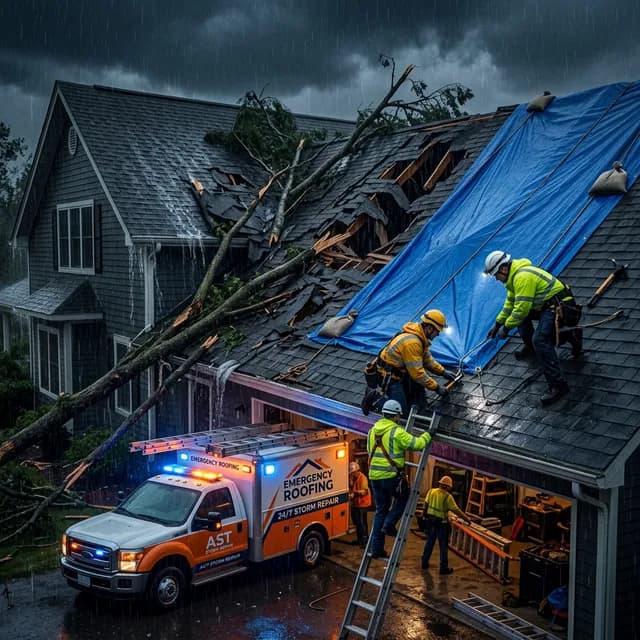
When your roof fails during a storm, the next few hours determine whether you are dealing with a roof repair or a roof repair plus ceiling replacement plus mold remediation plus damaged flooring. Speed matters. Getting the right help matters more.
This guide covers what Savannah homeowners need to know about emergency roof repair — what qualifies as an emergency, what to do in the first hour, how to get help fast, and what happens next once the immediate crisis is contained.
What Qualifies as an Emergency Roof Repair
Not every roof problem is an emergency. An emergency exists when damage is actively allowing water or weather elements into your home's interior. Situations that require immediate attention:
- Active leaking through the ceiling during or after a storm
- Missing sections of roofing that expose the decking or interior
- A tree or large branch that has fallen onto the roof
- Structural damage where the roof is visibly sagging or compromised
- Wind-lifted sections of roofing that are flapping and at risk of tearing off
Situations that are not emergencies but still need prompt attention:
- A few missing shingles with no active leaking
- Minor granule loss or surface wear
- Small amounts of debris on the roof surface
- Old stains on the ceiling that have not worsened
What to Do in the First Hour
If you have an active roof emergency, here is your action plan:
- Protect your family: If water is near electrical outlets, switches, or light fixtures, shut off the breaker to that area. Water and electricity are a deadly combination
- Contain the water: Place buckets, towels, and tarps under active drips. Move furniture, electronics, and valuables away from the affected area
- Document everything: Before you clean up, photograph and video every piece of damage. Your insurance claim depends on this documentation
- Call for emergency tarping: Ask about the earliest safe opening; timing depends on weather, access, location, storm volume, materials, and crew availability
- File your insurance claim: Do not wait. Georgia policies have strict reporting windows, and filing early protects your claim
Emergency Roof Repair Costs in Savannah
Emergency repairs may qualify for homeowner's insurance coverage depending on the cause, policy wording, deductible, exclusions, and the carrier's decision. Typical costs for emergency work in the Savannah area:
- Emergency tarping: $300-$800 depending on roof size and accessibility
- Emergency shingle replacement: $200-$600 for minor areas
- Emergency flashing repair: $250-$500 per area
- Tree removal from roof: $500-$3,000+ depending on size and damage
These are temporary stabilization costs. The permanent repair or full replacement is a separate scope that gets addressed through the regular insurance claims process.
Choosing an Emergency Roofing Contractor
During an emergency, you need help fast — but do not sacrifice quality for speed. A bad emergency repair can cause more damage than the storm itself. Choose a contractor who:
- Has a local physical presence (not a storm chasing crew from out of state)
- Can provide proof of insurance and workers' compensation before getting on your roof
- Documents all damage before covering it (critical for your insurance claim)
- Provides a clear scope and cost estimate before starting work
- Does not pressure you to commit to a full replacement before your adjuster visits
Talya Roofing provides emergency roof repair services across Coastal Georgia. We schedule active emergencies according to weather, safe access, location, storm volume, materials, and crew availability, and can document visible roof damage for your records. Over 300 roofs completed. 5.0 Google rating. Local team you can count on.
Roof Emergency? Check Current Availability.
Call now for emergency tarping and stabilization.
Emergency Roof Repair Scheduling in Savannah
When your roof fails during a storm or suffers sudden damage, limiting secondary water entry matters. Keep people away from structural damage, downed power lines, and unsafe roof access; call emergency services when there is an immediate life-safety risk.
Talya Roofing triages Savannah-area requests by safety and active water intrusion. Exact arrival and tarping times are not guaranteed and depend on weather, safe access, location, storm volume, materials, and crew availability.
| Situation | Scheduling Factors | Possible Next Step |
|---|---|---|
| Active leak during storm | Weather and electrical safety | Phone guidance for safe interior protection while scheduling is assessed |
| Post-storm emergency tarping | Safe roof access, location, materials, and crew availability | Temporary weather protection when conditions allow |
| Tree impact or structural damage | Emergency-services, utility, arborist, and structural clearance | Roof assessment after the site is declared safe |
| Full damage assessment | Storm volume and inspection access | Document visible conditions for the property owner and estimate |
What to Do While Waiting
Interior protection is your priority. Move electronics and valuables away from the leak if it is safe to do so, place containers under drips, avoid standing water near electrical sources, and photograph visible damage from a safe location. Do not enter a sagging room or climb onto a wet or storm-damaged roof.
Cost Expectations for Emergency Repairs
Emergency roof repairs in Savannah carry a premium over scheduled work due to urgency, overtime labor, and the need for immediate material sourcing. Budget 30-50% above normal repair costs for after-hours and storm-season emergency calls. However, this premium is almost always justified — delaying repair during active weather typically multiplies the total damage cost by 3-5x as water infiltration spreads to insulation, drywall, electrical systems, and flooring.
Choosing an Emergency Roofer: Beware Storm Chasers
After major storms hit Savannah, out-of-state contractors flood the area soliciting emergency work. These "storm chasers" may offer low initial prices but produce substandard work, use inferior materials, or disappear before warranty issues arise. Protect yourself by verifying the business or trade credentials applicable to the project and jurisdiction, checking for a physical Savannah-area office, requesting current proof of liability and workers' compensation coverage, reviewing a written scope, and checking local references. Talya Roofing has served the Savannah metro since our founding and maintains a permanent Savannah office.