
Key Takeaways
- Reflective and solar-ready roofing options should be compared using product-specific performance data and property conditions
- Cool roof coatings, metal roofing, and recycled shingles are the most practical green choices for coastal Georgia
- Do not assume a federal, state, utility, insurance, or tax benefit; confirm current eligibility with the responsible program or a qualified professional
- Proper installation is essential to achieve the selected product's documented performance
- Environmental and financial results vary by material, system design, maintenance, energy use, and project scope
Savannah homeowners are increasingly looking beyond traditional asphalt shingles toward roofing solutions that protect both their homes and the environment. Coastal heat, humidity, salt exposure, roof geometry, insulation, and HVAC conditions all affect which option is appropriate. Talya Roofing helps homeowners across Savannah, Pooler, Richmond Hill, and Tybee Island compare product documents, installed scope, maintenance, and project-specific tradeoffs.
Why Eco-Friendly Roofing Matters in Savannah
The Savannah metro area presents a unique set of challenges that make sustainable roofing especially relevant. Our subtropical climate means air conditioning runs 7–8 months per year, and your roof is the single largest surface absorbing solar heat. A conventional dark-colored asphalt roof can reach surface temperatures of 150°F on a July afternoon, radiating that heat directly into your attic and living spaces below.
Reflective roofing, insulation, air sealing, and correctly designed ventilation can change how heat moves through a particular roof and attic. Actual temperature, comfort, HVAC-runtime, and utility results depend on the complete building and weather; no fixed reduction or savings should be assumed from a material label alone.
Top Eco-Friendly Roofing Options for Coastal Georgia
Cool Roof Coatings
Cool roof coatings are one of the most accessible green upgrades for Savannah homeowners. These highly reflective coatings can be applied over existing roofing materials, bouncing up to 85% of solar radiation back into the atmosphere instead of absorbing it. For flat or low-slope roofs common on commercial buildings and some Pooler residences, cool roof coatings are particularly effective.
A compatible coating may protect an eligible substrate from weathering, but coating type, thickness, preparation, adhesion, drainage, existing moisture, maintenance, installed price, and warranty terms are project-specific. Use the selected manufacturer's documentation and a written proposal rather than assuming a fixed cooling-cost reduction or service-life extension.
Metal Roofing
Metal roofing can offer recycled-content and end-of-life recycling options, but those attributes vary by manufacturer, panel, finish, supplier, and local recycling access. Reflective performance also depends on the selected coating and published rating; it should not be converted into a universal Savannah cooling-cost promise.
For coastal projects, the panel, substrate, attachment, perimeter details, fasteners, coating, exposure category, salt distance, and tested assembly all matter. Wind documentation and service-life expectations belong to the selected system and site—not to metal roofing as a category. The written roof replacement proposal should identify those details.
Recycled Shingles
For homeowners in Richmond Hill and Savannah's historic districts who prefer the look of traditional shingles, recycled-content options are now widely available. These shingles are manufactured using recycled rubber, plastic, or wood fiber, diverting waste from landfills while delivering comparable performance to conventional materials. Many carry Class A fire ratings and withstand winds up to 130 mph.
Solar-Ready and Solar-Integrated Roofing
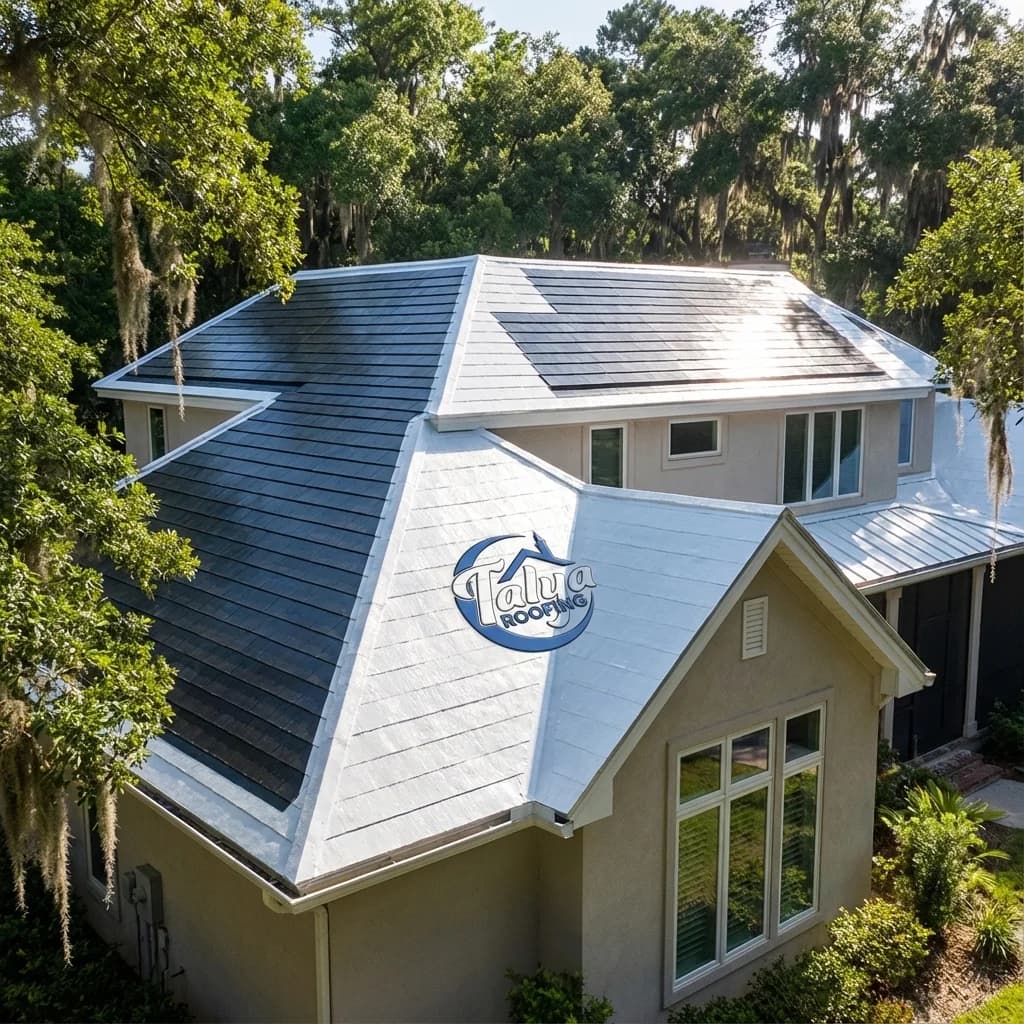
Solar-integrated roofing systems combine weather protection and electricity generation, but suitability depends on roof orientation, shade, structural capacity, electrical design, product availability, permitting, utility rules, and any neighborhood or historic-review requirements.
Even if you're not ready for solar panels today, choosing a solar-ready roof during your next replacement ensures your home is prepared for the transition. This means installing proper structural support, electrical conduit pathways, and optimal roof orientation during the initial build.
Financial Incentives for Green Roofing
Incentive and insurance programs change. Confirm the current rules before treating any benefit as part of the project economics:
- Federal tax treatment: Do not assume a current residential roofing or solar credit. Confirm the placed-in-service date, eligible property, current law, and documentation with a qualified tax professional.
- Utility programs: Ask the applicable utility about current rebates, interconnection, export-credit, and equipment rules before relying on an incentive.
- Insurance: The carrier and policy determine whether a particular tested assembly or designation qualifies for any discount.
- Property value: Resale impact varies by market, buyer, system age, documentation, maintenance, and remaining warranty; no fixed premium is promised.
Choosing the Right Eco-Friendly Roof for Your Home
Not every green roofing option is right for every home. The best choice depends on your roof's slope, your home's structural capacity, local HOA requirements, and your budget. A professional roof inspection is the essential first step — our team evaluates your existing roof structure, ventilation system, and energy usage patterns to recommend the most impactful sustainable upgrade for your specific situation.
For homes in Savannah's historic districts, material choices may be limited by preservation guidelines. We work closely with the Historic Savannah Foundation's requirements to find eco-friendly options that meet both sustainability goals and architectural standards.
The Installation Difference
Eco-friendly roofing materials are only as effective as their installation. Improper installation of metal roofing, for example, can lead to thermal bridging that negates its energy-saving benefits. Cool roof coatings applied at incorrect thickness won't achieve their rated reflectivity. At Talya Roofing, our crews are specifically trained in the installation requirements of every green roofing product we offer, ensuring you get the full environmental and financial benefit of your investment.
We also follow best practices for disposal of old roofing materials, recycling asphalt shingles and metal components whenever possible rather than sending them to the landfill. Our commitment to sustainability extends beyond the materials on your roof to every phase of the project.
Maintenance for Long-Lasting Green Performance
All roofing systems require maintenance, and eco-friendly options are no exception. Cool roof coatings should be inspected annually and recoated every 10–15 years. Metal roofs need periodic checks for fastener tightness and sealant integrity, especially after severe storms. Regular roof repair and maintenance keeps your green roof performing at peak efficiency for decades.
The Green Savannah Initiative
Talya Roofing's sustainability work begins with the complete roof and attic system. Through our Green Savannah promotion, a solar exhaust vent is included with a full roof replacement when the roof geometry, attic intake, existing exhaust, shade, controls, and selected product support it. The written proposal identifies the model, quantity, power arrangement, and applicable warranty terms.
Intake and exhaust should be evaluated as one system
Product, quantity, promotion terms, and warranty terms
Performance and electricity use depend on the selected controls
Our Sustainability Practices
Responsible Tear-Off Recycling
Old shingles don't go to the Chatham County landfill. We partner with recycling facilities that grind them into road paving material — diverting several tons of waste per job.
Compare Reflective Roofing Products
Compare the selected product's published solar-reflectance and thermal-emittance ratings. A brand name alone does not establish reflective performance.
Minimal Waste Installation
Our crews measure precisely and order accurately. Unused full bundles are returned to the supplier, not discarded.
Impact Since Launch (through Q1 2026)
- 187 tons of asphalt shingles diverted from Chatham County landfills
- 234 native live oaks and magnolias planted across Savannah neighborhoods (Savannah Tree Foundation partnership)
Ready to Go Green With Your Roof?
Talya Roofing helps Savannah homeowners choose and install eco-friendly roofing solutions that save money and protect the environment. Schedule a free consultation to explore your options.
Request Your Free Estimate or call us at (912) 999-7989