
Key Takeaways
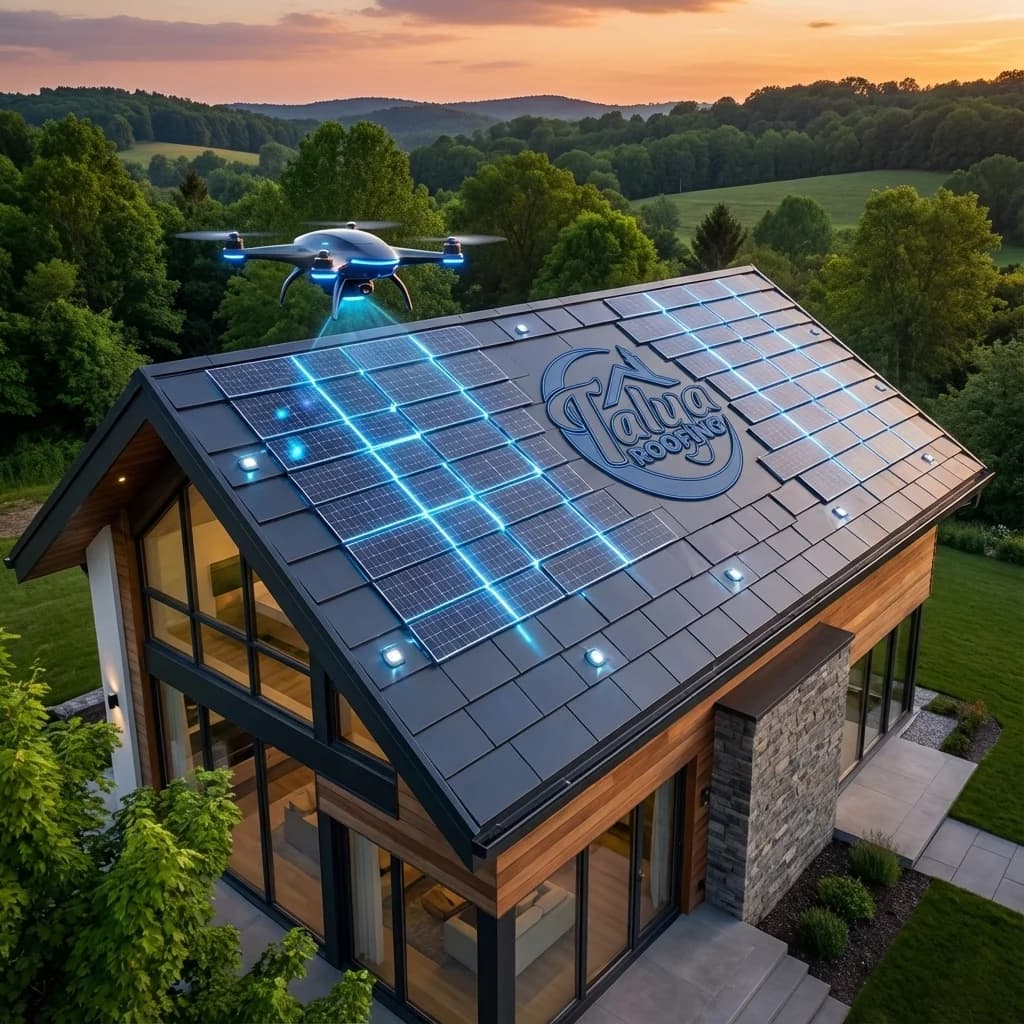
- Solar shingles now achieve 22%+ energy conversion efficiency while functioning as a primary weatherproofing layer — no separate panel installation needed.
- Self-healing coatings use microencapsulated polymers that automatically repair surface scratches and micro-cracks, extending roof life by years.
- Advanced polymer composites deliver the appearance of slate or wood shake at a fraction of the weight, with 50+ year lifespans.
- Robotic installation systems are being tested for steep-slope residential roofing, promising faster installation with fewer safety risks.
- 3D-printed roofing components enable custom-fit tiles, flashings, and architectural details manufactured on-site.
- IoT sensor networks turn roofs into "smart systems" that monitor their own condition and alert homeowners to problems before damage occurs.
Roofing Technology Is Accelerating
The roofing industry is entering a period of rapid technological transformation. Materials science, robotics, artificial intelligence, and digital manufacturing are converging to create roofing systems that are smarter, more durable, more energy-efficient, and more responsive than anything available even five years ago. For homeowners in Savannah, Pooler, Richmond Hill, Tybee Island, and across Chatham County, these advances promise better protection against our demanding climate — and significant long-term savings.
At Talya Roofing, we track emerging technologies closely, evaluating which innovations are ready for real-world deployment in Coastal Georgia and which are still in development. Here's what's coming — and what's already here.
Solar Shingles: Energy Generation Built Into Every Course
Solar shingles have evolved from an expensive novelty into a practical roofing solution. Current-generation products from manufacturers like Tesla, GAF Energy, CertainTeed, and SunRoof achieve energy conversion efficiencies above 22% — comparable to traditional solar panels — while serving as the primary weatherproofing layer.
How Solar Shingles Work
- Integrated photovoltaic cells: Monocrystalline silicon cells are embedded within the shingle body, protected by tempered glass and engineered polymers.
- Standard electrical integration: Solar shingles connect through microinverters or power optimizers, converting DC to AC power that feeds directly into your home's electrical panel.
- Seamless installation: Solar shingles install alongside conventional shingles using standard roofing techniques. Electrical connections are made at each shingle during installation.
- Aesthetic advantage: From street level, solar shingles are virtually indistinguishable from premium architectural shingles — particularly important in Savannah's historic districts.
Evaluate solar-electric roofing equipment separately when planning a roof replacement. The federal Residential Clean Energy Credit is not available for property placed in service after December 31, 2025. Compare current written project quotes without assuming a 30% credit.
Self-Healing Coatings: Roofs That Repair Themselves
One of the most exciting developments in roofing materials science is self-healing coatings. These engineered surface treatments contain microencapsulated healing agents — typically specialized polymers — that are released when the coating is damaged. The healing agents flow into scratches, micro-cracks, and abrasion zones, polymerizing to restore the protective barrier.
Applications for Coastal Georgia
- Wind-blown debris damage: Surface scratches from small branches and airborne particles during storms are automatically repaired, preventing moisture entry points.
- UV degradation mitigation: Self-healing coatings maintain their reflective properties longer by continuously repairing UV-induced surface deterioration — critical in Savannah's high-UV environment.
- Thermal cycling protection: Micro-cracks caused by expansion and contraction cycles are sealed before they propagate into structural fissures.
- Current status: Self-healing coatings are commercially available for metal roofing and single-ply membrane systems. Asphalt shingle applications are in advanced development.
Advanced Polymer Composites
Synthetic roofing materials made from advanced polymer composites are reaching performance levels that rival or exceed natural materials. These products replicate the appearance of slate, cedar shake, clay tile, and other premium materials while offering dramatically improved performance characteristics.
- Weight reduction: Synthetic slate weighs 1–2 lbs per square foot versus 9–12 lbs for natural slate, eliminating the need for structural reinforcement.
- Impact resistance: Polymer composites achieve UL 2218 Class 4 impact ratings — natural slate cracks and breaks under the same impacts.
- Lifespan: 50+ year manufacturer warranties backed by material science that doesn't degrade from moisture, UV, or biological growth the way natural materials do.
- Hurricane performance: Flexible polymer materials withstand wind forces that would shatter rigid natural slate or clay tiles — a significant advantage for Chatham County homes.
- Sustainability: Many synthetic products incorporate 50–95% recycled content and are fully recyclable at end of life.
Robotic Installation: The Future of Roofing Labor
With the roofing industry facing an estimated 200,000-worker labor shortage nationwide, robotic installation systems are moving from concept to prototype. Several companies are developing autonomous and semi-autonomous robots designed to work on residential roof surfaces.
Current Development Status
- Shingle placement robots: Autonomous systems that carry and position shingles on the roof surface, reducing the physical labor of carrying bundles up ladders.
- Nail-driving systems: Robotic nailers that achieve consistent fastening depth, spacing, and pattern compliance — eliminating human variation that can compromise wind resistance.
- Safety advantages: Robots don't fall off roofs. Removing human workers from the most dangerous aspects of roofing installation could reduce injuries by 60–80%.
- Timeline: Semi-autonomous systems assisting human crews are expected within 3–5 years. Fully autonomous installation may take 7–10 years to reach commercial viability.
3D Printing in Roofing
Additive manufacturing (3D printing) is finding applications in roofing through custom component production and on-site manufacturing capabilities.
- Custom flashings: 3D-printed metal and polymer flashings designed to fit exact roof geometries, eliminating the field-bending and cutting that introduces potential failure points.
- Replacement tiles: Matching discontinued tile profiles for historic home repairs in Savannah's historic districts, where architectural preservation requirements limit material choices.
- Architectural details: Custom ridge caps, finials, and decorative elements printed to match existing home architecture.
- Rapid prototyping: New roofing product designs can be prototyped and tested in weeks rather than months, accelerating innovation across the industry.
Weather Prediction Integration
Advanced weather modeling is being integrated into roofing maintenance and installation planning. Machine learning algorithms trained on historical weather data and real-time atmospheric monitoring can predict severe weather events with increasing accuracy, enabling proactive roof preparation.
- Storm preparation alerts: Automated notifications when conditions favor severe weather allow homeowners to secure loose materials and schedule pre-storm inspections.
- Installation scheduling: AI-optimized scheduling avoids weather-related delays by identifying the best windows for repair and installation work.
- Seasonal forecasting: Long-range weather models help contractors plan material ordering, crew scheduling, and project timelines months in advance.
- Post-storm assessment prioritization: AI analysis of storm path, intensity, and duration data helps identify which neighborhoods are most likely to have sustained damage, enabling faster response.
Blockchain Warranties and Digital Documentation
Blockchain technology is being explored for roofing warranty management, creating immutable digital records of installation details, material specifications, and warranty terms that cannot be lost, altered, or disputed.
- Permanent records: Installation date, crew certifications, material lot numbers, and photographic documentation stored on a blockchain that persists regardless of company changes.
- Transferable warranties: Digital warranty tokens that automatically transfer with property ownership, solving the common problem of lost warranty documentation during home sales.
- Smart contracts: Warranty claims could be automatically processed when IoT sensors detect covered conditions, eliminating the claims filing process entirely.
- Fraud prevention: Blockchain verification prevents counterfeit warranty certificates and unauthorized warranty claims.
IoT Sensor Networks: The Smart Roof Ecosystem
The integration of Internet of Things (IoT) sensors into roofing systems creates a continuous monitoring network that transforms a passive building component into an active, responsive system. Combined with the other technologies discussed, IoT sensors form the backbone of what the industry is calling the "smart roof."
- Moisture sensors at every vulnerable point detect water intrusion within minutes — not weeks or months.
- Temperature sensors monitor thermal performance and alert to insulation or ventilation failures.
- Wind sensors track sustained and gust speeds, correlating with potential damage for insurance documentation.
- Structural sensors detect movement, settling, and stress that could indicate developing problems.
- All data feeds into a dashboard accessible via smartphone, with automated alerts and maintenance recommendations.
For Savannah homeowners interested in a roof inspection that evaluates your home's readiness for smart roof technology, Talya Roofing provides consultations on which innovations offer the best value for Coastal Georgia properties.
Future-Proof Your Roof With Talya Roofing
The future of roofing is smarter, more durable, and more efficient — and Talya Roofing is bringing that future to Savannah, Pooler, Richmond Hill, and all of Chatham County. Whether you're ready for solar shingles, interested in smart monitoring, or simply want the best conventional roof available today, we're your partner for roofing excellence.