
🏠 Key Takeaways
- ✓ Clear your attic and protect belongings on upper floors before the crew arrives
- ✓ Move vehicles, grills, and patio furniture at least 15 feet from the house
- ✓ Plan pet care — noise and vibration last the full workday
- ✓ Notify your HOA and neighbors 5–7 days before the project starts
- ✓ Talya Roofing handles dumpster placement, tarping, and debris cleanup
- ✓ Most Savannah roof replacements take 1–3 days depending on size and complexity
A roof replacement is one of the biggest investments you will make in your Savannah home. The good news: a little preparation on your end goes a long way toward a smooth project, a faster timeline, and zero surprises. After completing hundreds of roof replacements across Chatham County — from the historic neighborhoods south of Victory Drive to the newer subdivisions in Pooler and Richmond Hill — we have a clear picture of what homeowners can do to make the process seamless.
Clear and Protect Your Attic
During a tear-off, the hammering and prying on the roof deck sends vibrations through the entire structure. Loose items stored in the attic can shift, fall, or get coated in dust.
- Remove fragile items from attic shelving entirely.
- Cover anything that stays with old sheets or plastic tarps.
- Note existing damage before the project — mention it during your pre-project inspection.
Protect Belongings Inside Your Home
- Wall art and mirrors: Remove or re-secure anything hanging on upper-floor walls. Vibrations loosen picture hangers fast.
- Ceiling fans and light fixtures: Give them a quick tighten.
- Dust-sensitive rooms: Cover electronics and surfaces with sheets in rooms directly below the roofline.
Vehicle and Driveway Logistics
Our crews arrive early — typically between 7:00 and 7:30 AM — and need clear access.
- Move all vehicles to the street or a neighbor's driveway.
- Clear a path to the roof edge on all sides.
- Keep the garage door closed during the workday.
Outdoor Furniture and Landscaping
- Move patio furniture, grills, and potted plants at least 15 feet from the house.
- Cover landscaping beds adjacent to the house with tarps.
- Flag sprinkler heads near the foundation.
Pet Safety and Comfort
- Keep pets indoors in a quiet room away from the work zone, or arrange boarding.
- Secure fences and gates. Our crew opens and closes yard gates for equipment access.
- Nail hazard: Walk the perimeter before letting animals outside after the workday ends.
What to Expect: Noise and Timeline
Typical Savannah Roof Replacement Timeline
| Home Size | Duration | Notes |
|---|---|---|
| Under 1,800 sq ft | 1 day | Standard tear-off and re-roof |
| 1,800–3,000 sq ft | 1–2 days | Most Savannah, Pooler, and Richmond Hill homes |
| 3,000+ sq ft | 2–3 days | Complex rooflines, steep pitch, or extensive decking repair |
Weather can extend timelines. Your roof is never left exposed overnight without protection.
HOA Notifications
Many Savannah-area neighborhoods — especially in Pooler (Godley Station, Telfair, The Highlands) and Richmond Hill — require HOA approval before exterior modifications.
- Submit your request 2–4 weeks before your scheduled project date.
- Talya Roofing can provide documentation — product spec sheets, color samples, and a project scope letter.
- Get approval in writing.
Talking to Your Neighbors
- Let them know the start date and estimated duration
- Ask them to move vehicles parked near your property line
- Reassure them that cleanup will be thorough — our crew runs magnetic nail sweeps on your property and theirs
What Talya Roofing Handles for You
- Material delivery coordination
- Dumpster placement and removal — removed within 24 hours of completion
- Tarping and weather protection — fully tarped each evening on multi-day projects
- Complete debris cleanup — sweep, rake, and magnetic nail sweeps across your entire yard
- Final walkthrough — we inspect the finished roof with you before we leave
Day-Before Checklist
- ☐ Attic cleared or items covered
- ☐ Wall art removed or secured on upper floors
- ☐ Vehicles moved away from the house
- ☐ Outdoor furniture, grills, potted plants relocated
- ☐ Pets planned for — indoor room or boarding arranged
- ☐ Neighbors notified
- ☐ HOA approval received (if applicable)
- ☐ Sprinkler heads flagged
- ☐ Garage door closed
Day-Before Checklist
The day before your crew arrives is when final preparation makes the biggest difference. Complete these steps the evening before installation begins:
- Move all vehicles: Park cars at least 20 feet from the house or, ideally, down the street. Debris, nails, and material fragments will fall around the perimeter throughout the day. Even with magnetic sweeps, stray nails can puncture tires if vehicles are too close.
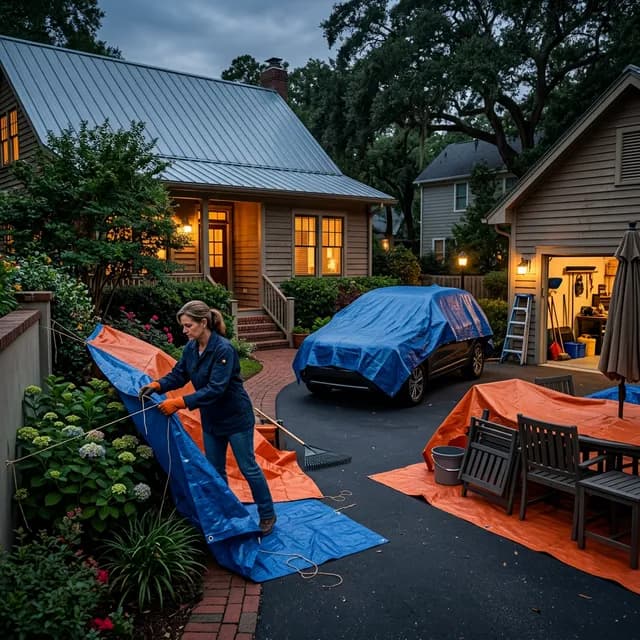
- Cover landscaping near the house: Lay tarps over flower beds, delicate shrubs, and garden features within 10 feet of the exterior walls. Our crews use ground tarps, but an extra layer of protection prevents granule debris from settling into mulch beds and around plants.
- Secure pets: Dogs and cats react strongly to the noise and activity of a roof replacement. Board sensitive pets for the day, arrange for them to stay with a friend, or confine them to an interior room on the opposite side of the house. Dogs left in fenced yards may escape through gates that crews need to access, and the stress of all-day hammering above can cause anxiety and behavioral issues.
- Protect attic items: Remove or cover anything stored in the attic with plastic sheeting. The vibration from tear-off dislodges dust and can shift boxes. If you have an HVAC system in the attic, cover the unit with a tarp to prevent debris from entering the air intake.
- Take down wall hangings: Remove mirrors, framed photos, and fragile items from walls — especially in upstairs rooms directly below the roof. The impact of tear-off creates vibrations that can dislodge items from hooks and nails.
- Inform your neighbors: A courtesy heads-up about the noise, delivery trucks, and potential debris is appreciated and prevents complaints. Let them know the timeline so they can plan accordingly.
During the Work: What to Expect
Knowing what a normal roof replacement looks, sounds, and feels like prevents unnecessary alarm:
- Noise level: The tear-off phase (typically 7:30 AM–11:00 AM) is the loudest. Shingles are being stripped with flat shovels, debris slides down the roof into a dumpster, and the impact is significant. Installation in the afternoon involves steady nail gun firing — loud but more rhythmic and tolerable. Plan phone calls and video meetings around these phases.
- Debris and dust: Roofing debris will be around the perimeter of your home throughout the day. Granules, old felt paper, and nail fragments are unavoidable. Do not walk barefoot in the yard until after the final magnetic nail sweep. Some dust will enter the home through attic access points and gaps — this is normal and easily cleaned after the project.
- Staying home vs. leaving: Most adults handle the noise fine with headphones or by using rooms on the opposite side of the house. However, if you have infants, elderly family members, or pets that are sensitive to sustained loud noise, spending the workday away from home is the better option. If you stay, you have the advantage of being available when the crew has questions about unexpected findings like additional decking damage.
- Water and power: Your water and electricity will not be affected. However, if the crew discovers damaged decking and needs to replace sections, they may ask to use an exterior power outlet for saws. Keep at least one outlet accessible.
After Completion: Your Post-Installation Checklist
Once the crew finishes, take these steps to protect your investment:
- Final walkthrough: Walk the perimeter of your home with the project manager. Look at the completed roof from each side. Check that ridge cap shingles are straight and uniform, drip edge is properly installed, and all flashing is neatly sealed. Inspect the gutters to make sure they were reattached securely and are free of debris.
- Collect your warranty documents: Keep the named manufacturer warranty and the contractor's separate workmanship warranty in writing. For any enhanced option, confirm the required system components, registration or application, property eligibility, exclusions, and current transfer terms rather than assuming every document transfers automatically.
- Photograph everything: Take dated photos of the completed roof from all four sides plus close-ups of flashing details, ridge cap, and any complex areas (valleys, chimneys, skylights). These photos serve as baseline documentation for future insurance claims and warranty reference.
- Schedule your first maintenance inspection: Mark your calendar for a professional roof inspection at the 12-month mark. This post-installation checkup catches any settling issues, confirms seal strip activation on shingles, and verifies that all components are performing as expected after a full year of Savannah weather.
- Establish a maintenance plan: A new roof is not a "set it and forget it" asset. Plan for annual gutter cleaning, biannual visual inspections from ground level, tree trimming to maintain 6-foot clearance, and professional inspections every 2–3 years. In Savannah's climate, proactive maintenance can add 5–8 years to your roof's functional lifespan.
Ready to Schedule Your Roof Replacement?
Talya Roofing makes the process simple for Savannah, Pooler, Richmond Hill, and Tybee Island homeowners. Call us or schedule your free estimate online.